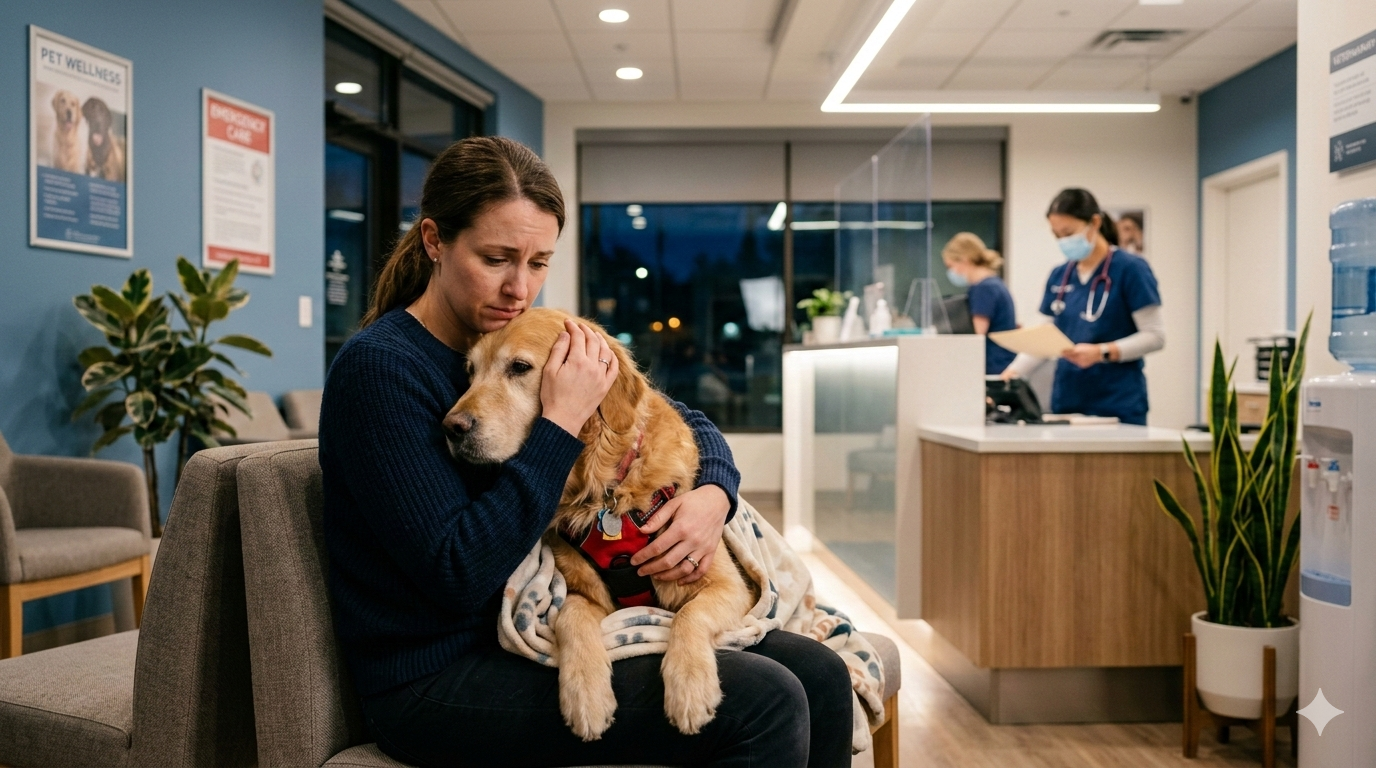
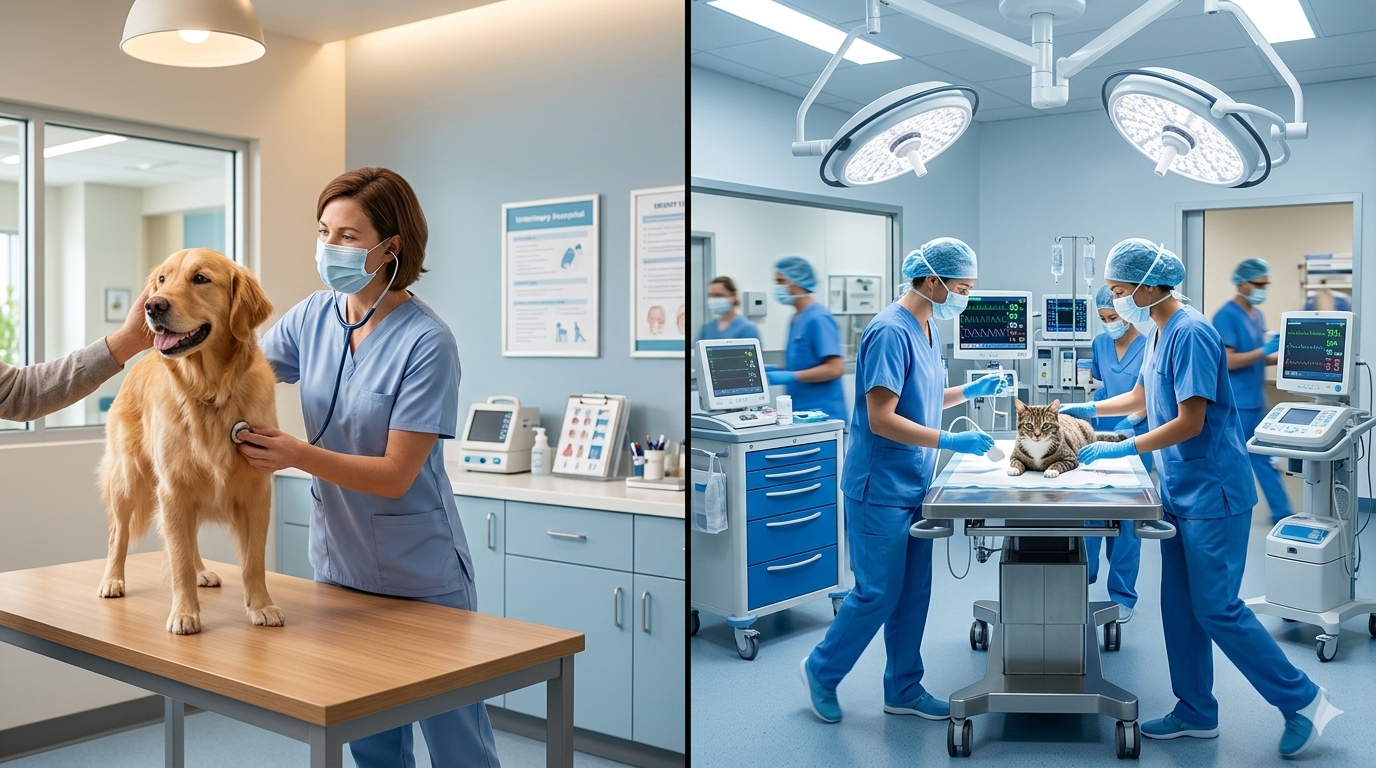
Last month, two families walked into our hospital on the same Saturday afternoon. The first was a couple from Lincoln Village whose Beagle, Milo, had been vomiting on and off since the morning. He was still drinking water, still wagging his tail, but clearly not himself. The second was a woman from Brookside who carried in her Siamese cat wrapped in a towel — the cat had been attacked by a stray dog twenty minutes earlier and was bleeding from a deep wound on her side, breathing fast and shallow.
Both families were scared. Both searched “emergency vet near me” on their phones before heading our way. But the care each pet needed was fundamentally different — and understanding that difference ahead of time could have saved both families a lot of anxiety.
This is a conversation we have with Stockton pet owners almost every day. The terms “emergency vet,” “urgent care for pets,” and “animal ER” get used interchangeably online, in conversations with friends, and even by some veterinary clinics themselves. But they actually describe very different levels of care. Knowing which one your pet needs — and when — can help you make faster decisions during the moments that matter most.
What Exactly Is an Animal ER?
An animal ER, sometimes called an emergency veterinary hospital, is a facility specifically designed to handle life-threatening situations around the clock. Think of it as the human equivalent of a hospital emergency room. These facilities typically operate 24 hours a day, seven days a week, and they’re staffed with veterinarians and technicians trained in critical care, trauma stabilization, and advanced life support.
The kinds of cases that belong in an animal ER include severe trauma (being hit by a car, falling from a balcony, attacks by other animals), active seizure clusters that won’t stop, signs of internal bleeding like a suddenly distended abdomen with pale gums, complete inability to breathe, and loss of consciousness. These are situations where every passing minute affects the outcome, and the pet needs immediate intervention that might include emergency surgery, blood transfusions, oxygen therapy, or intensive monitoring.
Most dedicated animal ERs operate independently from regular veterinary practices. They’re designed around the assumption that the patients walking through the door are in crisis. The equipment, staffing levels, and protocols all reflect that reality.
What Does Urgent Care for Pets Actually Mean?
Urgent care for pets occupies the space between a routine veterinary appointment and a true animal ER visit. It’s for situations that are serious enough that you shouldn’t wait days for a regular appointment, but not so catastrophic that your pet’s life is hanging in the balance at that exact moment.
A pet who has been limping for several hours after jumping off the couch, a dog who ate an entire bag of treats and has been having diarrhea all afternoon, a cat with a swollen eye that appeared overnight, or a pet running an unexplained fever — these are classic urgent care situations. The pet needs same-day veterinary attention, a proper examination, and likely some diagnostics, but the situation hasn’t escalated to a point where round-the-clock critical care is required.
What makes a good urgent care veterinary practice is the ability to see patients quickly without an appointment, run diagnostics on-site, and provide treatment the same day. That’s exactly the model we follow at Pacific Veterinary Hospital. We provide emergency and urgent care services seven days a week during our business hours, from 8:30 AM to 8 PM, with the diagnostic tools and veterinary expertise to handle the vast majority of urgent situations that Stockton pet owners encounter.
The Real Differences: Emergency Veterinary Care vs Urgent Vet Care
The confusion between these two types of care is understandable — especially when you’re worried and your pet is in pain. Here’s how they actually break down in practice.
Hours and Availability
A 24-hour animal ER is always open. That’s their defining feature. Urgent care veterinary clinics, on the other hand, operate during extended but defined hours. At Pacific Veterinary Hospital, we’re open every single day from 8:30 AM to 8 PM, including weekends and holidays. That covers the large majority of situations, but if your pet has a critical emergency at 2 AM — say, a bloated stomach, a major trauma, or an uncontrollable seizure — a 24-hour emergency veterinary care facility is where you need to go.
Staffing and Specialization
Dedicated animal ERs often have emergency and critical care specialists, veterinary technicians trained specifically in trauma and intensive care, and the capacity to monitor patients overnight on ventilators or IV drips. Urgent care facilities are staffed by experienced general practice veterinarians who can diagnose and treat a wide range of conditions quickly, including many that would be considered emergencies if left untreated. The key difference is overnight capability and the depth of critical care resources.
Equipment and Diagnostics
This is where the line gets interesting, because a well-equipped urgent care vet can handle more than most people expect. At our hospital, we maintain in-house X-ray, ultrasound imaging, and in-house bloodwork capabilities — meaning we can diagnose fractures, organ abnormalities, fluid accumulation, infection markers, and dozens of other conditions on the spot, during your visit. We also have the ability to perform emergency surgical procedures the same day when the situation demands it. A 24-hour animal ER will typically have all of this plus continuous monitoring equipment, ventilators, and blood bank access for transfusions.
Cost Considerations
This is the part nobody talks about but everyone thinks about. Emergency veterinary care at a dedicated 24-hour facility is generally more expensive than an urgent care visit, sometimes significantly so. The overhead of running a round-the-clock operation with specialized staff contributes to higher fees. That doesn’t mean you should avoid the animal ER when your pet truly needs it — but it does mean that for situations that are serious but not life-threatening, seeking urgent care for pets at a facility like ours can get your pet the treatment they need without the higher costs associated with a dedicated ER.
A Real Story: When Urgent Care Was the Right Call
Let me take you back to Milo, the Beagle from Lincoln Village I mentioned earlier. His family was genuinely worried — and they had every right to be. A dog who vomits repeatedly over several hours isn’t something to shrug off.
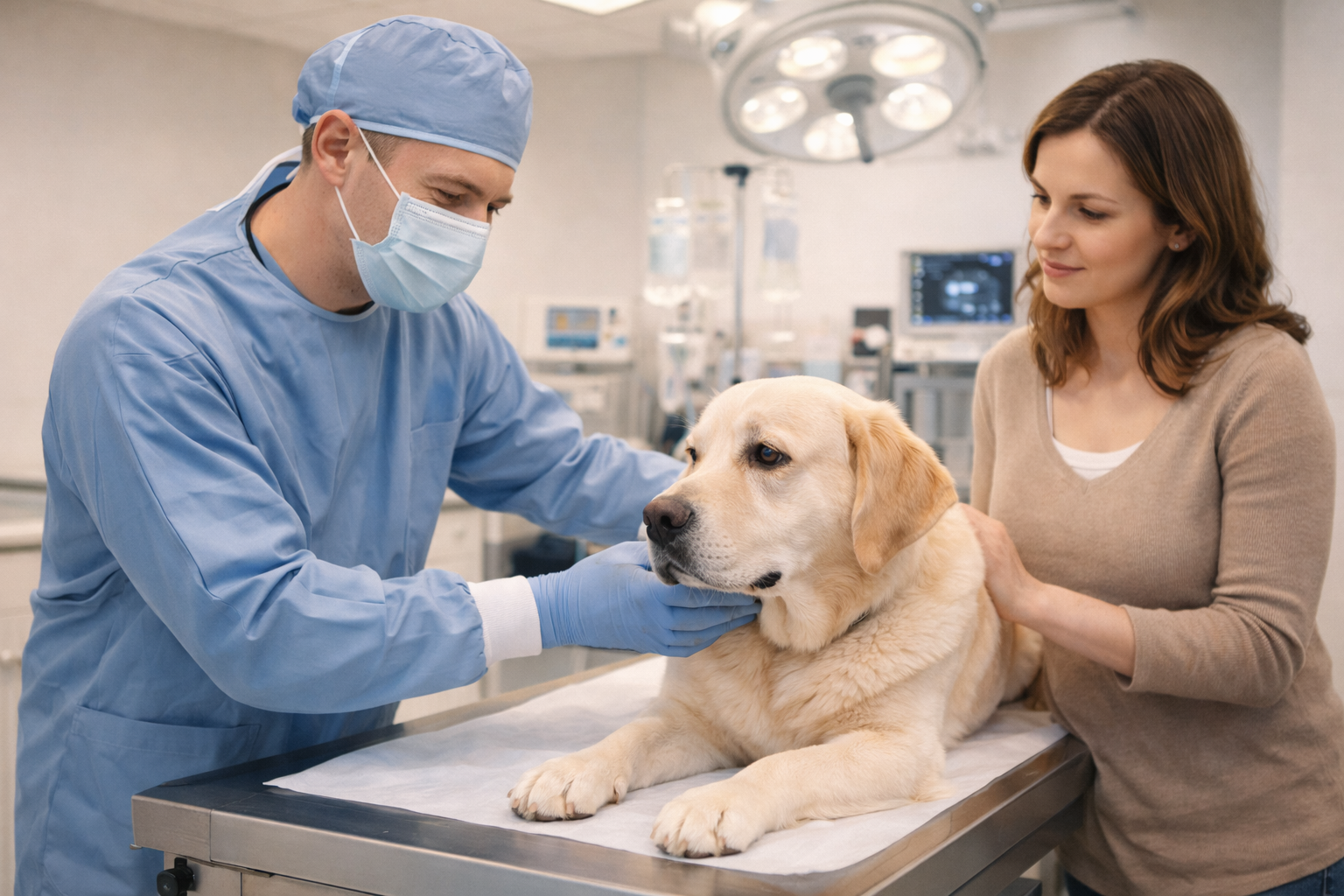
When they brought Milo in, our veterinarian examined him, ran a quick blood panel and took X-rays to check for any obstruction. The bloodwork came back showing mild dehydration and slightly elevated white blood cells — consistent with a gastrointestinal upset, likely from something he’d gotten into in the yard. The X-rays were clean. No blockage, no foreign object.
Milo received anti-nausea medication and subcutaneous fluids, and his family went home with clear instructions: a bland diet for 48 hours, monitoring for any worsening, and a follow-up call the next day. By Monday, he was back to his usual self.
This was a textbook urgent care scenario. Milo needed same-day attention and diagnostics to rule out something more serious. But he didn’t need overnight hospitalization, a critical care specialist, or the full resources of a 24-hour animal ER.
Now, contrast that with the Siamese cat from Brookside. She had active bleeding, visible puncture wounds, rapid breathing, and was clearly in shock. Our team stabilized her immediately — stopping the bleeding, administering pain management, and running bloodwork. She needed surgical repair of the wound, which our surgical team was able to perform that same afternoon. Had her injuries been more extensive — say, a crushed chest or massive internal hemorrhage — we would have stabilized her and referred her to a 24-hour facility for overnight intensive monitoring.
That’s how the system works best: urgent care facilities and animal ERs aren’t competitors. They’re partners in a continuum of care.
When to Search “Emergency Vet Near Me” vs Going to Urgent Care
Here’s a practical framework that we share with pet owners in our community.
Go Directly to a 24-Hour Animal ER If Your Pet Has:
Hit by a vehicle, fallen from a significant height, or experienced other major physical trauma. Seizures lasting more than three minutes, or multiple seizures back to back. Complete inability to breathe — open-mouth gasping, blue or white gums, choking. Suspected poisoning from a known lethal substance like antifreeze, rodenticide, or large quantities of xylitol or chocolate. Uncontrolled, heavy bleeding that won’t stop with direct pressure. Loss of consciousness or total unresponsiveness. A visibly distended, hard abdomen (possible GDV/bloat) — this is a surgical emergency that can kill within hours.
If any of these situations occur outside our business hours, don’t wait until morning. Search for a 24-hour emergency vet near you and go immediately.
Come to Urgent Care for Pets If Your Pet Is:
Vomiting or having diarrhea repeatedly but is still conscious and responsive. Limping badly or refusing to put weight on a leg. Showing a sudden swelling, lump, or wound that isn’t actively hemorrhaging. Straining to urinate or defecate, especially male cats. Running a fever with noticeable lethargy. Experiencing eye injuries or sudden vision changes. Showing signs of an allergic reaction like facial swelling or hives but is still breathing normally.
These situations are serious and absolutely need same-day veterinary attention, but they typically fall within the scope of what a well-equipped urgent care vet can manage during business hours.
What Pacific Veterinary Hospital Offers During Urgent Care Visits
When you bring your pet to us for an urgent visit, here’s what happens. Our team assesses the severity of the situation the moment you walk in. Critical cases are prioritized. A veterinarian examines your pet, and depending on what we find, we move quickly into diagnostics — bloodwork, X-rays, or ultrasound, all performed right here in our facility without outside referrals.
From there, treatment begins the same day. That might mean fluids and medication for a GI issue, wound care and antibiotics for a bite or laceration, emergency parvo treatment for an unvaccinated puppy, or surgical intervention for a foreign body obstruction. Our veterinarians explain what’s happening at every step, so you’re never left guessing.
For a deeper look at what to expect when your pet needs surgical care, our guide on preparing your pet for surgery walks through the entire process from pre-op to recovery.
How to Reduce the Chances of an Emergency in the First Place
The most effective emergency plan is the one you never have to use. And a surprising number of the urgent and emergency cases we see each month were preventable.
Keeping your pet’s vaccinations current is a big one. Diseases like parvovirus, distemper, and rabies are all serious enough to land your dog in an animal ER, and they’re all preventable with routine immunization. Scheduling annual wellness checkups gives your veterinarian the opportunity to catch brewing problems — a heart murmur, early kidney decline, a suspicious mass — before they become Saturday night emergencies.
Pet-proofing your home matters more than most owners realize. Chocolate, grapes, medications left on countertops, rat poison in the garage, open toilet lids with chemical cleaners — these are among the most common reasons pets end up needing emergency veterinary care, and they’re entirely avoidable.
Learning to read your pet’s subtle signals is equally important. Cats, in particular, are experts at masking pain. Our guide on spotting early illness symptoms in cats can help you catch problems before they escalate. And for a comprehensive look at all the services available to support your pet’s long-term health, read our overview of comprehensive veterinary services in Stockton.
Frequently Asked Questions
-
Is Pacific Veterinary Hospital a 24-hour emergency vet?
No. We are not a 24-hour facility. We provide urgent care for pets and emergency veterinary care during our business hours — every day of the week, from 8:30 AM to 8 PM. For critical, life-threatening emergencies that occur after our hours, we recommend contacting a 24-hour animal ER in the Stockton area. During business hours, we can handle the vast majority of emergency and urgent situations with our on-site diagnostics and surgical capability.
-
Can I walk in for urgent care, or do I need to call first?
Walk-ins are welcome during our business hours. That said, calling ahead at (209) 474-2444 helps our team prepare — especially if your pet’s situation sounds like it may need immediate triage or specific equipment ready on arrival.
-
How do I know if my pet’s situation is urgent or a true emergency?
A general rule: if your pet is still conscious, breathing on their own, and responsive to you — even if they’re clearly unwell — it’s likely an urgent care situation that we can handle. If your pet has collapsed, is unresponsive, actively seizing, bleeding heavily, or cannot breathe, that’s a true emergency. When you’re unsure, call us. We’ll help you assess over the phone.
-
What should I do if my pet has an emergency at 3 AM?
Search for a 24-hour emergency vet near you or emergency veterinarian near me in the Stockton area. Keep that facility’s number saved in your phone alongside ours, so you’re never scrambling in a crisis. Then bring your pet to us the next day for follow-up care, as we can provide continuity of treatment during our hours.
-
What diagnostics can you run during an urgent visit?
We have full in-house diagnostic capabilities, including blood panels, X-rays, and ultrasound. These tools allow us to identify fractures, organ issues, infections, blockages, and other conditions without referring you to an outside lab. Results are typically available during the same visit.
-
Do you see both dogs and cats for emergencies?
Absolutely. We treat dogs and cats of all breeds, ages, and sizes for both urgent and emergency needs during our business hours.
The Bottom Line: Know Before You Need to Go
The best time to figure out the difference between an emergency vet and urgent care for pets is right now — before you’re standing in your kitchen at 10 PM wondering whether your dog’s labored breathing qualifies as a crisis.
Save two numbers in your phone: ours at (209) 474-2444 for urgent and emergency care seven days a week during business hours, and the number for the nearest 24-hour animal ER for after-hours critical situations. Know what each facility can and can’t do. And if you’re ever in doubt about which one your pet needs, call us — even if it’s just for guidance over the phone.
Pacific Veterinary Hospital has been here for Stockton families since 1981. We’ve spent more than four decades building the kind of practice where pet owners can walk in during a scary moment and feel confident that their animal is in capable, compassionate hands. Whether your pet needs urgent attention today or you want to prevent tomorrow’s emergency with proactive care, we’re at 6828 Pacific Avenue, Stockton, CA 95207 — open every single day.
For a step-by-step guide on what to do during a pet crisis, read our article: Emergency Pet Care 101: What to Do When Your Dog or Cat Is in Crisis.