
Digital X-Ray Services for Pets in Stockton, CA
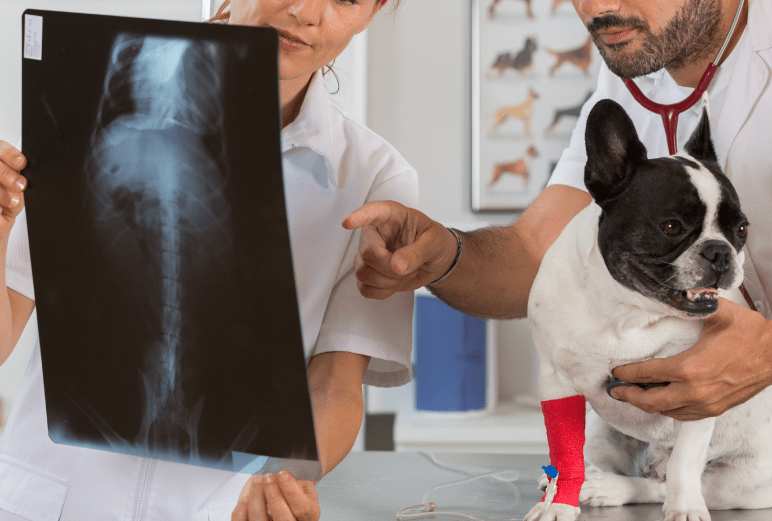
Pacific Veterinary Hospital uses in-house digital radiography to quickly and accurately evaluate your pet’s skeletal system, chest, abdomen, and other internal structures. Digital X-rays produce high-resolution images within seconds, enabling our veterinarians to diagnose conditions and begin treatment without delays from outside referrals. X-ray is one of the most versatile diagnostic tools in veterinary medicine, providing critical information for everything from fracture evaluation to cardiac screening to dental root assessment.
Conditions Digital X-Rays Can Detect
Our veterinarians use radiographic imaging to identify fractures, dislocations, growth plate injuries, and skeletal abnormalities, evaluate heart size and shape for cardiac enlargement or heart failure, assess lungs for pneumonia, fluid accumulation, masses, or metastatic disease, detect swallowed foreign objects — a common emergency in dogs, evaluate abdominal organ size and position, identify bladder and kidney stones, screen for arthritis, hip dysplasia, and degenerative joint disease, evaluate dental health including tooth roots and jaw bone integrity, monitor healing after surgical procedures, and screen for spinal conditions including disc disease and vertebral abnormalities.
Advantages of Digital Radiography
Digital X-ray technology produces images on screen within seconds rather than requiring chemical processing. Images can be enhanced, magnified, and contrast-adjusted to reveal subtle details. Radiation exposure is lower than traditional film. Images are stored electronically and can be shared instantly with specialists for consultation. Speed is especially critical in emergency and urgent care situations where rapid diagnosis directly impacts treatment outcomes.
What to Expect
Your pet is positioned on the X-ray table by trained staff and images are captured in seconds per view. Most pets tolerate X-rays without sedation. Sedation may be recommended for patients in significant pain, extremely anxious animals, or when precise positioning is needed. Multiple views are usually taken for a complete three-dimensional understanding. Results are reviewed immediately and discussed during the same visit. When both X-rays and ultrasound are indicated, both can be performed during the same appointment. Bloodwork is often performed alongside imaging to correlate structural findings with organ function data.
Frequently Asked Questions About Pet X-Rays
Is X-ray radiation harmful to my pet?
Digital X-rays use very low radiation doses — significantly less than older film systems. The diagnostic benefits far outweigh minimal exposure risk. Our equipment uses the lowest effective dose for diagnostic-quality images. Staff members use protective equipment during every procedure to maintain safety standards throughout the imaging process.
Does my pet need sedation for X-rays?
Most pets do not require sedation. Calm patients can be gently positioned for the brief seconds needed per image. Sedation is recommended for pets in significant pain, extremely anxious animals, or when precise positioning is critical for specific diagnostic views requiring the patient to remain completely still during exposure.
How quickly will I get results?
Digital images appear on screen within seconds. Your veterinarian reviews them immediately and discusses findings during your appointment. If specialist interpretation is needed for complex cases, images are transmitted electronically for radiologist review, typically with results returned within twenty-four hours for prompt follow-up with your family.
Can X-rays detect everything wrong with my pet?
X-rays excel at evaluating bones, chest, and general abdominal views. Some conditions require ultrasound for soft tissue detail, bloodwork for organ function, or advanced imaging like CT or MRI. Our veterinarians select the most appropriate diagnostics based on symptoms and combine modalities when necessary for the most accurate and complete diagnosis.
How much do pet X-rays cost?
Costs depend on the number of views and body region imaged. We provide estimates before proceeding and accept CareCredit and most pet insurance plans. In-house X-ray eliminates referral fees, transportation stress, and wait times associated with outside imaging facilities, providing both convenience and cost savings for pet owners.