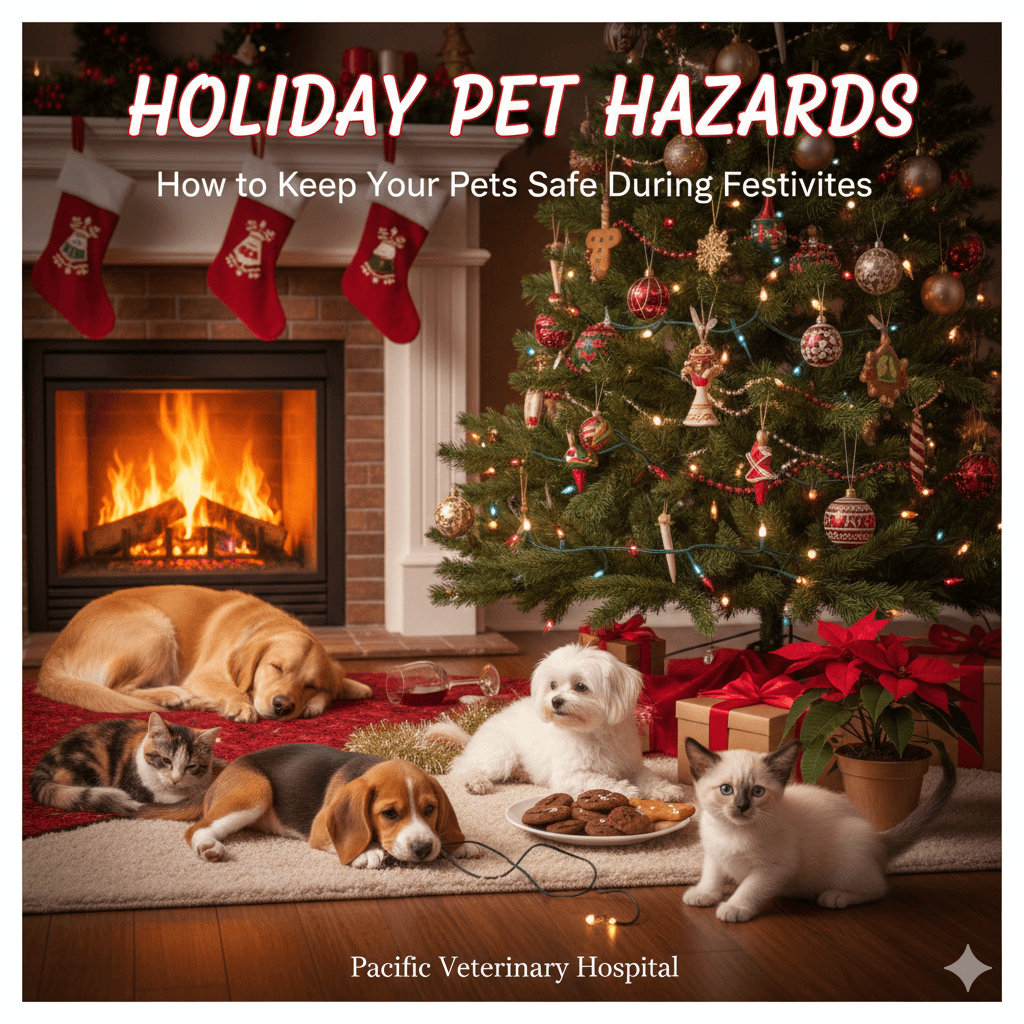
The holiday season brings joy, celebration, and plenty of decorations into our homes. While we’re busy preparing festive meals and decorating our spaces, our furry companions are curious about all these new sights, smells, and tastes. What seems harmless to us can pose serious threats to our pets. Understanding these holiday pet hazards and taking preventive steps can mean the difference between a happy celebration and an emergency visit to your local pet hospital near me open now.
Every year during the holidays, veterinary clinics see a significant spike in pet emergencies. From food poisoning to electrical burns, the festive season presents unique challenges for pet owners. The good news is that most of these incidents are preventable with proper awareness and precautions. Whether you’re celebrating Thanksgiving, Christmas, New Year’s, or any other holiday throughout the year, this guide will help you identify potential dangers and keep your pets safe during festivities.
Common Holiday Foods Toxic to Pets
The holiday table is filled with delicious dishes, but many of these foods can be extremely dangerous for dogs and cats. Pet poisoning prevention during holidays starts with understanding which foods should never be shared with your four-legged friends.
Chocolate and Caffeine
Chocolate tops the list of holiday foods toxic to pets. The darker the chocolate, the more dangerous it becomes. Chocolate contains theobromine and caffeine, both of which are toxic to dogs and cats. Even small amounts can cause vomiting, diarrhea, rapid breathing, increased heart rate, and seizures. Baking chocolate and dark chocolate pose the highest risk because they contain higher concentrations of these compounds.
During holiday baking sessions, keep all chocolate products securely stored away. Don’t leave chocolate desserts unattended on counters where curious pets can reach them. If you suspect your pet has consumed chocolate, contact Pacific Care Pet Emergency immediately. Time is critical in these situations.
Xylitol and Artificial Sweeteners
This sugar substitute is found in sugar-free baked goods, gum, candy, and even some peanut butter brands. Xylitol causes a rapid release of insulin in dogs, leading to dangerous drops in blood sugar levels. Within minutes of ingestion, pets can experience weakness, disorientation, seizures, and liver failure. Always check ingredient labels before sharing any food with your pets.
Grapes, Raisins, and Currants
Holiday fruitcakes, stuffing with raisins, and grape-based dishes can cause kidney failure in dogs. The exact toxic compound remains unknown, but even small amounts can be harmful. Some dogs are more sensitive than others, making it impossible to predict a safe threshold. The safest approach is complete avoidance.
Onions, Garlic, and Chives
These ingredients are common in holiday dishes like stuffing, gravy, and side dishes. They belong to the Allium family and contain compounds that damage red blood cells in pets, potentially leading to anemia. All forms are dangerous, whether raw, cooked, powdered, or dehydrated. Even small amounts consumed regularly can accumulate and cause problems.
Alcohol
Alcoholic beverages and foods containing alcohol are serious holiday dangers for pets. Dogs and cats are much more sensitive to alcohol than humans. Even small amounts can cause vomiting, disorientation, difficulty breathing, coma, and death. Be vigilant about leaving drinks unattended and cleaning up spills immediately.
Fatty Foods and Bones
Rich, fatty holiday meals can trigger pancreatitis in pets, a painful and potentially life-threatening inflammation of the pancreas. Turkey skin, ham fat, buttery dishes, and gravy should stay off your pet’s plate. Cooked bones also present hazards, as they can splinter and cause choking, intestinal blockage, or perforation. Raw turkey and chicken bones pose similar risks.
Other Dangerous Foods
Macadamia nuts, walnuts, raw bread dough, nutmeg, sage, and certain mushrooms can all cause problems ranging from mild stomach upset to serious neurological issues. When in doubt, keep human food away from pets and stick to their regular diet.
Decorative Holiday Pet Hazards
Holiday decorations transform our homes into festive wonderlands, but they also introduce numerous hazards that require careful consideration when you have pets.
Christmas Trees and Ornaments
Real Christmas trees can pose multiple threats. Pine needles are mildly toxic and can puncture intestines if swallowed. The water in tree stands often contains fertilizers, bacteria, and flame retardants that can make pets sick. Cover the tree stand or use a tree skirt to prevent access.
Glass ornaments can shatter if knocked down, creating sharp hazards. Tinsel is particularly dangerous for cats, who are attracted to its shiny, string-like appearance. If swallowed, tinsel can cause linear foreign body obstruction, requiring emergency surgery. Opt for pet-safe ornaments made of wood, felt, or sturdy plastic, and hang fragile decorations higher on the tree where pets can’t reach them.
Electrical Cords and Lights
Curious pets, especially puppies and kittens, may chew on electrical cords from holiday lights. This can cause electrical burns to the mouth and tongue, or even electrocution. Use cord covers, tape cords to baseboards, or apply bitter apple spray to discourage chewing. Unplug lights when you’re not home to supervise.
Candles and Fireplaces
Open flames are obvious dangers. An excited tail can knock over a candle, and cats can jump onto surfaces with lit candles. Use flameless LED candles for a safer alternative. Keep pets away from fireplaces with screens or gates, and never leave them unsupervised around open flames.
Holiday Plants
Several popular holiday plants are toxic to pets. Poinsettias can cause mild stomach upset, though they’re less dangerous than commonly believed. However, lilies are extremely toxic to cats, causing kidney failure even from small exposures. Holly berries can cause vomiting and diarrhea. Mistletoe is highly toxic and can cause cardiovascular problems and death.
Amaryllis can cause vomiting, depression, and tremors. Even Christmas cactus, while less toxic, can still cause stomach upset. Choose pet-safe alternatives or keep these plants completely out of reach. If you’re unsure about a plant’s safety, consult with your wellness checkup provider before bringing it into your home.
Ribbons, Wrapping Paper, and Gift Bags
Cats are particularly drawn to ribbons, yarn, and string, which can cause serious intestinal blockages if swallowed. Dogs may tear into presents and consume wrapping paper, bows, or even small gifts. Keep wrapped presents in areas your pets can’t access, and clean up wrapping materials immediately after opening gifts.
Stress and Anxiety During Holiday Gatherings
Holiday pet care tips extend beyond physical hazards to include your pet’s emotional well-being. The holiday season disrupts normal routines, which can be stressful for pets.
Managing Crowds and Noise
Large gatherings of family and friends can overwhelm pets, especially those who aren’t used to crowds. Loud noises from music, conversation, and children playing can cause anxiety. Some pets may react by hiding, while others might become defensive or try to escape.
Create a quiet, safe space where your pet can retreat during gatherings. This could be a bedroom with their bed, toys, and water. Let guests know that your pet is off-limits in this area. Consider using calming aids like pheromone diffusers or anxiety wraps if your pet is particularly stressed.
Door Dashing and Escapes
With guests arriving and departing frequently, doors open more often than usual. Anxious or curious pets may see an opportunity to dash outside. In unfamiliar territory during stress, even well-trained pets might not respond to recall commands.
Make sure your pets are wearing identification tags with current contact information. Microchipping provides permanent identification that can’t fall off. Keep cats in a separate room during peak arrival and departure times. Brief guests on your pet’s whereabouts and the importance of keeping doors closed.
Changes in Routine
Pets thrive on routine. Holiday activities often disrupt normal feeding times, walk schedules, and sleep patterns. These changes can cause digestive upset, anxiety, and behavioral issues. Try to maintain regular mealtimes and exercise schedules as much as possible. Even during busy holiday preparations, make time for your pet’s normal activities.
Holiday Travel Safety for Pets
If your holiday plans include traveling with your pet, preparation is essential for veterinary holiday pet safety.
Pre-Travel Health Check
Schedule a wellness examination before traveling. Make sure vaccinations are current, especially if you’ll be boarding your pet or visiting areas with different disease risks. Ask about preventive medications for parasites and discuss any travel-related health concerns.
Safe Transportation
Never leave pets alone in vehicles, even for short periods. In cold weather, cars become refrigerators. In warm weather, they become ovens, reaching dangerous temperatures within minutes. Use proper pet restraints like crates, harnesses, or seat belt attachments to keep pets safe during car rides.
Packing for Your Pet
Bring enough food for the entire trip plus extra in case of delays. Sudden diet changes can cause digestive upset. Pack medications, vaccination records, your veterinarian’s contact information, and local emergency veterinary clinic information for your destination. Include familiar items like their bed, toys, and a piece of clothing with your scent to reduce anxiety.
Creating a Pet-Safe Holiday Environment
Prevention in health care extends to creating an environment that minimizes risks before problems occur.
Pet-Proof Your Space
Before decorating, get down to your pet’s eye level and look for potential hazards. Secure loose cords, anchor tall decorations that could tip over, and remove small items that could be swallowed. Think about your specific pet’s behaviors. Does your cat climb? Does your dog jump on furniture? Adjust your decorating strategy accordingly.
Supervise and Redirect
Active supervision prevents many accidents. When you can’t watch your pets closely, confine them to a safe area. Provide appropriate toys and activities to keep them occupied. If your pet shows interest in decorations or dangerous items, redirect their attention to something safe.
Establish Clear Boundaries
Train pets to stay away from certain areas, like the dining table or Christmas tree. Use baby gates to block off rooms with many decorations or hazards. Consistency is important, so enforce these boundaries throughout the holiday season.
Emergency Preparedness: What to Do If Something Goes Wrong
Despite our best efforts, accidents can happen. Knowing how to respond quickly can save your pet’s life.
Recognizing Emergency Signs
Learn to identify signs that your pet needs immediate veterinary attention. These include vomiting or diarrhea, difficulty breathing, seizures, extreme lethargy, loss of consciousness, burns, bleeding that won’t stop, or any sudden behavioral changes. If your pet has consumed something toxic, don’t wait for symptoms to appear.
Having an Emergency Plan
Know the location and hours of your nearest emergency veterinary clinic. Pacific Veterinary Hospital is open daily from 8:30 AM to 8 PM at 6828 Pacific Avenue, Stockton, CA 95207. Save the phone number (209) 474-2444 in your phone for quick access. Keep the ASPCA Poison Control hotline (888) 426-4435 readily available as well.
What Not to Do
Never induce vomiting without veterinary guidance, as this can make some poisonings worse. Don’t give human medications unless specifically instructed by a veterinarian. Avoid home remedies found online without professional verification. Time spent trying unproven treatments can be critical time lost.
First Aid Basics
Keep a pet first aid kit accessible during the holidays. Include gauze, bandages, hydrogen peroxide (only use if directed by a vet), a digital thermometer, tweezers, and your veterinarian’s contact information. Take a pet first aid course to learn basic skills like how to safely transport an injured pet.
Benefits of Health and Wellness Preventive Care
The benefits of health and wellness programs extend far beyond holiday seasons. Regular veterinary care helps identify potential health issues before they become emergencies. Pets with underlying conditions may be more vulnerable to holiday hazards.
Regular Wellness Visits
Annual or biannual wellness checkups allow veterinarians to monitor your pet’s health trends. They can advise on specific vulnerabilities your individual pet might have. For example, pets with diabetes are more sensitive to dietary indiscretions, and those with heart conditions may be more affected by stress.
Flea and Tick Prevention
Don’t neglect flea and tick prevention during holidays, even in winter. These parasites can survive indoors and may be present on visiting pets or in areas you travel to. Maintaining year-round prevention protects your pet and your family from parasite-related diseases.
Dental Health
Good dental health contributes to overall wellness. Pets with dental disease are more susceptible to infections and may be tempted by holiday foods if their regular food causes them discomfort. Regular dental care keeps your pet healthier year-round.
Alternative Treats and Safe Celebrations
Keep pets safe during holidays without excluding them from the fun entirely.
Pet-Safe Holiday Treats
Many companies make holiday-themed treats specifically formulated for pets. You can also prepare simple, safe treats at home using pet-friendly ingredients like plain cooked turkey (no skin or bones), sweet potato, carrots, green beans, or pumpkin. Always introduce new foods gradually and in moderation.
Including Pets in Celebrations
Create special moments for your pets that don’t involve dangerous foods or situations. Let them open a gift filled with new toys. Take a special holiday walk in their favorite park. Set up a photo shoot with pet-safe decorations. These activities make pets feel included while keeping them safe.
Holiday Gifts for Pets
Choose gifts that enhance their quality of life. Puzzle toys provide mental stimulation. Comfortable beds support joint health. Interactive toys promote exercise. Consider experiences like professional grooming, training classes, or even a pet-friendly vacation.
Frequently Asked Questions About Holiday Pet Safety
-
What should I do immediately if my pet eats something toxic during the holidays?
Contact your veterinarian or emergency clinic right away. Don’t wait for symptoms to appear. Have the product packaging available to tell the veterinarian exactly what your pet consumed and approximately how much. Time is critical in poisoning cases, and early treatment improves outcomes significantly.
-
Can I give my pet table scraps during holiday meals?
It’s best to avoid giving pets table scraps, especially during holidays when rich, fatty foods are common. If you want to share, stick to small amounts of plain, cooked lean meat or vegetables like green beans or carrots. Never share anything with bones, seasonings, onions, garlic, or high fat content.
-
How can I tell if holiday stress is affecting my pet?
Signs of stress include hiding, excessive vocalization, changes in eating or bathroom habits, destructive behavior, aggression, or excessive grooming. Some pets may also show physical symptoms like vomiting or diarrhea. If you notice these changes, provide a quiet space and maintain routines as much as possible.
-
Are artificial Christmas trees safer than real trees for pets?
Artificial trees eliminate concerns about tree water and pine needles, but they present their own hazards. Pets can still chew on plastic needles or branches, potentially causing intestinal blockage. Wire branches can injure mouths. The safest approach is to secure any tree properly and supervise pets around it.
-
What emergency supplies should I have on hand during the holidays?
Keep a pet first aid kit with gauze, bandages, tweezers, a digital thermometer, and your veterinarian’s contact information. Have hydrogen peroxide available but only use it to induce vomiting if specifically instructed by a veterinarian. Know the location of the nearest emergency clinic and keep their number saved in your phone.
-
Should I skip decorating if I have pets?
You don’t need to skip decorating entirely. Choose pet-safe decorations, secure them properly, and supervise your pets around them. Place the most hazardous decorations higher up where pets can’t reach. With thoughtful planning, you can enjoy a beautifully decorated home while keeping pets safe.
Long-Term Health Considerations
The holiday season is temporary, but the health decisions you make during this time can have lasting effects on your pet’s well-being.
Weight Management
Holiday overindulgence doesn’t just affect humans. Pets who receive too many treats or table scraps can gain weight quickly. Excess weight stresses joints, contributes to diabetes, and reduces life expectancy. Maintain portion control and resist those pleading eyes at the dinner table.
Digestive System Health
Repeated dietary indiscretions can damage your pet’s digestive system over time. Pancreatitis, once triggered, often recurs. Chronic stomach upset can indicate food sensitivities or underlying conditions. Consistency in diet is one of the best ways to maintain digestive health.
Behavioral Patterns
Behaviors learned during holidays can persist. If you allow jumping on guests or begging at the table during celebrations, your pet may continue these behaviors year-round. Maintain consistent rules and boundaries to avoid creating problematic habits.
Working with Your Veterinarian
Your veterinarian is your best resource for personalized holiday pet safety advice. They know your pet’s medical history, current health status, and specific vulnerabilities.
Before the Holidays
Schedule a pre-holiday checkup to ensure your pet is healthy heading into the season. Discuss any concerns about specific health conditions and how they might affect holiday activities. Update vaccinations if needed, especially if you’ll be traveling or hosting guests with pets.
During the Holidays
Don’t hesitate to call with questions or concerns. If something seems off, trust your instincts. It’s better to check in and have nothing wrong than to wait too long with a real problem. Many practices offer phone consultations for quick questions.
After the Holidays
If your pet experienced any health issues during the holidays, follow up with your veterinarian. Some problems may need continued monitoring or treatment adjustments. Discuss what went well and what was challenging to prepare better for next year.
Making Pet Safety a Year-Round Priority
While this guide focuses on holiday pet hazards, many of these principles apply throughout the year. Creating a safe environment, maintaining routines, preventing access to toxins, and knowing when to seek veterinary care are always important.
The holidays should be a time of joy for the entire family, including our four-legged members. With awareness, preparation, and vigilance, you can enjoy festivities while keeping pets safe during holidays. When you prioritize prevention in health care and stay alert to potential dangers, you create the best possible outcome for everyone.
If you have questions about holiday pet care tips or need assistance with any pet health concern, Pacific Veterinary Hospital is here to help. Located at 6828 Pacific Avenue in Stockton, CA, we’re open daily from 8:30 AM to 8 PM. Whether you need a routine checkup or emergency care, our experienced team is ready to provide the compassionate, expert veterinary care your pet deserves. Call (209) 474-2444 or schedule an appointment online to ensure your pet stays healthy and happy throughout the holiday season and beyond.
Remember, the best gift you can give your pet is the gift of safety, health, and your loving attention. Here’s to a wonderful holiday season with all members of your family, paws and all.