Finding out that your pet needs surgery can feel overwhelming. Whether it was something your vet discovered during a routine visit or the result of an unexpected injury, the moment you hear the word “surgery” it’s natural to have questions — and concerns. Pet surgery in Stockton CA has become increasingly safe and accessible, thanks to modern veterinary techniques and skilled care teams, but that doesn’t make the experience any less stressful for the humans involved. Understanding what the process actually looks like, from the initial conversation with your veterinarian through the recovery period at home, can go a long way toward easing that anxiety.
At Pacific Veterinary Hospital, located at 6828 Pacific Avenue, Stockton, CA 95207, our team handles everything from routine spays and tumor removals to more complex orthopedic procedures. We’ve been caring for Stockton’s dogs and cats since 1981, and our approach to surgical care is built around transparency, preparation, and compassion — for your pet and for you. This guide walks you through every stage of the process so you know exactly what to expect when your animal goes in for an operation.
The First Conversation: When Surgery Gets Recommended
Most surgical recommendations don’t come as a complete surprise. Usually, your veterinarian has noticed something during a wellness checkup — an unusual lump, abnormal bloodwork, restricted movement, or pain during palpation — that warrants further investigation. Other times, surgery follows a more urgent situation, like a traumatic injury or a gastrointestinal obstruction discovered during an emergency visit.
When a surgeon recommends a procedure, don’t hesitate to ask every question that comes to mind. A good veterinarian will explain why surgery is the right course of action compared to other options, what the procedure specifically involves, and what the recovery timeline will realistically look like. You should leave that conversation feeling informed, not rushed. At Pacific Veterinary Hospital, our veterinarians take time with these discussions because we know that a pet owner who understands the plan is far better equipped to help their animal recover afterward.
Pre-Op Evaluation: What Happens Before the Procedure
The pre-op phase is where a lot of the important groundwork gets done. Before your pet ever goes under anesthesia, our team conducts a thorough pre-operative evaluation — often including diagnostic work that gives us a detailed picture of your animal’s current health status. This isn’t just a formality. It’s a critical safety step that helps us identify any hidden conditions that could complicate anesthesia or the procedure itself.
This evaluation typically includes a physical exam, a review of your pet’s medical history, and — in most cases — laboratory diagnostics. Our in-house bloodwork lets us check your pet’s organ function, red and white blood cell counts, and other key markers quickly and accurately, right here in our facility. For some patients, we may also recommend imaging to better understand what we’re dealing with before the first incision. Our in-house ultrasound and in-house X-ray services allow us to visualize soft tissues and bone structure without sending your pet to a separate imaging facility. That means faster answers and less travel stress for your animal.
You’ll also receive specific instructions for the days leading up to surgery. In almost all cases, your pet will need to fast — no food — for at least eight to twelve hours before the procedure. Water restrictions vary depending on the type of surgery. Your veterinarian will give you clear written instructions, but if anything seems unclear, call us at (209) 474-2444 and we’ll walk you through it.
Types of Pet Surgery at Pacific Veterinary Hospital
The range of surgeries performed at our surgical services department covers a broad spectrum of medical needs. Some procedures are elective and planned in advance, while others are urgent responses to illness or trauma. Here’s a look at the categories of surgeries we perform most frequently:
Soft Tissue Surgery
Soft tissue surgery is the most common type of veterinary vet surgery. It involves any procedure that doesn’t directly address the bones or joints. This includes mass and tumor removals, splenectomy (spleen removal), bladder surgery for stones or obstructions, intestinal surgeries, wound repair and reconstruction, and abdominal exploratory procedures. Many of the pets we see for soft tissue surgery are recovering quickly and heading home the same day or the day after.
Orthopedic Surgery
Orthopedic procedures address bones, joints, and connective tissues. These are often needed after traumatic injuries — fractured bones, dislocated joints, torn cruciate ligaments — as well as certain congenital conditions. Orthopedic surgery for pets requires precision and a thorough understanding of anatomy, and recovery periods tend to be longer than soft tissue cases. We’ll work with you to develop a realistic rehabilitation plan based on your pet’s specific procedure and physical condition.
Cryosurgery
Cryosurgery is a minimally invasive approach that uses extreme cold to destroy abnormal tissue — typically small surface tumors, warts, or certain skin lesions. It’s a useful option when the location or size of a growth makes conventional surgery less desirable. Recovery is often faster compared to traditional excision, and scarring is minimal.
Routine Surgical Procedures
Some of the most frequently performed surgeries are those considered routine, including spays and neuters. These procedures do more than prevent unwanted litters — they carry measurable health benefits for your pet, including a reduced risk of certain cancers and infections. If your pet still needs to be altered, our spay and neuter services offer a safe, professional environment with attentive post-operative monitoring.
Understanding Anesthesia and Surgical Monitoring
One of the most common sources of anxiety for pet owners is anesthesia. It’s understandable — anesthesia is serious, and the thought of your pet being unconscious and vulnerable is unsettling. The good news is that veterinary anesthesia has improved substantially over the past two decades, and our protocols are designed to maximize safety at every stage.
Before your pet is anesthetized, we select an anesthetic protocol tailored to their specific species, breed, age, weight, and health status. The pre-op bloodwork we mentioned earlier directly informs this decision. Animals with compromised kidney or liver function, for instance, require different anesthetic choices than a healthy young dog. Your pet receives a pre-anesthetic sedative to relax them and reduce stress, followed by the induction agent. Once they’re under general anesthesia, they’re placed on a heated surgical table and monitored continuously.
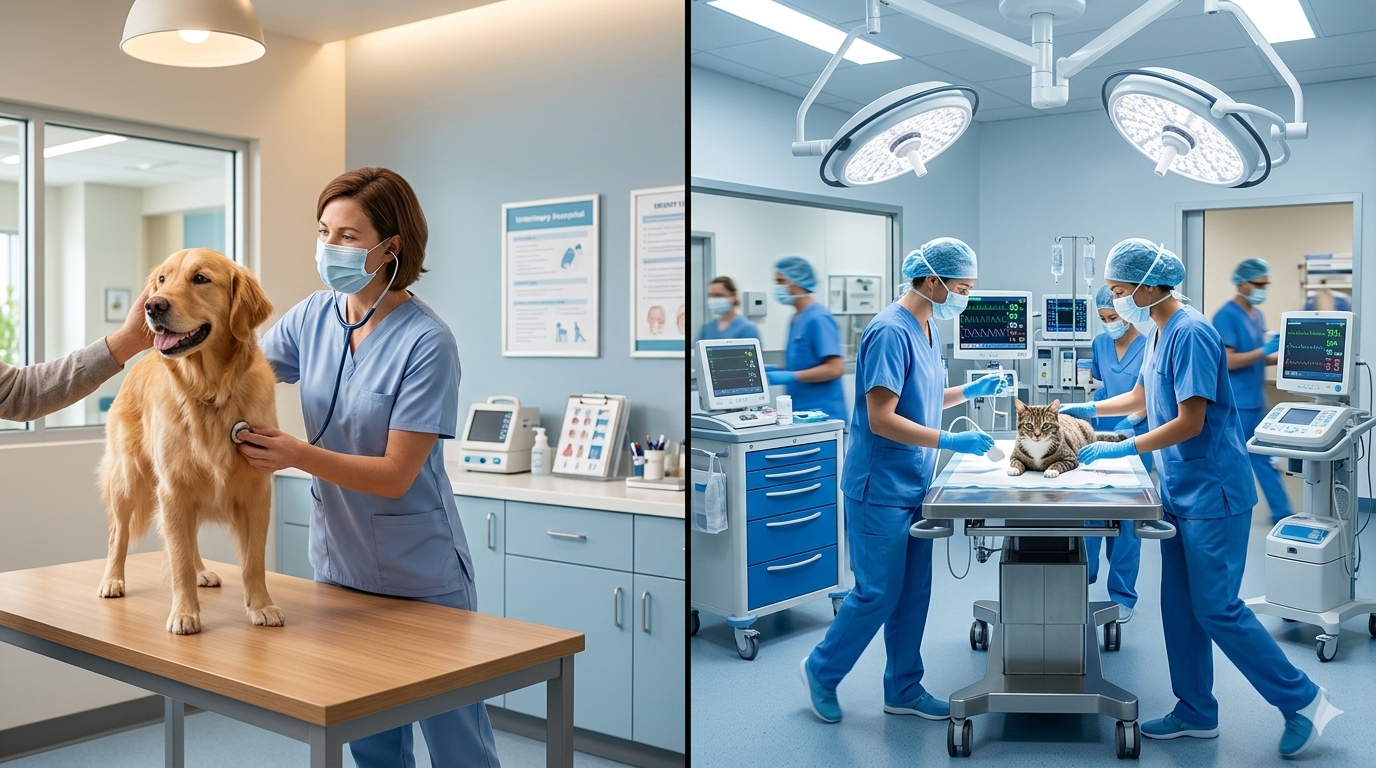
Throughout the procedure, our team tracks your pet’s heart rate, respiratory rate, oxygen saturation, blood pressure, body temperature, and anesthetic depth. Animal monitoring during surgery is not a passive activity at Pacific Veterinary Hospital — it’s an active, ongoing process. A dedicated technician remains with your pet from the moment anesthesia begins until they’ve fully recovered and are comfortable in our supervised recovery area.
Local anesthesia may also be incorporated for certain procedures, particularly dental surgeries or localized tissue work. In these cases, your pet may require a lighter level of sedation, and recovery tends to be quicker.
The Day of Surgery: What to Do and What to Expect
Drop-off for surgery typically happens in the morning during our regular hours. We’re open daily from 8 AM to 8 PM at 6828 Pacific Avenue, Stockton, CA 95207. Bring your pet on an empty stomach (following fasting instructions), and plan to spend a few minutes with our check-in team to review the procedure, sign consent forms, and ask any last-minute questions.
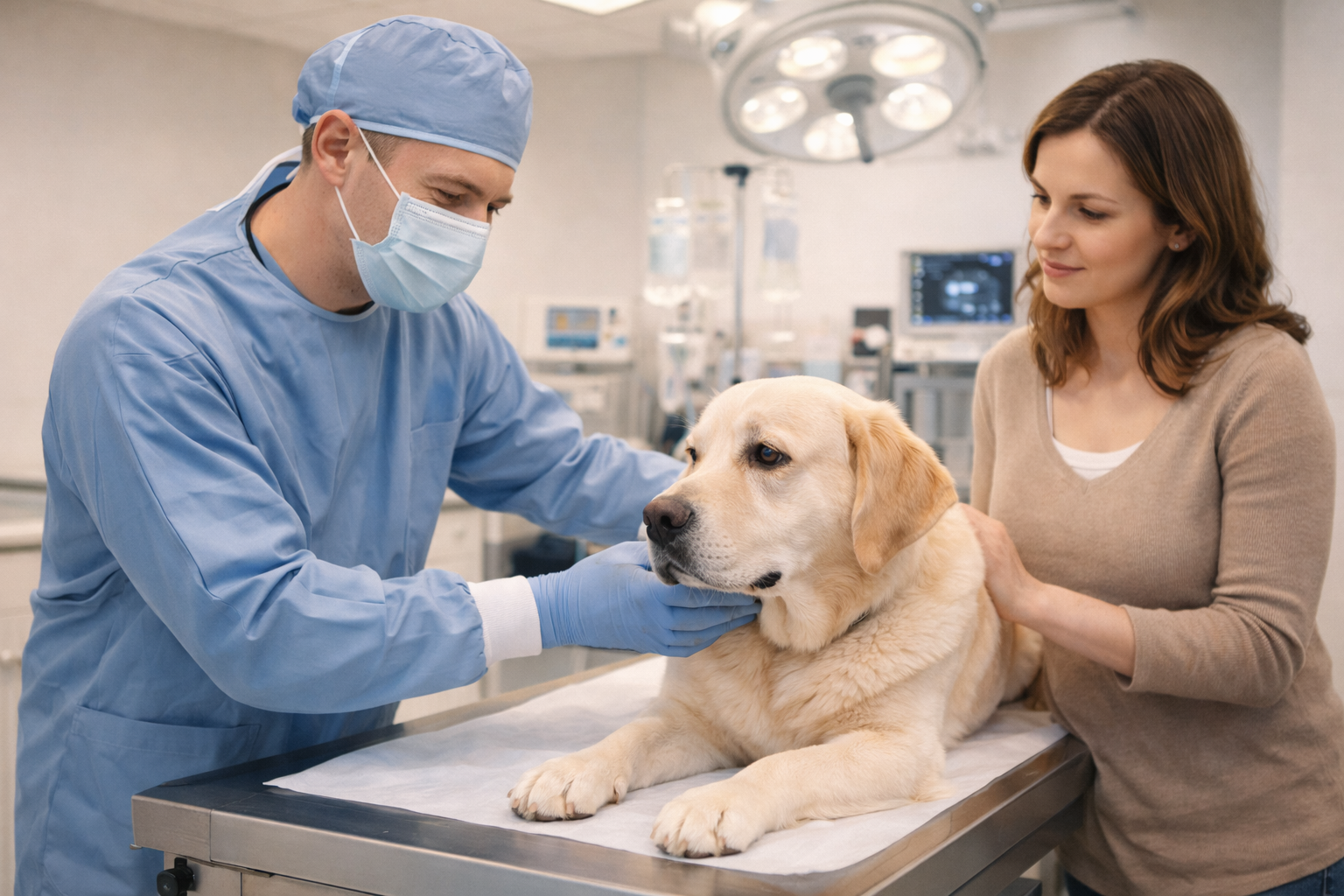
Once your pet is checked in, they’ll be settled into a quiet kennel area to rest until their procedure. When it’s time, they’ll be brought to the prep area, where they’ll receive their pre-surgical sedation and IV catheter placement. The catheter allows us to administer anesthesia and any needed fluids or medications efficiently and with minimal discomfort. From there, the surgery itself proceeds according to the plan your veterinarian has laid out.
You’ll receive an update from our team when the procedure is complete. We encourage owners to make sure we have a current phone number so we can reach you as soon as there’s news. Most owners find the wait is the hardest part — the best advice we can offer is to stay busy and trust that your pet is in good hands.
Recovery at the Clinic: The Hours Right After Surgery
Immediately following surgery, your pet is moved to our recovery area, where they’re closely observed as the anesthesia wears off. This phase can take anywhere from thirty minutes to a few hours depending on the type of anesthetic used, the length of the procedure, and your pet’s individual response. Some animals bounce back quickly; others take longer and remain groggy for several hours.
Pain management is a priority throughout recovery. We use a multimodal approach to analgesia — meaning we combine different types of pain control medications to minimize discomfort while reducing reliance on any single drug. Your pet should not be in significant pain when they come home. If they seem to be struggling despite the medications prescribed, contact us immediately. Undertreated pain slows healing and increases stress.
When it’s time for discharge, one of our technicians will walk you through the post-operative care instructions in detail. You’ll receive information about activity restrictions, wound care, signs of complications to watch for, and your pet’s medication schedule. All prescribed medications are available through our in-house pharmacy, so you won’t need to make a separate stop on your way home.
Recovery Tips: Helping Your Pet Heal at Home
The work doesn’t stop when you leave the clinic. Home recovery is where most of your involvement happens, and doing it well makes a meaningful difference in how quickly and completely your pet heals.
- Restrict activity. This is probably the most important instruction and the hardest to enforce — especially with young, energetic animals. No running, jumping, or rough play until your veterinarian clears it. Leash walks only for dogs. Keep cats confined to a small, calm space. Excessive movement can open incisions, disrupt healing tissue, or cause implants to shift in orthopedic cases.
- Monitor the incision site daily. Some redness and mild swelling directly around a fresh incision is normal. What you’re watching for is progressive swelling, excessive discharge, a foul odor, opening of the wound edges, or your pet repeatedly licking or chewing at the area. An Elizabethan collar (the cone) exists for a reason — use it consistently, especially when you’re not able to directly supervise.
- Follow the medication schedule exactly. Even if your pet seems to be feeling better, don’t stop antibiotics early or skip pain medication doses. Complete the prescribed course. If you notice side effects like vomiting, diarrhea, or unusual lethargy, call us before making any changes.
- Manage the environment. Remove obstacles your pet might try to jump over or through. Keep their resting area clean, quiet, and comfortable. Elevated beds or getting off and on furniture should be avoided until healing is well established.
- Maintain follow-up appointments. Suture removal (if non-absorbable sutures were used) typically happens ten to fourteen days post-surgery. Don’t skip this visit — it’s also a chance for your veterinarian to evaluate healing and catch any minor complications before they become bigger problems.
When to Call — or Come In Right Away
Most pets recover from surgery without major complications, but it’s important to know the warning signs that require prompt veterinary attention. Contact us immediately at (209) 474-2444 if your pet shows any of the following after surgery:
- Pale, white, blue, or gray gums
- Labored or rapid breathing that doesn’t settle
- Collapse or inability to stand
- Significant bleeding from the incision site
- Extreme and worsening lethargy more than 24 hours post-op
- Vomiting or diarrhea that persists beyond the first day
- Swelling or discharge at the incision site that worsens over time
If something happens outside of our regular hours and you believe your pet is in serious distress, please don’t wait. Our emergency and urgent care team is available to help guide you on next steps. We’d rather you call and find out it’s not serious than delay seeking attention when your pet truly needs it.
Why Pet Owners in Stockton Trust Pacific Veterinary Hospital for Surgery
There are a lot of options when it comes to animal hospital surgery in Stockton and the surrounding Central Valley. What sets Pacific Veterinary Hospital apart is the combination of experience, technology, and the genuine care that runs through everything we do. Our facility has been serving this community since 1981 — that’s over four decades of surgical experience, client relationships, and continuous investment in our equipment and team.
Our diagnostic capabilities — including on-site bloodwork, digital X-ray, and ultrasound — mean that your pet isn’t bounced between multiple facilities before a surgical decision is made. We see the full picture, all in one place, and that continuity matters both for accuracy and for the comfort of your animal. Fewer trips, faster answers, and a team that knows your pet’s complete history.
We also understand that pet surgery is never just a medical event for families — it’s an emotional one. Our staff is trained to communicate clearly, check in with pet owners throughout the day, and make sure you never feel left in the dark. If you have a question at any point in the process, we want to hear it.
Frequently Asked Questions About Pet Surgery in Stockton CA
-
How long will my pet stay at the clinic after surgery?
Most routine soft tissue procedures allow for same-day discharge, typically in the afternoon or early evening. More complex surgeries may require an overnight stay or a longer in-clinic recovery period. Your veterinarian will give you a realistic estimate before the procedure.
-
My pet is older. Is surgery still safe?
Age alone is not a disqualifying factor for surgery. Senior pets can and do undergo successful operations regularly. The key is thorough pre-operative assessment — our bloodwork panel and physical evaluation help identify age-related organ changes that can be accounted for in the anesthetic protocol. We approach every senior patient individually.
-
What if my pet already has an underlying health condition?
This is exactly why the pre-op evaluation matters so much. Conditions like kidney disease, heart disease, or diabetes don’t automatically rule out surgery, but they require careful planning and modified protocols. Our team will discuss the specific risks and accommodations with you in detail before proceeding.
-
Will my pet need physical rehabilitation after surgery?
For orthopedic procedures in particular, some form of structured rehabilitation is often recommended. This can include controlled leash exercises, range-of-motion work, and in some cases hydrotherapy. We’ll work with you on a plan that fits your pet’s needs and your schedule.
-
Can I visit my pet while they’re recovering at the clinic?
In many cases, yes — though we do ask that visits be coordinated with our team so we can minimize stress for your pet and other animals in our care. Call us at (209) 474-2444 to discuss the best approach for your specific situation.
Schedule a Surgical Consultation at Pacific Veterinary Hospital
If your pet has been recommended for surgery, or if you’ve noticed something that concerns you and want a professional evaluation, we’re here. At Pacific Veterinary Hospital, our team approaches every animal as an individual and every procedure with the seriousness it deserves. We’ve been a trusted part of this community for over forty years, and we’re committed to giving your pet the surgical care they need with the compassion they deserve.
Location: 6828 Pacific Avenue, Stockton, CA 95207
Phone: (209) 474-2444
Hours: Open Daily, 8 AM – 8 PM (7 days a week)