In-House Ultrasound for Pets in Stockton

At Pacific Veterinary Hospital, we’re proud to offer in-house ultrasound services as part of our diagnostic capabilities. Ultrasound is a safe, non-invasive imaging tool that allows our veterinarians to look inside your pet’s body in real time, providing valuable insights into their health.

What is Ultrasound?

Ultrasound uses sound waves to create detailed images of your pet’s internal organs. This helps us evaluate the heart, liver, kidneys, bladder, and other soft tissues quickly and comfortably, without the need for invasive procedures.

Why It Matters
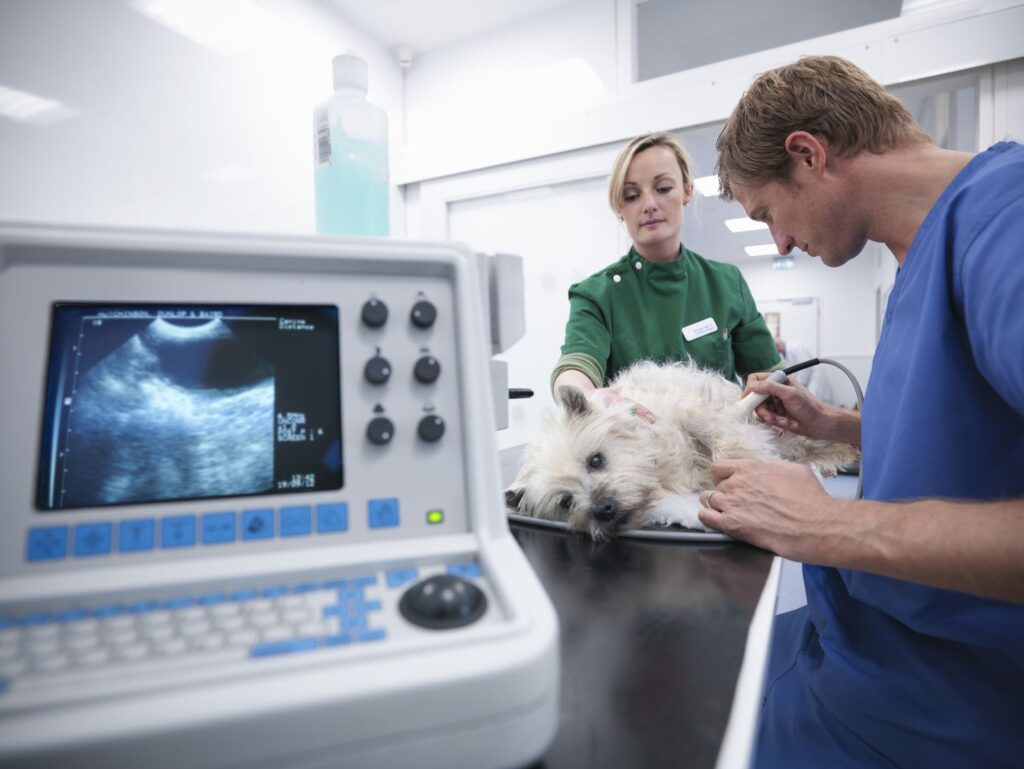
  • Detects internal abnormalities early
  • Helps diagnose urinary or digestive issues
  • Monitors ongoing conditions
  • Guides treatment decisions with accuracy
In-House Ultrasound

Why In-House is Better

Because our ultrasound is available on-site, your pet doesn’t have to travel to another clinic or wait days for results. We can perform the scan during your visit, review the images right away, and move forward with a treatment plan — saving you time and reducing stress for your pet.

What to Expect

Ultrasound is typically quick and stress-free for pets. Most do not require sedation, and results are available immediately, allowing our team to discuss findings with you during your visit.
What is a veterinary ultrasound and how does it work for pets?
A veterinary ultrasound is a non-invasive imaging technique that uses high-frequency sound waves to create images of internal organs, tissues, and blood flow in dogs, cats, and other animals. It helps veterinarians diagnose conditions such as organ disease, pregnancy, tumors, and internal injuries without surgery.
Ultrasound can identify liver, kidney, heart, and bladder problems, detect tumors or cysts, monitor pregnancy, assess abdominal pain, evaluate masses, and guide biopsies. It is a versatile diagnostic tool for both routine and emergency care.
Most pet ultrasounds take between 20 and 45 minutes, depending on the area being examined and whether sedation is required. Complex cases or multiple organ scans may take longer, but your veterinarian will provide a timeline based on your pet’s needs.
Yes. Veterinary ultrasounds are safe, painless, and do not use radiation. Most pets remain calm during the procedure, and sedation is rarely needed unless your animal is anxious or cannot stay still.
Preparation depends on the type of ultrasound. Abdominal ultrasounds usually require fasting for several hours, while other scans, like cardiac ultrasounds, generally do not. Your veterinarian will provide detailed instructions to ensure accurate imaging.
Many veterinary hospitals, specialty animal clinics, and imaging centers offer pet ultrasound services. Searching terms like “ultrasound for pets near me” or “veterinary ultrasound” can help you locate local facilities equipped for safe and accurate imaging.
A regular exam involves a physical check of your pet’s overall health, including vital signs, coat, eyes, ears, and behavior. A veterinary ultrasound provides an internal view of organs and tissues that cannot be detected through a physical exam alone. Ultrasound complements regular checkups and other diagnostic tests.