Digital X-Ray Services for Pets in Stockton

Pacific Pet Clinic provides in-house digital X-ray services to give our veterinarians a clear look at your pet’s bones, chest, and other internal structures. X-rays are an essential diagnostic tool that helps us quickly identify issues and create the right treatment plan.

What is Digital X-Ray?

Digital radiology produces high-quality images of your pet’s skeletal and internal systems. This allows us to detect fractures, foreign objects, tumors, lung conditions, and more.

Why It Matters
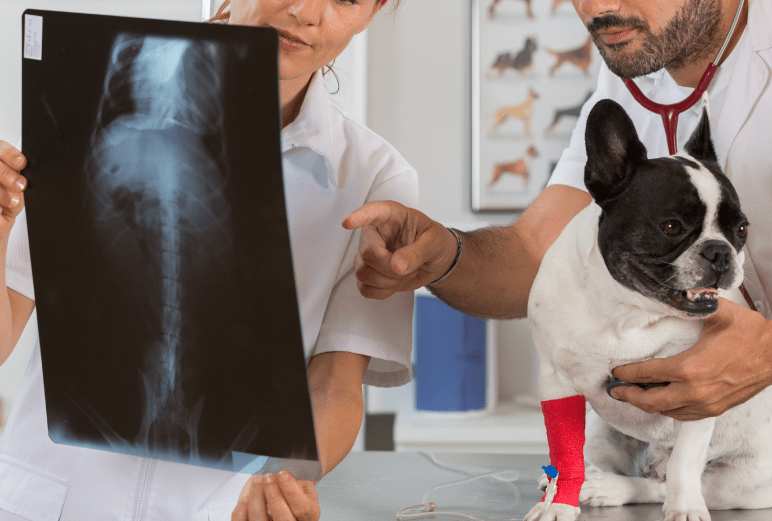
  • Diagnoses injuries such as fractures or dislocations
  • Evaluates chest and abdominal concerns
  • Monitors conditions like arthritis
  • Provides fast, accurate results on-site
In-House X-ray

Why In-House is Better

Having X-rays available in our hospital means your pet can be evaluated right away without being referred elsewhere. Immediate access to imaging allows us to confirm a diagnosis, explain results during your appointment, and begin treatment faster.

What to Expect

The process is quick and painless for your pet. In some cases, mild sedation may be used if your pet is anxious or needs to remain still for clearer imaging.
What is a veterinary X-ray and how is it used for pets?
A veterinary X-ray is a diagnostic imaging technique that uses controlled radiation to create detailed images of your pet’s bones, chest, abdomen, and other internal structures. It helps veterinarians detect fractures, tumors, lung disease, foreign objects, and other internal health conditions.
Digital X-rays provide faster results, higher-quality images, and reduced radiation exposure compared to traditional film X-rays. They allow veterinarians to enhance, zoom, and share images easily for consultations or referrals. Most modern veterinary clinics use digital radiography for improved accuracy.
X-rays can reveal broken bones, arthritis, dental problems, lung infections, heart enlargement, gastrointestinal obstructions, bladder stones, tumors, and other internal issues. They are commonly combined with ultrasounds or lab tests for comprehensive diagnostics.
Most veterinary X-rays take between 5 and 20 minutes per area. Sedation may be used for anxious or uncooperative pets to ensure clear images and safety during the procedure.
Yes. Veterinary X-rays use carefully controlled doses of radiation. Modern digital X-ray equipment further reduces exposure while providing precise imaging. Protective measures are taken for both pets and staff during the procedure.
Preparation depends on the type of X-ray. Abdominal or gastrointestinal X-rays may require fasting, while limb or chest X-rays typically require no special preparation. Your veterinarian will give specific instructions based on the procedure.
Benefits of digital radiology include faster imaging, higher resolution images, reduced radiation exposure, and easy sharing for consultations. A non-benefit would be eliminating the need for veterinary interpretation—professional assessment is still essential for accurate diagnosis and treatment planning.