
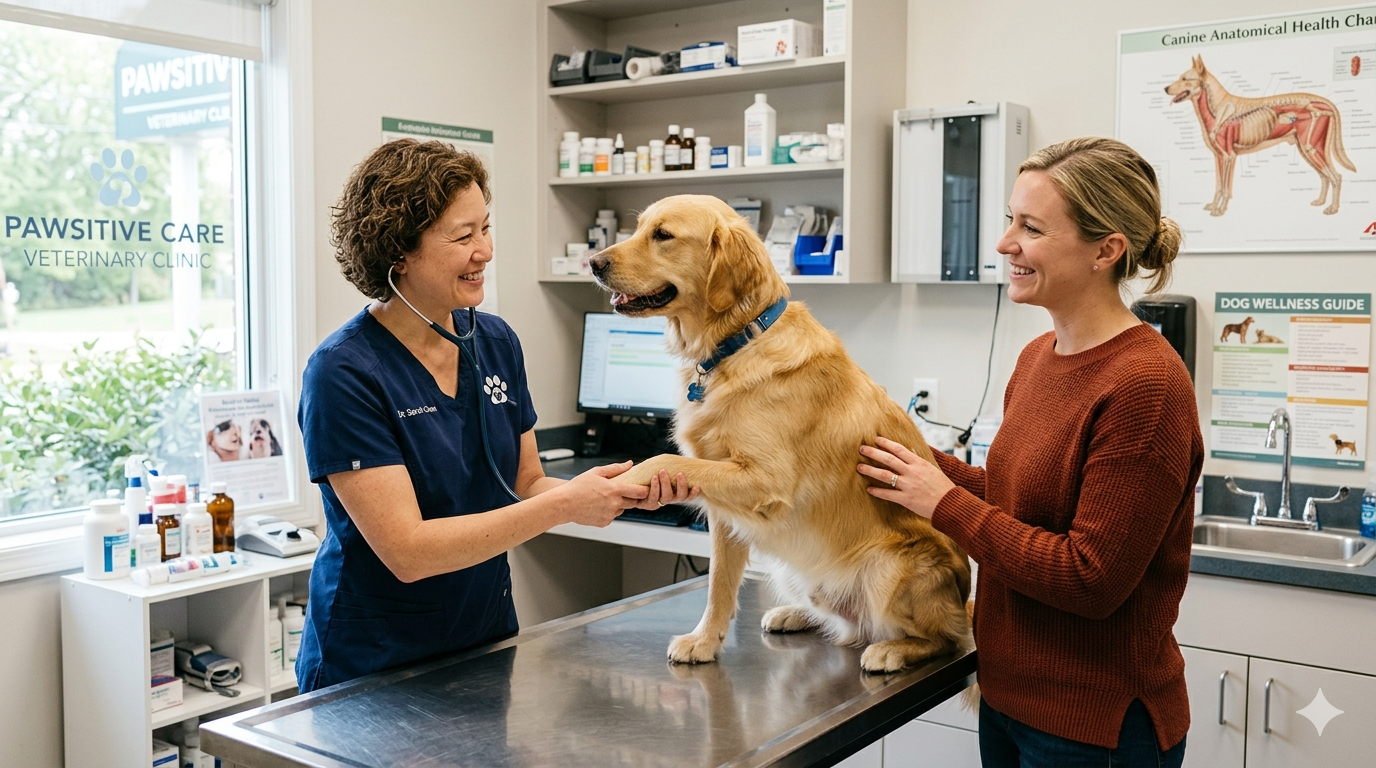
Finding a veterinary hospital that actually handles everything your pet needs — from a simple vaccine update to a midnight stomach emergency — takes more than a quick Google search. Most pet owners in the Stockton area piece together care from two or three different clinics, and that fragmented approach often leads to repeated diagnostic tests, missing medical records, and a whole lot of unnecessary stress for both you and your pet.
At Pacific Veterinary Hospital, we built our practice around a different idea. One hospital, one team, one medical record that follows your pet from their very first puppy visit through their senior years. That continuity of care is not just convenient — it is one of the most important factors in catching health problems early and treating them effectively.
This guide breaks down every major veterinary service category we offer, explains what conditions each one addresses, and helps you understand when your pet actually needs professional attention versus when you can safely wait.
Why a Single Full-Service Hospital Beats Multiple Clinics
Pet owners who search for veterinary services near me usually start with one immediate need — a vaccination, a limp, a weird lump that appeared overnight. The problem is, that single visit rarely tells the full story.
A dog limping on his front leg, for example, might look like a simple sprain on the surface. But a veterinarian who has access to that dog’s dental records, bloodwork history, and previous X-rays can spot patterns a first-time vet visit would miss entirely. Maybe the bloodwork from six months ago flagged early joint inflammation. Maybe the dental cleaning last year revealed gum disease that has since progressed and is contributing to systemic issues.
That kind of longitudinal insight only comes from a hospital that handles everything in-house. According to the American Veterinary Medical Association, establishing a relationship with a single veterinary practice significantly improves long-term health outcomes for companion animals. We have seen that play out firsthand over our 40-plus years serving Stockton families.
Preventive Wellness Exams: Where Everything Starts
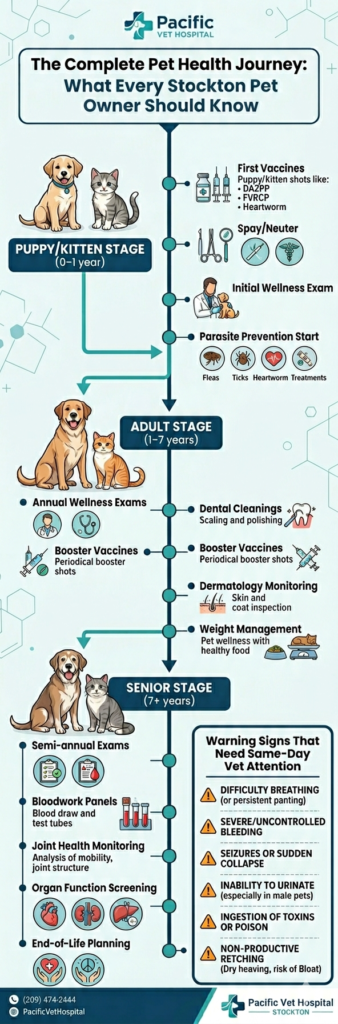
Routine preventive care is, hands down, the single most cost-effective investment you can make in your pet’s health. A comprehensive wellness checkup catches problems while they are small, treatable, and far less expensive to address.
During a standard wellness exam, our veterinarians evaluate your pet’s weight and body condition, heart and lung function, dental health, coat and skin quality, joint mobility, and abdominal palpation for any internal abnormalities. We also review vaccination status, discuss parasite prevention strategies, and talk through any behavioral changes you have noticed at home.
The American Animal Hospital Association recommends annual wellness exams for healthy adult pets and semi-annual visits for senior animals, puppies, and kittens. Pets age much faster than humans, and a year between checkups is roughly equivalent to five to seven human years. A lot can change in that window.
Here in Stockton, we commonly identify early-stage dental disease, weight-related joint stress, and undiagnosed parasite infections during routine exams — conditions that would have escalated into serious and expensive problems without intervention.
Dental Care: The Most Overlooked Health Issue in Pets
If there is one area of pet health that owners consistently underestimate, it is dental disease. By the time most dogs and cats reach age three, some degree of periodontal disease is already present according to research published in the Merck Veterinary Manual. Left untreated, the bacteria from infected gums can enter the bloodstream and damage the heart, kidneys, and liver.
Our dental care services include full oral examinations, professional scaling and polishing under anesthesia, tooth extractions when necessary, and dental radiographs to evaluate what is happening below the gumline — where roughly 60 percent of dental disease hides.
Signs that your pet needs a dental evaluation sooner rather than later include persistent bad breath, difficulty chewing or dropping food, swollen or bleeding gums, pawing at the mouth, and excessive drooling. If you have been noticing any of these, do not wait for your next annual visit.
Many Stockton pet owners searching for dog dental cleaning near me are surprised to learn that a professional cleaning involves far more than scraping tartar off the visible tooth surfaces. The procedure includes subgingival cleaning, polishing, and a thorough assessment of every tooth — the same standard of care you would expect from your own dentist.
Skin and Coat Conditions: Veterinary Dermatology
Stockton’s warm climate, combined with the agricultural environment surrounding the Central Valley, creates a perfect storm for pet skin issues. Allergies, hot spots, chronic ear infections, fungal conditions, and parasitic infestations are among the most frequent reasons pet owners walk through our doors.
Our pet dermatology services address the underlying cause of skin problems rather than simply masking symptoms with medications. That means skin scrapings, cytology, allergy testing, and targeted treatment plans that might include medicated baths, dietary changes, or immunotherapy depending on the diagnosis.
Stockton pet owners often notice seasonal patterns — itching that flares in spring and fall, ear infections that worsen during irrigation season, or coat thinning that does not improve with over-the-counter supplements. Those patterns point to environmental allergies, and they respond best to professional veterinary management rather than guesswork.
Spay, Neuter, and General Surgical Services
Reproductive surgeries remain among the most impactful veterinary procedures for long-term pet health. Spaying eliminates the risk of pyometra — a life-threatening uterine infection — and dramatically reduces mammary tumor incidence in female dogs and cats. Neutering reduces roaming behavior, inter-dog aggression, and the risk of certain cancers in males.
Our spay and neuter procedures include pre-surgical bloodwork, individualized anesthesia protocols, continuous monitoring during the operation, and post-operative pain management. Every patient is treated with the same level of care regardless of the procedure’s routine nature.
Beyond reproductive surgeries, our veterinary surgery capabilities cover soft-tissue procedures such as mass removals, gastrointestinal foreign body retrieval, bladder stone surgery, and hernia repairs. Orthopedic cases that require specialty referral are coordinated directly with board-certified surgeons, and we handle all follow-up care in-house.
The question we hear most often from pet owners in Stockton is whether their animal truly needs surgery or whether a wait-and-see approach is appropriate. That answer depends entirely on diagnostics — which is exactly why having imaging, bloodwork, and surgical capabilities under one roof matters.
Vaccinations: The First Line of Defense
Vaccination protocols are not one-size-fits-all. A puppy living in an apartment has different exposure risks than an adult hunting dog spending weekends in the Delta. Our vaccinations program tailors core and non-core vaccines to each pet’s age, breed, lifestyle, and geographic risk factors.
Core vaccines for dogs in the Stockton area include distemper, parvovirus, adenovirus, and rabies. The Centers for Disease Control and Prevention classifies rabies vaccination as a critical public health measure — it is required by California state law for all dogs. Non-core vaccines such as Bordetella, leptospirosis, and canine influenza are recommended based on your pet’s individual exposure profile.
For cats, core vaccines include feline panleukopenia, calicivirus, herpesvirus, and rabies. Indoor cats still benefit from core vaccination because viruses can enter homes on shoes, clothing, and through screened windows.
Keeping vaccination records current also matters practically. Boarding facilities, groomers, dog parks, and travel across state lines all require proof of current vaccination status.
Emergency and Urgent Veterinary Care
Pet emergencies rarely happen at convenient times. A dog that swallows a sock on a Saturday evening or a cat that stops urinating on a holiday morning needs immediate attention — not an answering machine message.
Our emergency and urgent veterinary care services bridge the gap between routine appointments and true life-threatening crises. We accept walk-in urgent cases throughout our operating hours, staffed with veterinarians who have access to in-house diagnostics, imaging, and a fully equipped treatment area.
Common urgent presentations we see include persistent vomiting or diarrhea lasting more than a few hours, sudden lameness or inability to bear weight, allergic reactions causing facial swelling or hives, suspected toxin ingestion (chocolate, grapes, rodent bait, household chemicals), urinary blockages in male cats, and eye injuries or sudden vision changes.
Not every concerning symptom is an emergency, but waiting too long can turn a treatable condition into a critical one. If you are unsure whether your pet’s situation qualifies as urgent, calling our team for guidance is always the right move. For a deeper look at recognizing true emergencies, our guide on when to visit an emergency vet in Stockton walks through the specific warning signs and what to expect during an urgent visit.
In-House Diagnostics: Faster Answers When They Count
Sending lab work to an outside reference laboratory means waiting hours or even days for results. When your pet is sick, that delay is not just inconvenient — it is potentially dangerous.
Our hospital runs bloodwork, urinalysis, fecal testing, digital X-rays, and ultrasound imaging on-site. That means your veterinarian can review results during the same appointment, make a diagnosis, and begin treatment without sending you home to wait anxiously by the phone.
In-house diagnostics also play a critical role in pre-surgical screening, monitoring chronic conditions like diabetes or kidney disease, and evaluating emergency patients who need rapid assessment. The ASPCA recommends that pet owners prioritize veterinary hospitals with on-site diagnostic capabilities, particularly for senior pets and animals with known health conditions, because speed of diagnosis directly influences treatment success.
Choosing the Right Pet Hospital in Stockton
If you are actively searching for veterinary services in Stockton or a pet hospital near me, there are a few practical factors worth considering beyond just proximity and reviews.
First, look for a hospital that offers comprehensive services under one roof. Fragmented care across multiple clinics creates gaps in communication, duplicated testing, and inconsistent treatment plans. Second, confirm that the hospital has in-house diagnostic capabilities — if they have to send out every blood panel and X-ray, critical hours can be lost during urgent situations. Third, ask about availability. Pets do not schedule their illnesses around normal office hours, and a veterinarian in Stockton CA with broad availability — including evenings and non-traditional hours — provides a meaningful safety net.
Finally, consider the relationship. The veterinarian who sees your pet for a routine wellness exam should be the same team available when something goes wrong. That continuity builds a medical history that makes every future diagnosis faster and more accurate. If budget is a concern, our affordable veterinary care in Stockton guide outlines the most cost-effective approach to keeping your pet healthy without cutting corners on quality.
Pacific Veterinary Hospital has served Stockton families since 1981. Our hospital at 6828 Pacific Avenue is equipped with a full diagnostic suite, surgical capabilities, an in-house pharmacy, and a team that treats every pet with the same care we would give our own. You can reach us at (209) 474-2444 to schedule an appointment or walk in for urgent needs.
Frequently Asked Questions About Veterinary Services
-
What veterinary services does a full-service pet hospital typically offer?
A full-service animal hospital provides preventive wellness exams, dental cleanings and oral surgery, vaccinations, spay and neuter procedures, soft-tissue and orthopedic surgery, dermatology, emergency and urgent care, in-house diagnostic imaging including X-rays and ultrasound, laboratory bloodwork, pharmacy services, and end-of-life care. The key advantage is having all of these capabilities centralized so your pet’s entire medical history stays with one team.
-
How often should I bring my pet in for a veterinary checkup?
Healthy adult dogs and cats should visit a veterinarian at least once per year for a comprehensive wellness exam. Puppies, kittens, and senior pets over seven years old benefit from visits every six months because health conditions develop and progress faster at both ends of the age spectrum. Pets with chronic conditions such as diabetes, kidney disease, or allergies may need quarterly monitoring depending on their treatment plan.
-
When should I take my pet to urgent care versus a 24-hour emergency vet?
Urgent care covers situations that are serious and time-sensitive but not immediately life-threatening — persistent vomiting, sudden lameness, minor allergic reactions, or suspected mild toxin ingestion. True emergencies include uncontrolled bleeding, active seizures, difficulty breathing, severe trauma, or complete inability to urinate. If your pet’s life is at immediate risk outside our operating hours, head to the nearest 24-hour emergency facility and follow up with us the next day.
-
Do veterinary hospitals in Stockton treat both dogs and cats?
Yes. Most full-service veterinary hospitals in Stockton provide medical, surgical, and preventive care for both dogs and cats of all breeds and ages. Some hospitals also treat small mammals, pocket pets, and exotic species. When choosing a veterinarian near me, confirm that their team has experience with your specific pet type and that their facility is equipped to handle the diagnostic and treatment needs relevant to your animal.
-
What should I look for when searching for veterinary services near me?
Prioritize hospitals that offer comprehensive care under one roof, including diagnostics, surgery, dental, and urgent services. Confirm they maintain in-house laboratory and imaging equipment for rapid results. Check their availability — a clinic with broad access beyond standard office hours provides critical flexibility. Read recent reviews from other Stockton pet owners, and ask whether they accept your pet insurance provider. Building a long-term relationship with one hospital leads to better, more consistent care.
