
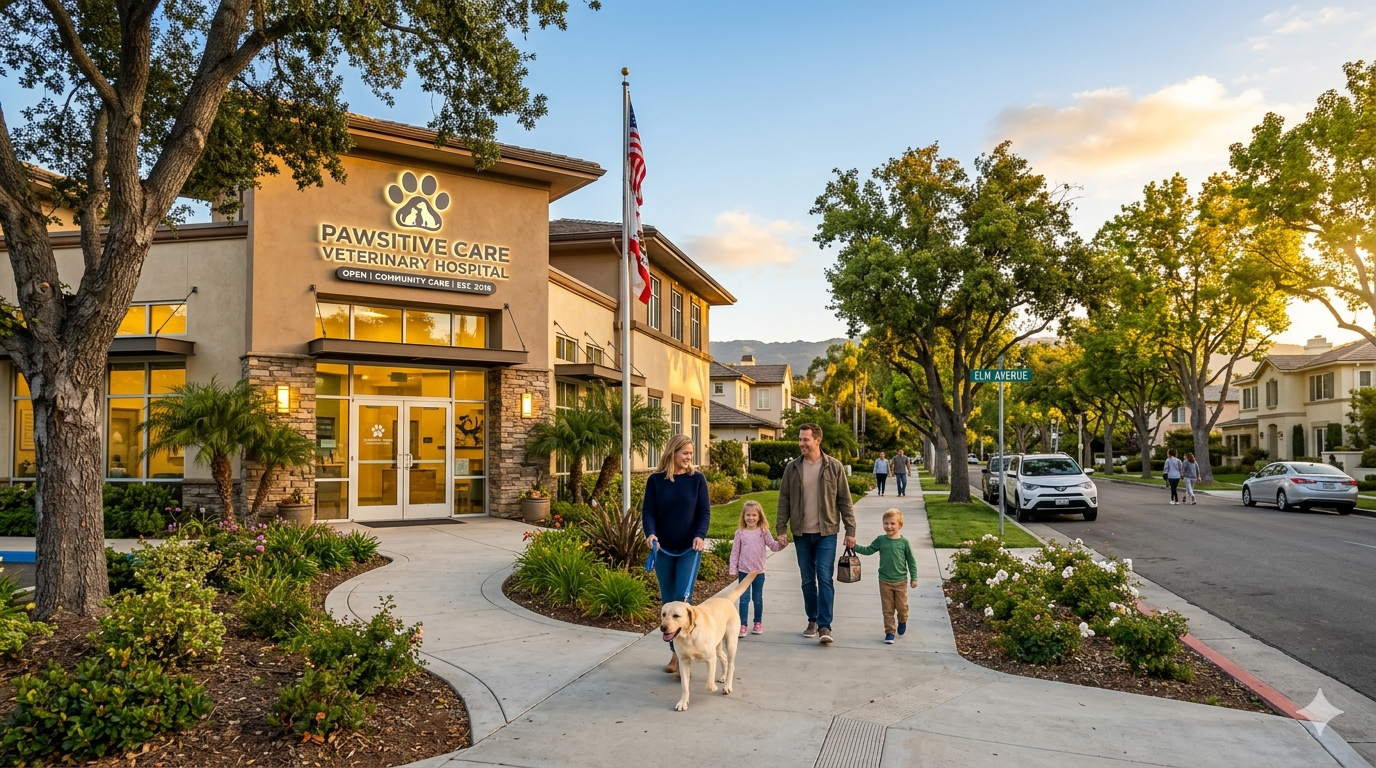
Stockton has changed a lot over the past four decades. Neighborhoods have expanded, families have grown, and the city itself has evolved in ways nobody fully predicted back in the early 1980s. One thing that has stayed consistent, though, is the role that pets play in Stockton households. Dogs greet kids at the door after school. Cats curl up on windowsills overlooking Pacific Avenue. Rabbits, hamsters, and the occasional guinea pig find their way into bedrooms across the city.
Behind every healthy pet in Stockton is a veterinary team that knows the animal’s history, understands the local environmental risks, and genuinely cares about getting things right. Pacific Veterinary Hospital has filled that role for more than 40 years, and this guide explains exactly how we do it — from preventive wellness exams through emergency situations and every stage of life in between.
A Stockton Veterinary Practice Built on Four Decades of Trust
When a veterinary hospital stays rooted in the same community for over 40 years, something meaningful happens. The veterinarian who vaccinated your childhood dog might be the same team caring for your own children’s first puppy. That kind of generational continuity matters more than most people realize.
We have treated pets through Stockton’s growth, watched neighborhoods around the Pacific Avenue corridor develop, and adapted our services as veterinary medicine advanced. From manual X-ray processing in our early years to the in-house digital diagnostics we rely on today, the tools have changed dramatically. What has not changed is the relationship between our team and the families who walk through our doors.
According to the American Veterinary Medical Association, pets with a consistent veterinary home receive better preventive care, experience fewer emergency events, and live longer on average. That aligns with everything we have observed across four decades of practice in the Stockton area.
Preventive Care: The Backbone of Community Pet Health
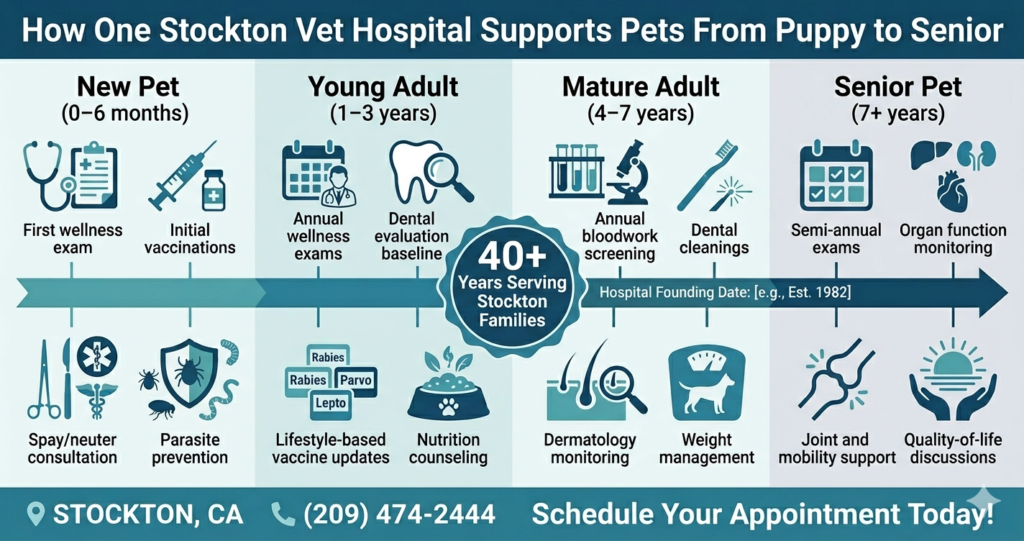
The single most impactful thing any pet owner in Stockton can do is commit to regular wellness checkups. That sounds obvious, and yet preventive care remains the most underutilized service in veterinary medicine. Too many pet owners wait until something goes visibly wrong before scheduling an appointment.
A routine wellness exam at our hospital goes well beyond the basics. Our veterinarians assess body condition, cardiovascular and respiratory health, dental status, skin and coat quality, joint function, abdominal organs by palpation, and neurological reflexes. We review parasite prevention, discuss nutritional needs based on your pet’s life stage, and update vaccination schedules according to current guidelines from the American Animal Hospital Association.
Stockton’s Central Valley climate presents specific health challenges that pet owners elsewhere may never encounter. Extended warm seasons mean year-round flea and tick pressure. Agricultural runoff and irrigation patterns create environments where leptospirosis exposure increases for dogs who frequent outdoor areas near waterways. Valley fever — caused by the Coccidioides fungus in Central California soil — is a real risk that many pet owners are unaware of until their dog develops a persistent cough that does not respond to standard treatment.
These are the kinds of regional nuances that only a local veterinarian in Stockton CA would recognize and screen for proactively. A veterinarian practicing in coastal San Francisco or mountain communities around Tahoe would not be thinking about the same risk profile.
Dental Health: A Quiet Epidemic in Stockton Pets
Walk into any veterinary hospital in the country and you will hear the same statistic: the majority of dogs and cats over age three have some form of dental disease. Stockton is no exception. Our team sees advanced periodontal disease on a daily basis, often in pets whose owners had no idea anything was wrong because their animal was still eating normally.
Our dental care program includes comprehensive oral exams, professional cleaning under anesthesia, digital dental radiographs, extractions when teeth are beyond saving, and post-procedure pain management. We also counsel pet owners on at-home dental maintenance — because the work that happens between professional cleanings matters just as much as the cleanings themselves.
Untreated dental disease does not stay in the mouth. The Merck Veterinary Manual documents a well-established connection between chronic oral infection and damage to the heart, liver, and kidneys. When bacteria from diseased gums enter the bloodstream, they can seed infection in organs throughout the body. This is preventable, and it starts with paying attention to dental health long before the symptoms become obvious.
Spay and Neuter: Serving the Broader Stockton Community
Stockton, like much of the Central Valley, faces ongoing challenges with pet overpopulation. Shelters operate near capacity, and stray animals present public health concerns across multiple neighborhoods. Spay and neuter surgeries remain the most effective tool for addressing this issue at the community level.
Our spay and neuter services go beyond simple population control. Spaying female dogs and cats eliminates the risk of pyometra and dramatically reduces mammary cancer incidence. Neutering males lowers the likelihood of prostate problems, reduces territorial aggression, and decreases the urge to roam — which in turn reduces the risk of vehicle trauma and dog fights.
Every spay and neuter procedure at our hospital includes pre-surgical bloodwork, individualized anesthesia protocols, intraoperative monitoring, and post-surgical pain management. The Humane Society of the United States considers spay and neuter surgery one of the most important decisions a pet owner can make, both for the individual animal’s health and for the welfare of the broader animal community.
For Stockton families researching community resources, our guide on affordable veterinary care in Stockton covers options including county-supported programs and subsidized clinic events that operate periodically in the area.
Vaccinations: Protecting Against Regional Threats
Vaccination is not a one-size-fits-all conversation, and a responsible veterinarian in Stockton CA will tailor protocols based on where the animal lives, how it spends its time, and what diseases are actively circulating in the region.
Our vaccinations program covers core vaccines — distemper, parvovirus, adenovirus, and rabies for dogs; panleukopenia, calicivirus, herpesvirus, and rabies for cats — alongside non-core vaccines selected based on individual risk assessment. Leptospirosis and canine influenza vaccines, for example, are strongly recommended for Stockton dogs who frequent parks, boarding facilities, or areas near standing water.
Rabies vaccination is legally required for all dogs in California, as outlined by the California Department of Food and Agriculture. Beyond the legal requirement, rabies is a fatal zoonotic disease — meaning it can transfer from animals to humans. Keeping your pet’s rabies vaccination current protects your family as much as it protects your pet.
When Emergencies Happen: Urgent Care for Stockton Families
No amount of preventive care can eliminate emergencies entirely. Dogs eat things they should not. Cats fall from heights that looked perfectly safe. Senior pets develop sudden complications from conditions that were being managed just fine the week before.
Our emergency and urgent care services exist for exactly these moments. We handle walk-in urgent cases throughout our operating hours, supported by in-house diagnostics including X-rays, ultrasound, and rapid-turnaround bloodwork. That means we can evaluate, diagnose, and begin treatment during a single visit rather than sending you home to wait for results from an outside laboratory.
Common urgent presentations from Stockton pet owners include acute vomiting and diarrhea, suspected toxic ingestion — chocolate, grapes, rodenticides, and antifreeze are the most frequent culprits — urinary obstruction in male cats, sudden lameness after trauma, and allergic reactions causing facial swelling or respiratory distress.
Recognizing emergency symptoms early makes a measurable difference in outcomes. Our detailed guide on recognizing pet emergency signs explains the specific warning signals that warrant immediate veterinary attention versus symptoms that can safely wait for a scheduled appointment.
Supporting Pets Through Every Life Stage — Including the End
One of the hardest conversations we have with Stockton families is also one of the most important. When a pet reaches the end of their life — whether from terminal illness, advanced age, or declining quality of life — families deserve honest guidance and compassionate support.
Our hospice and euthanasia services prioritize your pet’s comfort and your family’s emotional needs. Hospice care involves individualized pain management plans, nutritional support, mobility assistance, and regular quality-of-life assessments. When the time comes for euthanasia, the procedure is gentle, painless, and carried out with dignity. Families are welcome to be present throughout the process, and aftercare options including private cremation and memorial keepsakes are coordinated entirely by our team.
We do not rush end-of-life decisions, and we do not make them for you. Our veterinarians provide objective quality-of-life assessments, help you understand what your pet is experiencing, and give you the space and information you need to make the right choice on your own terms.
In-House Diagnostics and Pharmacy: Eliminating the Runaround
One of the most frustrating experiences in veterinary care is being told your pet needs a test, a medication, or a specialist consultation — and then being sent somewhere else to get it. That fragmented approach wastes time, adds stress, and delays treatment.
Our hospital operates a complete on-site diagnostic suite and in-house pharmacy. Bloodwork, urinalysis, fecal screening, digital X-rays, and ultrasound imaging are all performed on the same day, during the same visit. Prescriptions are filled before you leave. If follow-up diagnostics are needed to monitor a chronic condition, everything happens under one roof with one medical record.
That matters most during urgent situations. A pet who arrives vomiting blood does not benefit from waiting 48 hours for reference lab results. On-site diagnostics allow our team to move from evaluation to diagnosis to treatment within hours rather than days. The ASPCA identifies diagnostic speed as one of the most important factors in successful treatment of acute veterinary conditions.
What Stockton Pet Owners Should Know When Choosing a Vet
Whether you recently moved to Stockton or you have lived here for decades and your previous veterinarian retired, choosing a new vet involves more than reading online reviews.
Look for a hospital that offers genuinely comprehensive services. A clinic that handles wellness exams but refers out dental work, surgery, and diagnostics means your pet’s care will be scattered across multiple facilities with no central coordination. Ask about in-house capabilities specifically — if the hospital cannot run bloodwork or take X-rays on-site, urgent situations will always require a second trip.
Consider accessibility. When your pet needs help, the last thing you want is a voicemail directing you to try again tomorrow. A pet hospital near me with broad availability and walk-in capacity for urgent cases provides real peace of mind that a strictly appointment-only practice cannot match.
And think about the long game. The veterinarian who knows your pet’s entire medical history — every vaccine, every blood panel, every minor concern you mentioned in passing — is in the strongest position to catch problems early and treat them effectively. That relationship compounds over time, and it starts with choosing a hospital that you and your pet can grow with.
Pacific Veterinary Hospital is located at 6828 Pacific Avenue, Stockton, CA 95207. To schedule an appointment or ask questions, call (209) 474-2444. We also accept walk-ins for urgent cases throughout our operating hours.
Frequently Asked Questions
-
What makes Pacific Veterinary Hospital different from other vets in Stockton?
Pacific Veterinary Hospital has served the Stockton community since 1981, building over four decades of local trust and experience. Our hospital provides comprehensive care under one roof — wellness exams, dental services, surgery, vaccinations, urgent care, diagnostics, and an in-house pharmacy. That eliminates referrals to outside facilities and keeps your pet’s entire medical history with a single team who knows them personally.
-
How do I know if my pet needs urgent veterinary care or can wait for a regular appointment?
Persistent vomiting, bloody stool, difficulty breathing, sudden inability to walk, suspected poisoning, seizures, and urinary blockage all warrant immediate veterinary attention. If your pet is acting slightly off — eating less, sleeping more, or showing mild lethargy — monitor for 24 hours and schedule an appointment if symptoms persist. When in doubt, call your veterinarian in Stockton CA for phone guidance before deciding.
-
Are vaccinations really necessary for indoor cats in Stockton?
Yes. Indoor cats still need core vaccinations because viruses can enter your home on shoes, clothing, and open windows. Rabies vaccination is required by California state law regardless of whether your cat goes outside. Core feline vaccines protect against panleukopenia, calicivirus, and herpesvirus — all of which can cause serious illness even in cats that never leave the house.
-
What should I look for when searching for a veterinarian near me in Stockton?
Prioritize a hospital with in-house diagnostics, on-site pharmacy, surgical capabilities, and walk-in availability for urgent cases. Confirm the practice treats your specific type of pet and has experience with breed-specific health concerns. A veterinary hospital with broad operating hours and a long community track record offers both convenience and the continuity of care that leads to better long-term health outcomes.
-
Why is a long-term relationship with one veterinary hospital important for my pet?
Continuity of care allows your veterinarian to track subtle changes in your pet’s health over months and years — weight trends, blood panel shifts, behavioral patterns, and developing conditions that would be invisible during a single visit at an unfamiliar clinic. That accumulated knowledge leads to earlier detection, more accurate diagnoses, and treatment plans informed by your pet’s complete medical history rather than a snapshot.
