
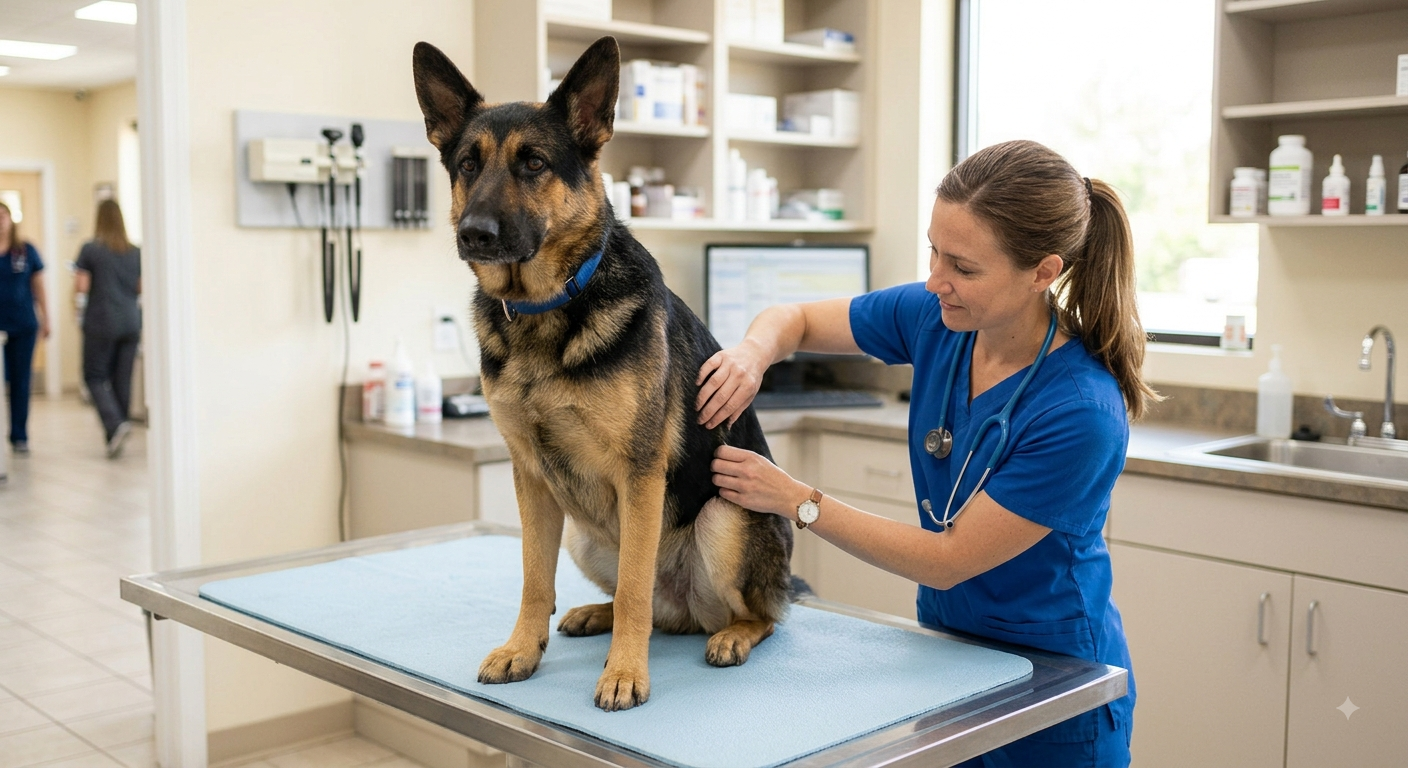
If you own a German Shepherd, there is a good chance you have already dealt with some version of the scratching, licking, or recurring hot spots that seem to follow this breed everywhere. German Shepherds are one of the most allergy-prone breeds in veterinary medicine, and their skin issues tend to be more stubborn and more complicated than what shows up in many other dogs. This guide walks through why the breed struggles so much with skin problems, what the most common conditions look like, and how a dog allergy vet at Pacific Veterinary Hospital approaches diagnosis and treatment for Stockton-area German Shepherds.
Why German Shepherds Are Prone to Skin Problems
German Shepherds did not end up at the top of the allergy list by chance. Research into the breed has identified specific genetic and physical traits that make them unusually susceptible to skin disease compared to the average dog.
A Genetic Predisposition to Allergies
German Shepherds are considered a high-risk breed for canine atopic dermatitis, the chronic allergic skin condition triggered by everyday environmental allergens like pollen, dust mites, and mold. Studies looking at the breed’s genetics have found that German Shepherds tend to have lower serum IgA levels than other breeds, which appears to play a role in why their immune systems overreact to allergens that most dogs tolerate without issue. This same immune sensitivity also contributes to the breed’s tendency toward food allergies and a unique, difficult-to-treat bacterial skin infection known as German Shepherd pyoderma.
The Double Coat Factor
Beyond genetics, the German Shepherd’s dense double coat works against them here. That thick undercoat traps pollen, dust, moisture, and bacteria close to the skin, creating an environment where allergens linger longer and infections have an easier time taking hold. Combined with an already sensitive immune system, this is part of why German Shepherds so often develop skin flare-ups that other breeds might shake off.
According to the American Veterinary Medical Association, allergies are one of the most common medical conditions affecting dogs, and correctly identifying the trigger is central to effective treatment. Genetic research published through the National Institutes of Health has confirmed German Shepherds as a high-risk breed for canine atopic dermatitis, with measurable differences in immune markers compared to dogs of other breeds. This research helps explain why skin issues in German Shepherds so often need a more structured diagnostic approach rather than a one-size-fits-all treatment.
Common Skin Issues in German Shepherds
Several distinct conditions show up again and again in this breed, often overlapping in the same dog.
Atopic Dermatitis (Environmental Allergies)
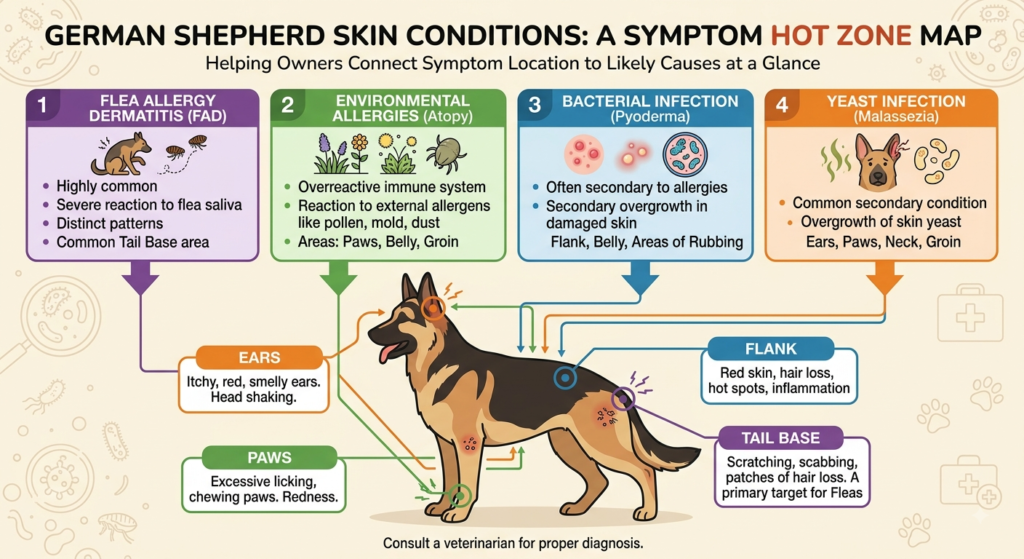
This is the most frequently diagnosed skin condition in German Shepherds. Signs typically begin between six months and three years of age and include itching around the face, ears, paws, and belly, along with recurring ear infections. Because atopic dermatitis is driven by environmental allergens, symptoms often follow a seasonal pattern, though some dogs react to allergens present year-round, like dust mites.
Food Allergies and Sensitivities
Food allergies frequently occur alongside environmental allergies in German Shepherds rather than as a standalone issue. Signs include itching that does not follow a seasonal pattern, chronic ear infections, and sometimes mild digestive upset. Identifying a food allergy usually requires a structured elimination diet trial rather than an at-home guess, since the breed’s overlapping conditions can easily be confused with one another.
Flea Allergy Dermatitis
Even a single flea bite can trigger an outsized reaction in a dog with flea allergy dermatitis, causing intense itching, redness, and hair loss, particularly around the lower back, tail base, and rear legs. In a warm region like Stockton, where fleas remain active for much of the year, consistent prevention is one of the simplest ways to reduce this risk.
German Shepherd Pyoderma
This is a deep bacterial skin infection that veterinary dermatology researchers consider unique to the breed. It typically begins over the lower back near the tail and can spread if left untreated, presenting as pustules, crusting, and painful, thickened skin. Because it is so closely tied to underlying allergies, hormonal imbalances, or immune irregularities, resolving it usually means identifying and managing the root trigger, not just treating the infection itself.
Recognizing the Early Signs
Skin conditions in German Shepherds often overlap, which makes early pattern recognition genuinely useful for owners trying to figure out what they are dealing with.
| Symptom Pattern | Most Likely Cause | Typical Onset |
|---|---|---|
| Itchy face, ears, and paws, seasonal | Atopic dermatitis | 6 months to 3 years |
| Itching year-round, ear infections, mild GI upset | Food allergy | Any age |
| Itching at tail base and lower back after outdoor time | Flea allergy dermatitis | Any age, worse in warm months |
| Pustules and crusting over the lower back or spreading | German Shepherd pyoderma | Often secondary to allergy |
When to See a Dog Allergy Vet vs Manage at Home
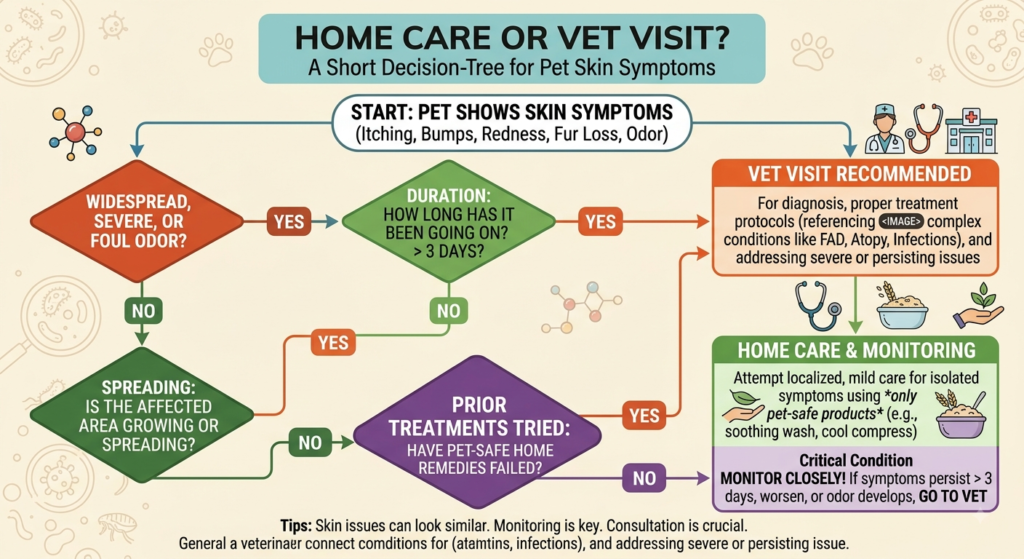
Mild, occasional itching after a day outside is usually nothing to worry about. A veterinary evaluation becomes worthwhile when scratching, licking, or chewing becomes persistent, when hair loss or open sores appear, when your dog develops a strong odor from the skin or ears, or when the same problem keeps returning despite over-the-counter shampoos or supplements. German Shepherds in particular tend to have layered skin problems, so what looks like a simple hot spot can be sitting on top of an undiagnosed allergy that will keep causing flare-ups until it is properly identified.
It is also worth paying attention to how quickly a skin issue is progressing. A small area of redness that stays localized and improves within a day or two can often be watched at home with gentle cleaning. A hot spot that spreads rapidly, becomes increasingly painful, or is accompanied by lethargy or fever needs same-day attention rather than a wait-and-see approach, since these secondary bacterial infections can worsen quickly on a dog with an already compromised skin barrier.
Case Study: Managing Chronic Pyoderma in a German Shepherd
A three-year-old German Shepherd was brought to our hospital after months of recurring hot spots along his lower back that kept returning despite repeated rounds of antibiotics from a previous clinic. His owner had tried multiple over-the-counter shampoos and supplements in the meantime, with only brief improvement each time before the lesions returned. Rather than simply prescribing another course of antibiotics, our veterinary team performed skin cytology and a full dermatological workup, which revealed an underlying environmental allergy driving the recurring infections.
Once the atopic dermatitis was identified and brought under control with a combination of allergy management and targeted antimicrobial therapy, the pyoderma resolved and has not returned. This case reflects a pattern our team sees often in the breed: treating the visible infection without addressing the allergy underneath it almost always leads to the same problem coming back within weeks or months. Cases like this are part of why we recommend a full dermatological workup for any German Shepherd with skin infections that keep recurring, rather than repeating the same antibiotic course each time symptoms flare.
How Our Veterinary Dermatology Team Diagnoses Skin Issues
When a German Shepherd comes in for a skin evaluation, our team starts with a detailed history covering symptom onset, seasonal patterns, diet, flea prevention, and whether other pets in the household are affected. A full physical exam of the skin, coat, ears, and paws follows, along with skin cytology to check for bacterial or yeast overgrowth. Depending on the presentation, we may also recommend allergy testing, a skin scrape to rule out mites, or a structured diet trial to isolate a possible food allergy. Our veterinary dermatology team builds each treatment plan around the underlying cause rather than only addressing surface symptoms, which matters especially for a breed prone to overlapping conditions like the German Shepherd.
According to the American College of Veterinary Dermatology, veterinary dermatologists receive additional training specifically in skin, ear, and allergy disorders, which is why complex or treatment-resistant cases are sometimes referred to a specialist. Ongoing clinical research summarized in the Journal of the American Veterinary Medical Association continues to refine how veterinarians diagnose and manage food allergies in dogs and cats, reinforcing why an elimination diet trial remains the most reliable diagnostic tool available for this condition.
Ear Infections: The Overlooked Skin Symptom
Ear infections are one of the most commonly overlooked signs of skin allergies in German Shepherds. Because the ear canal is lined with skin, it reacts to the same allergens and irritants that affect the rest of the body, which means recurring ear infections are frequently a symptom of an underlying allergy rather than an isolated ear problem.
Why the Ears Flare Up
Atopic dermatitis and food allergies both commonly trigger inflammation inside the ear canal, creating a warm, moist environment where yeast and bacteria multiply quickly. Owners often notice head shaking, scratching at the ears, a strong odor, or dark discharge before they notice any skin changes elsewhere on the body. Treating the ear infection alone without addressing the allergy driving it usually means the infection returns within a few weeks.
What a Thorough Workup Looks Like
When a German Shepherd presents with recurring ear infections, our team evaluates the ears alongside the rest of the skin rather than treating them as a separate issue. Ear cytology helps confirm whether yeast, bacteria, or both are present, which guides medication selection. If the ear infections keep recurring despite appropriate treatment, that pattern itself is often the clue that an underlying allergy needs to be identified and managed.
Treatment Options for German Shepherd Skin Allergies
Treatment depends heavily on which condition or combination of conditions is driving the symptoms. Environmental allergies are often managed with a combination of targeted anti-itch medications, regular bathing with medicated shampoo, and in some cases allergen-specific immunotherapy, which gradually desensitizes the immune system to identified triggers over a period of months. Food allergies require a structured elimination diet followed by careful reintroduction to confirm the trigger, typically using a novel protein or hydrolyzed prescription diet for a minimum of eight to twelve weeks before any conclusions can be drawn. Flea allergy dermatitis responds well to consistent, year-round flea prevention paired with anti-itch relief during flare-ups. For infections like German Shepherd pyoderma, targeted antimicrobial therapy addresses the infection while the underlying allergy is brought under control in parallel, since treating one without the other tends to produce only temporary improvement.
Our in-house pharmacy stocks commonly prescribed dermatological medications, so your dog’s treatment plan can typically begin the same day as the appointment rather than requiring a separate trip. In cases where a hot spot has become severely infected, swollen, or is causing significant pain, our emergency and urgent care team is available to see your dog the same day rather than waiting for a scheduled dermatology appointment.
Preventing Flare-Ups: Home Care Tips for Pet Skin Care
Consistent pet skin care between veterinary visits makes a real difference in how often German Shepherds experience flare-ups. Because this breed’s skin issues tend to be chronic rather than one-time events, the goal at home is not to eliminate every flare-up but to reduce their frequency and severity while staying alert to early warning signs. A few habits worth building into your routine:
- Brush your dog several times a week to remove loose hair, dander, and trapped allergens from the double coat
- Stay current on year-round flea and tick prevention rather than only during warmer months
- Bathe with a vet-recommended, gentle or medicated shampoo rather than human products, which can disrupt the skin barrier
- Keep a symptom log noting when itching worsens, since seasonal patterns can help identify environmental triggers
- Avoid switching diets frequently, since inconsistent nutrition makes it harder to isolate a true food allergy if one develops
- Check the ears weekly for odor, redness, or discharge, since ear flare-ups often precede or accompany skin symptoms
- Dry your dog thoroughly after swimming or bathing, since trapped moisture in the double coat encourages bacterial and yeast growth
Frequently Asked Questions
-
When should I see a dog allergist instead of my regular vet?
A dog allergist, or veterinary dermatologist, is typically involved when skin issues are recurring, severe, or not responding to standard treatment. Most primary care veterinarians, including our team, can diagnose and manage the majority of allergy and skin cases directly. Referral to a board-certified specialist usually comes into play only for the most complex, treatment-resistant cases requiring advanced allergy testing.
-
What does good pet skin care look like for an allergy-prone dog?
Good pet skin care includes regular brushing to remove trapped allergens, consistent year-round flea prevention, bathing with a vet-approved shampoo, and monitoring for early signs like redness or excessive licking. For breeds like German Shepherds, catching flare-ups early and addressing the underlying allergy rather than just the symptoms leads to noticeably better long-term skin health.
-
What is veterinary dermatology and when does my dog need it?
Veterinary dermatology is the branch of veterinary medicine focused on diagnosing and treating skin, ear, and coat conditions, including allergies, infections, and autoimmune skin disease. Your dog may benefit from a dermatology evaluation if they have persistent itching, recurring skin or ear infections, unexplained hair loss, or skin problems that keep returning despite previous treatment attempts.
-
How do I find a good dermatology veterinarian near me?
Start with your regular veterinarian, since most general practices, including ours, offer in-house dermatology services covering the majority of skin and allergy cases. Look for a clinic with in-house diagnostic tools like skin cytology and allergy testing, since these allow for faster, more accurate diagnosis without needing to wait on outside lab referrals for every case.
-
Are German Shepherds really more prone to skin allergies than other breeds?
Yes. Genetic research has consistently identified German Shepherds as a high-risk breed for canine atopic dermatitis, and the breed also has a unique susceptibility to deep bacterial skin infections known as German Shepherd pyoderma. This combination of genetic sensitivity and a dense double coat that traps allergens makes skin issues considerably more common in this breed than in many others.
-
Can German Shepherd skin allergies be cured completely?
Most allergy-driven skin conditions in dogs, including German Shepherds, are managed rather than cured outright, much like allergies in people. With consistent management, including appropriate medication, diet, and flea prevention, most dogs experience long stretches of comfortable, healthy skin with only occasional flare-ups instead of constant symptoms.
Pacific Veterinary Hospital, 6828 Pacific Avenue, Stockton, CA 95207, (209) 474-2444
