
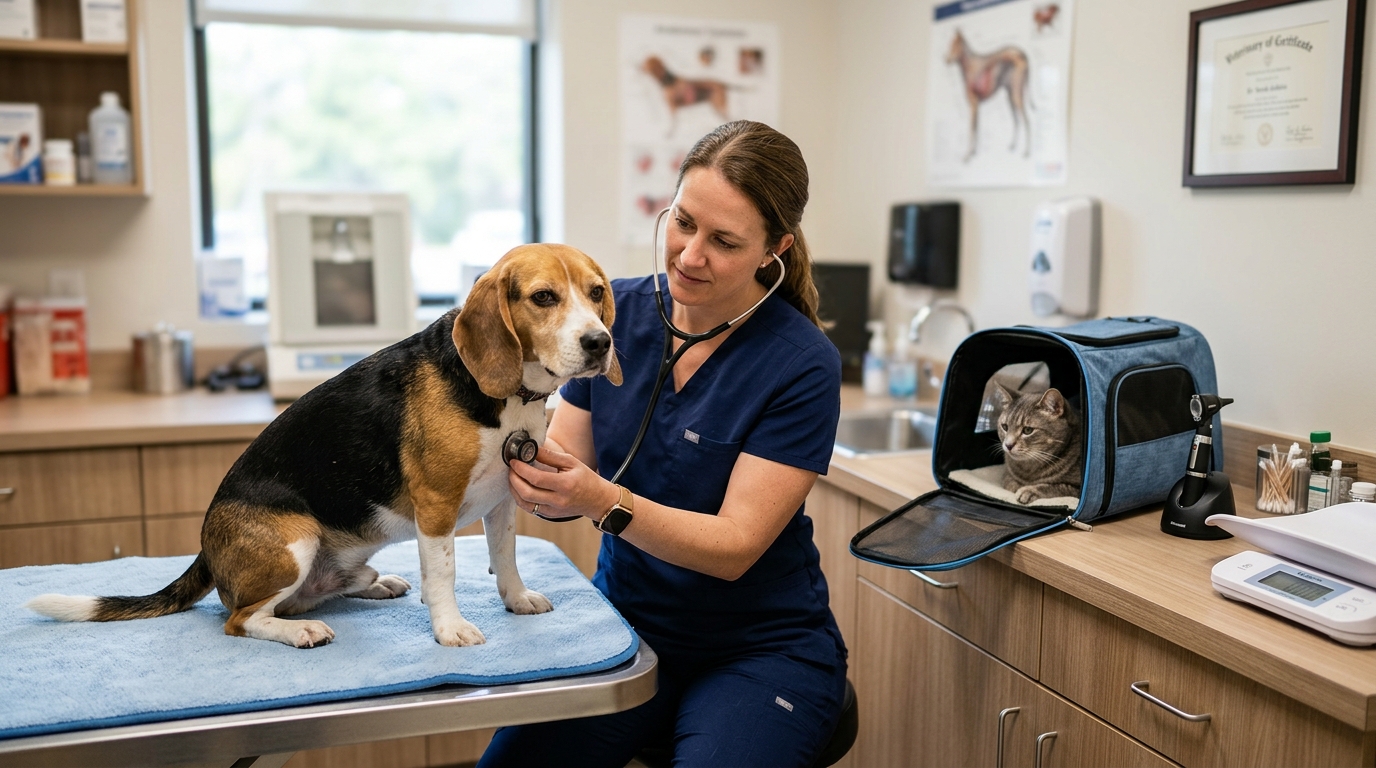
Dogs and cats are very good at looking fine when they are not. A cat with early kidney disease still eats breakfast. A dog with a painful tooth still chases the ball. A yearly pet health checkup is how those quiet problems get found while they are still small, and if you are looking for a vet near me in Stockton to handle it, this guide from Pacific Veterinary Hospital explains exactly what happens during the visit, which tests matter at each life stage, and how to get the most out of every appointment.
Why Pets Hide Illness Until It Is Advanced
Hiding weakness is an old survival instinct. In the wild, an animal that looks sick becomes a target, so dogs and cats tend to mask discomfort until a problem is too big to hide. By the time an owner notices weight loss, drinking more water, or a change in energy, the condition behind it has often been developing for months.
Pets also age faster than people. A single year can represent several years of change in a dog or cat’s body, which means a lot can shift between one checkup and the next. That is why veterinary organizations recommend a pet check up at least once a year for healthy adults, and more often for seniors.
What Your Vet Checks: The Nose-to-Tail Exam
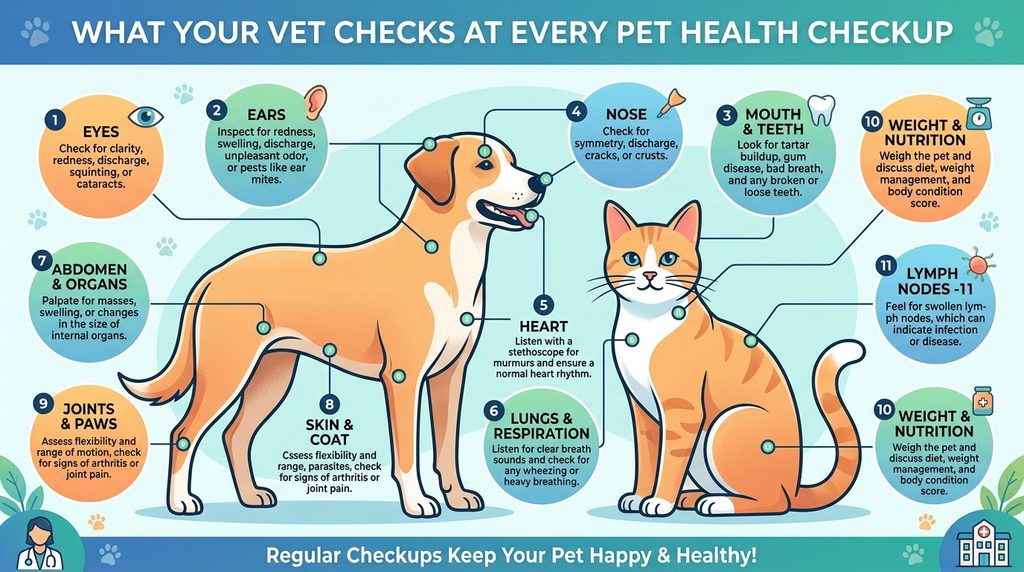
A good wellness check for dogs and cats follows the same pattern every time, so nothing gets skipped. Here is what your veterinarian is looking at, and what each step can reveal.
1. History and conversation. The visit starts with questions about appetite, thirst, bathroom habits, energy, behavior, diet, and any medications or supplements. Small details, such as a dog that now hesitates on the stairs, often point the exam in the right direction.
2. Weight and body condition. Your pet is weighed and given a body condition score. Weight gain strains joints and raises the risk of diabetes. Unexplained weight loss can be an early sign of thyroid, kidney, or dental disease.
3. Vital signs. Temperature, heart rate, and breathing rate give a baseline for your pet. Having those normal numbers on file makes it much easier to spot changes later.
4. Eyes and ears. Your vet checks for cloudiness, redness, discharge, and changes in pupil response. Ears are examined for infection, mites, and debris, a common issue in dogs with allergies or floppy ears.
5. Mouth and teeth. Tartar, red gums, broken teeth, and oral masses are all checked. Dental disease is one of the most common findings at a dog check up, and infected gums can affect the heart, liver, and kidneys over time.
6. Heart and lungs. Listening with a stethoscope can pick up murmurs, irregular rhythms, and abnormal lung sounds long before a pet shows coughing or exercise intolerance.
7. Abdomen and lymph nodes. Gentle palpation checks the size and shape of organs and looks for masses, pain, or bloating. Enlarged lymph nodes can signal infection or, in some cases, cancer.
8. Skin and coat. Lumps, hair loss, itching, fleas, and hot spots are noted. Any new lump should be measured and recorded so changes can be tracked.
9. Joints, muscles, and mobility. Your veterinarian watches how your pet walks and feels the joints for pain, swelling, or reduced range of motion. Early arthritis is easier to manage than advanced arthritis.
10. Neurological check. Basic reflexes, balance, and responsiveness are assessed, which matters more as pets age.
Screening Tests That Go Beyond the Physical Exam
The hands-on exam finds a lot, but some problems only show up in lab work. This is where preventive pet screening in Stockton, CA earns its place. Results from in-house testing are often available during the same visit, so a plan can be made right away.
| Test | What It Checks | Who Usually Needs It |
|---|---|---|
| Complete blood count (CBC) | Anemia, infection, inflammation, platelet levels | Adults yearly, seniors more often |
| Chemistry panel | Kidney, liver, blood sugar, protein, electrolytes | Adults yearly, seniors more often |
| Thyroid screening | Overactive thyroid in cats, underactive thyroid in dogs | Middle-aged and senior pets |
| Urinalysis | Kidney function, urinary infection, crystals, diabetes | Seniors and pets with urinary changes |
| Fecal test | Intestinal parasites | Puppies, kittens, and adults yearly |
| Heartworm test | Heartworm infection in dogs | All dogs yearly |
The American Heartworm Society recommends testing every dog every year, even dogs on year-round prevention, since missed or late doses happen more often than most owners realize.
Annual Pet Checkup Needs by Life Stage
A pet’s needs change a lot between the first year and the senior years. The AAHA canine life stage guidelines and the AAHA and AAFP feline life stage guidelines both shape their recommendations around these stages. For cats, the feline guidelines call for exams at least once a year through mature adulthood and every six months once a cat is a senior.
| Life Stage | Typical Age | Visit Frequency | Main Focus |
|---|---|---|---|
| Puppy or kitten | Birth to 1 year | Every 3 to 4 weeks during the vaccine series | Vaccines, deworming, growth, socialization, spay or neuter timing |
| Young adult | 1 to 6 years | Once a year | Weight, dental health, parasite prevention, booster vaccines |
| Mature adult | About 7 to 10 years | Once a year, with baseline bloodwork | Early detection of kidney, liver, thyroid, and joint changes |
| Senior | Over 10 years (earlier for large dogs) | Every 6 months | Organ function, arthritis, weight loss, cognitive changes, blood pressure |
Senior pet care in Stockton, CA works best when visits move to every six months. Kidney disease, diabetes, hyperthyroidism, and some cancers progress quickly in older pets, and six months can be the difference between a diet change and a hospital stay.
Wellness Exam vs Sick Visit vs Emergency
Not every vet visit serves the same purpose. Understanding the difference helps you know when to book a routine appointment and when to act faster.
| Visit Type | When It Happens | Goal |
|---|---|---|
| Wellness exam | On a schedule, when your pet seems healthy | Prevention, early detection, vaccines, baseline records |
| Sick visit | When you notice a new symptom | Diagnose and treat a specific problem |
| Emergency visit | Sudden, severe, or life-threatening signs | Stabilize and treat immediately |
If your pet collapses, has trouble breathing, is straining to urinate, or has been hit by a car, skip the wait for an appointment and contact an emergency vet in Stockton right away.
Pet Wellness Exam Benefits Owners Often Overlook
Most owners think of the checkup as “shots and a weigh-in.” The real value is broader:
- A baseline for your pet. Normal bloodwork and weight from a healthy year make it much easier to spot changes later.
- Earlier, simpler treatment. Catching kidney disease or dental infection early usually means fewer procedures and less recovery time.
- Vaccines matched to your pet’s life. A pet vaccine clinic in Stockton, CA that sees your pet every year can space boosters correctly instead of giving everything at once.
- Dental problems found before they hurt. Many pets need a professional dental cleaning in Stockton long before owners notice bad breath or chewing changes.
- Parasite control that fits the season and your area. Fleas, ticks, intestinal worms, and heartworm are all addressed in one visit.
Prevention works best as a routine, and our guide to preventive pet care in Stockton, CA covers the everyday habits that support your pet between visits.
Signs Your Pet Should Not Wait for the Next Checkup
Annual visits are a minimum, not a reason to wait when something seems off. Book a visit sooner if you notice:
- Drinking or urinating much more than usual
- Blood in the urine or straining in the litter box
- Weight loss without a diet change
- Vomiting or diarrhea that lasts more than a day
- Bad breath, drooling, or dropping food
- Limping, stiffness, or reluctance to jump
- New lumps or lumps that are growing
Blood in the urine is especially worth a prompt call. Our article on senior dog peeing blood explains the common causes and which signs mean same-day care. Cats are even better at hiding illness, so it helps to know the early symptoms of illness in cats that owners tend to miss.
How to Prepare for Your Pet’s Checkup
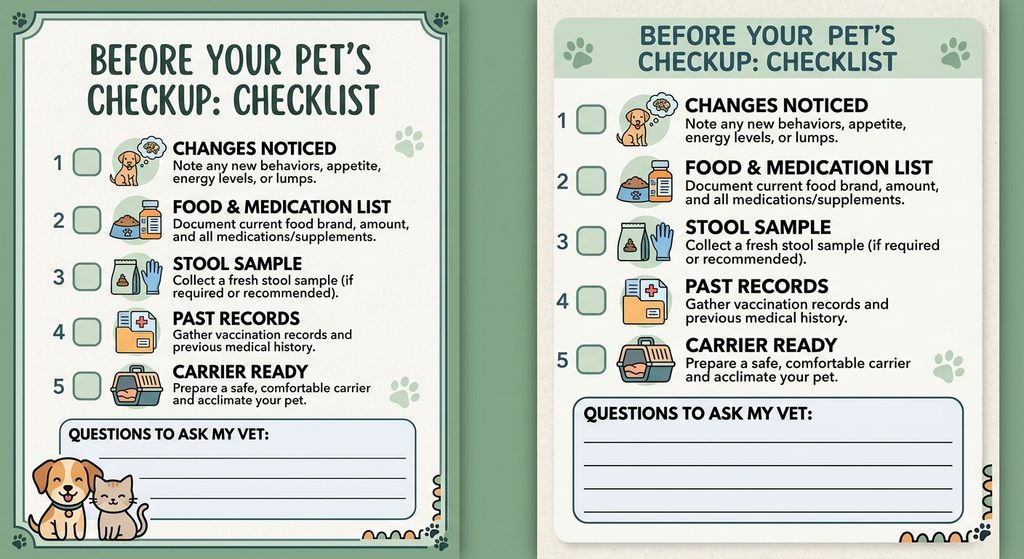
A few minutes of preparation makes the visit more useful:
- Write down any changes in appetite, thirst, bathroom habits, or behavior
- Bring a list of all foods, treats, medications, and supplements
- Collect a fresh stool sample in a clean bag or container
- Bring previous records if your pet is new to the clinic
- For cats, leave the carrier out at home for a few days so it feels familiar
Patient Story: A Routine Visit That Found Early Kidney Changes
This story is a composite based on situations our team sees often. Names and details have been changed.
Luna, an 11-year-old domestic shorthair, came in for what her owner called “just her yearly visit.” She was eating well, still greeted everyone at the door, and her owner had no concerns. On the scale, though, Luna had lost almost a pound since her last checkup, which is a meaningful amount for a cat.
Her veterinarian recommended bloodwork and a urinalysis. The results showed early changes in kidney values and dilute urine, consistent with the early stage of chronic kidney disease. Because it was caught before Luna showed symptoms, her plan was simple: a kidney-support diet, more water through wet food and a fountain, and rechecks every six months.
Over the following year, Luna’s values held steady and her weight came back up. Her owner later said she never would have guessed anything was wrong. That is exactly the point of a routine checkup.
Getting a Wellness Checkup Near Me in Stockton
When you search for a wellness checkup near me or a pet checkup near me, look for a practice that offers the exam, in-house lab work, and follow-up care under one roof. That way, if a test result needs attention, the next step can happen quickly instead of starting over somewhere else. Our earlier article on the pet wellness exam in Stockton, CA explains why annual visits matter for dogs and cats of every age.
Owners often tell us they want to stay on top of my pet’s wellness but are not sure where to start. It starts with one appointment. You can request a wellness check for dogs and cats and bring your notes, records, and questions.
Frequently Asked Questions
-
How often does my pet need a health checkup?
Most healthy adult dogs and cats need a pet health checkup at least once a year. Puppies and kittens need visits every few weeks during their vaccine series, and seniors benefit from an exam every six months because age-related diseases can progress quickly. Pets with ongoing conditions such as diabetes, kidney disease, or heart disease may need more frequent rechecks based on their treatment plan and how stable they are.
-
What happens during a dog check up?
A dog check up starts with questions about appetite, energy, behavior, and bathroom habits. Your veterinarian then weighs your dog, checks vital signs, and examines the eyes, ears, mouth, heart, lungs, abdomen, skin, and joints. Depending on age and history, the visit may include vaccines, a heartworm test, a fecal test, and bloodwork. You will leave with notes on anything that needs follow-up and a recommended date for the next visit.
-
How much for a check up at the vet?
The cost of a check up at the vet depends on what your pet needs at that visit. A basic exam differs from one that includes vaccines, heartworm testing, bloodwork, or dental evaluation, and needs change with age and health history. The most accurate way to know what to expect is to call our team, describe your pet’s age and any concerns, and ask which services are recommended for that visit.
-
Is bloodwork necessary if my pet seems healthy?
Yes, in most cases. Many common diseases, including early kidney disease, liver disease, diabetes, and thyroid problems, show up in bloodwork before a pet looks or acts sick. Bloodwork from a healthy year also gives your veterinarian a personal baseline, which makes future changes much easier to spot. For mature adults and seniors, routine screening is one of the most valuable parts of the annual pet checkup.
-
Do indoor cats need annual checkups?
Yes. Indoor cats avoid some outdoor risks, but they still develop dental disease, kidney disease, hyperthyroidism, diabetes, and weight problems. Cats are especially skilled at hiding illness, so many problems are only found during an exam or with lab work. Indoor cats should be seen at least once a year, and every six months once they reach their senior years, to catch changes early.
-
What should I bring to my pet’s wellness exam?
Bring a list of the foods, treats, medications, and supplements your pet takes, along with notes on any changes in appetite, thirst, behavior, or bathroom habits. A fresh stool sample collected within the last day is helpful for parasite testing. If your pet is new to the clinic, bring previous vaccine and medical records. Dogs should arrive on a leash and cats in a secure carrier.
-
Can a wellness exam really catch serious disease early?
Yes. Heart murmurs, dental infections, abnormal lumps, kidney changes, and early arthritis are regularly found at routine exams in pets that seemed completely normal at home. Early detection usually means simpler treatment, fewer complications, and a better long-term outlook. This is one of the main pet wellness exam benefits, and it is the reason veterinarians encourage yearly visits even for young, active pets with no symptoms.
Pacific Veterinary Hospital, 6828 Pacific Avenue, Stockton, CA 95207. Call (209) 474-2444 to book your pet’s next checkup.
