

If your dog has been diagnosed with parvo, or you are simply researching before a possible outbreak in your neighborhood, one question tends to come up fast: can people get parvo from dogs? It is a fair question, especially with young kids or immunocompromised family members in the house. At Pacific Veterinary Hospital, your vet near me in Stockton, we get asked this constantly by worried families, so we want to give you a clear, accurate answer along with everything else you need to know about how canine parvovirus actually spreads.
What Is Parvo? A Quick Overview
Canine Parvovirus Explained
Canine parvovirus, often shortened to parvo or CPV-2, is a highly contagious virus that attacks a dog’s gastrointestinal tract and white blood cells. It is one of the most serious viral illnesses a dog can contract, and it disproportionately affects puppies and young dogs who have not completed their full vaccination series. Left untreated, it can escalate quickly and become life-threatening within days.
Why Parvo Spreads So Easily
Parvo is notoriously difficult to contain because the virus is extremely hardy. It can survive in soil, on kennel surfaces, and on household items for months, sometimes longer, resisting many common household cleaners. That resilience is exactly why the virus spreads so efficiently between dogs, and it is also part of why the question of human transmission comes up so often.
Can People Get Parvo from Dogs? The Direct Answer
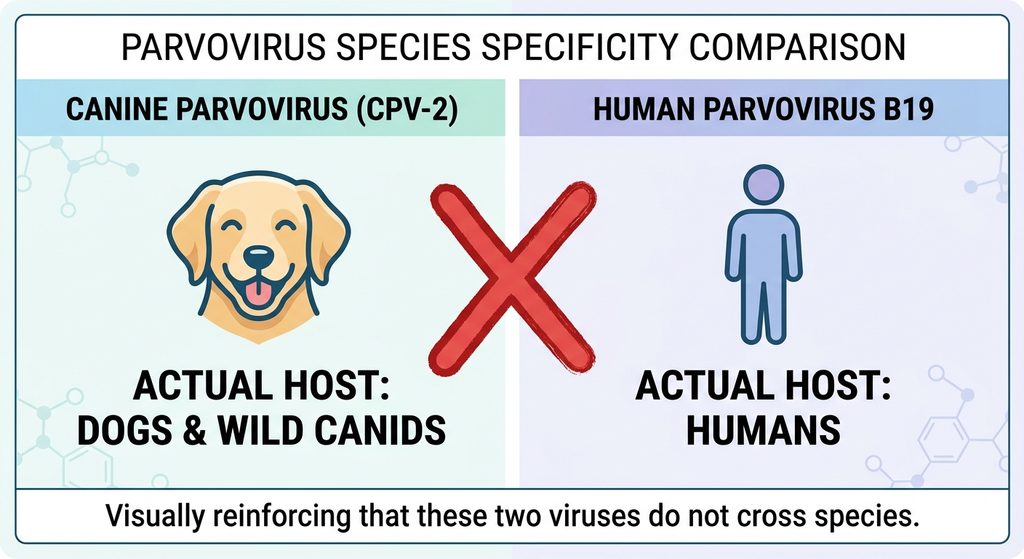
Here is the short, direct answer: no, people cannot get canine parvovirus from dogs. Canine parvovirus type 2 is species specific, meaning it has evolved to infect canine cells using receptors that are not present in human cells. According to the American Veterinary Medical Association, canine parvovirus attacks the white blood cells and gastrointestinal tract of dogs and related canids like coyotes, wolves, and foxes, not people. Cornell University’s Baker Institute for Animal Health, which conducts ongoing research into canine parvovirus, similarly confirms that the virus is not zoonotic, meaning it cannot pass from dogs to humans.
That said, there is an important nuance worth understanding: while you cannot catch the virus itself, you can absolutely carry it. Parvo particles can cling to your shoes, clothing, and hands after contact with an infected dog or contaminated feces, and you can unknowingly transport those particles to another dog, even one in a completely different location. You are not at risk of getting sick, but you can act as a mechanical carrier that puts other dogs at risk.
Why the Confusion? Human Parvovirus B19 vs Canine Parvovirus
Part of the confusion comes from the name itself. “Parvovirus” is a broad family term, not a single virus, and different species have their own versions that share a name but nothing else biologically relevant to transmission.
| Feature | Canine Parvovirus (CPV-2) | Human Parvovirus B19 |
|---|---|---|
| Who it infects | Dogs and related canids | Humans only |
| Common name | Parvo | Fifth disease |
| How it spreads | Contact with infected feces or contaminated surfaces | Respiratory droplets from coughing or sneezing |
| Typical symptoms | Vomiting, bloody diarrhea, lethargy, dehydration | Mild rash, fever, joint pain, often no symptoms at all |
| Can it cross species | No | No |
The Centers for Disease Control and Prevention describes human parvovirus B19 as a seasonal respiratory virus spread through droplets from an infected person, commonly causing a mild childhood illness known as fifth disease. It has no biological relationship to the version that affects dogs beyond sharing part of a name.
Can Other Pets Catch Parvo from a Dog?
Cats have their own related virus called feline panleukopenia, which behaves similarly to canine parvo but is generally considered a separate concern from CPV-2. Certain newer strains of canine parvovirus have been documented to infect cats in some cases, which is one more reason multi-pet households should keep an infected dog fully isolated from all other animals, not just other dogs, until a veterinarian confirms it is safe.
What Are the Signs of Parvo in Dogs?
Recognizing symptoms early can make a significant difference in outcome. Watch for:
- Severe, often bloody diarrhea
- Repeated vomiting
- Lethargy or sudden loss of energy
- Loss of appetite
- Fever or, in advanced cases, a low body temperature
- Rapid dehydration despite drinking water
If your dog is showing any combination of these signs, especially a puppy who has not completed their vaccine series, treat it as an emergency. Our detailed guide on parvo symptoms in dogs walks through what each sign can mean and how quickly they typically progress.
How Canine Parvovirus Actually Spreads
Understanding the actual transmission route helps explain why the virus is so persistent in the environment, even though it cannot infect you directly:
- Direct contact with an infected dog’s saliva, vomit, or feces
- Contact with contaminated surfaces, bedding, food bowls, or kennel floors
- Contaminated soil, grass, or parks where an infected dog has been
- Indirect transfer on human hands, shoes, or clothing after contact with an infected environment
Because the virus can persist in the environment for such a long time, thorough disinfection with a bleach-based solution is typically necessary anywhere an infected dog has spent time.
How Long Is a Dog with Parvo Contagious?
Dogs typically begin shedding the virus in their feces before symptoms even appear, and shedding can continue for one to two weeks after clinical signs resolve, sometimes longer in individual cases. This extended shedding window is another reason isolation and thorough disinfection matter well beyond the days your dog seems visibly sick. A veterinarian can advise on when it is reasonably safe to reintroduce a recovering dog to other pets based on the timeline of their specific case.
How Veterinarians Diagnose and Treat Parvo in Dogs
Diagnosis usually starts with a fecal antigen test performed right in the clinic, often alongside bloodwork to check white blood cell counts and hydration status. Because there is no direct antiviral cure for parvo, treatment focuses on supportive care: intravenous fluids to combat dehydration, anti-nausea medication, antibiotics to prevent secondary infections while the intestinal lining heals, and around-the-clock monitoring in more severe cases. Our parvo treatment team provides this kind of intensive, hands-on care for dogs fighting the virus. For a deeper breakdown of what each stage of illness and treatment actually looks like, our guide on canine parvovirus treatment covers the full progression from early symptoms through recovery.
Protecting Your Family and Other Pets During a Parvo Outbreak
Even though the virus cannot make you sick, protecting your household still matters, both for your other pets and to stop further spread in the community:
- Isolate the infected dog away from other animals in the home
- Disinfect all surfaces, bedding, bowls, and floors with a bleach-based cleaner
- Wash your hands thoroughly after any contact with the infected dog or its waste
- Change clothes and clean shoes before visiting other homes with dogs, especially puppies
- Keep unvaccinated or partially vaccinated puppies away from dog parks, boarding facilities, and other high-traffic pet areas
Vaccination remains the single most effective tool against parvo. The American Animal Hospital Association classifies canine parvovirus vaccination as a core vaccine recommended for every dog, regardless of lifestyle, precisely because of how contagious and dangerous the virus can be.
Case Study: Managing a Parvo Diagnosis with Young Kids at Home
A family with two small children brought in their eight week old puppy after a night of vomiting and diarrhea. The parents’ first question, understandably, was whether the kids were at risk. Once the veterinary team confirmed the parvo diagnosis and explained that the virus cannot infect people, the family was able to focus entirely on their puppy’s recovery instead of worrying about their children’s health. They isolated the puppy in one room, disinfected thoroughly, and followed strict handwashing practices, mainly to protect a neighbor’s unvaccinated dog rather than themselves. The puppy recovered after several days of supportive care, and the family’s other pets, kept fully separated during treatment, never showed any signs of illness.
When to Seek Emergency Care for a Dog with Parvo
Parvo can progress from mild symptoms to a life-threatening emergency in a matter of hours, particularly in puppies. If your dog is vomiting repeatedly, has bloody diarrhea, or seems suddenly weak and unresponsive, do not wait for a scheduled appointment. Our emergency vet near me services are equipped to start treatment immediately, which gives dogs the best possible chance at a full recovery.
Frequently Asked Questions
-
Can people get parvo from dogs?
No. Canine parvovirus type 2 is species specific and cannot infect human cells, according to the American Veterinary Medical Association and veterinary research institutions like Cornell’s Baker Institute. While you cannot get sick from the virus itself, you can carry it on your hands, shoes, or clothing and unintentionally spread it to other dogs, so good hygiene still matters.
-
Can I get sick from touching dog feces infected with parvo?
You will not contract canine parvovirus from touching contaminated feces, since the virus cannot infect human cells. However, dog feces can carry other organisms, like certain bacteria and parasites, that can affect people, so washing your hands thoroughly after any contact with an infected dog’s waste is still good practice for general hygiene.
-
Can my cat catch parvo from my dog?
Cats have their own related virus called feline panleukopenia, and some newer strains of canine parvovirus have been documented to infect cats as well. Because of this, it is best to keep an infected dog fully separated from cats and other pets in the household until your veterinarian confirms it is safe to reintroduce them.
-
How long does canine parvovirus survive on surfaces?
Parvovirus is remarkably resilient and can survive in soil, carpet, and on hard surfaces for extended periods, often for months, if not properly disinfected. This is why thorough cleaning with a bleach-based solution is typically recommended for any area where an infected dog has spent time, rather than standard household cleaners alone.
-
Is the human parvovirus B19 related to canine parvovirus?
Not biologically. Human parvovirus B19, which causes a mild childhood illness known as fifth disease, and canine parvovirus type 2 share part of a name but are entirely separate viruses that evolved to infect different species. Neither virus can cross over between dogs and humans in either direction.
-
Can a vaccinated dog still get parvo?
It is uncommon but not impossible, particularly if a puppy’s vaccine series was incomplete or a dog was exposed before full immunity developed. This is why veterinarians recommend following the complete puppy vaccination schedule rather than stopping after just one or two doses, since partial protection leaves a window of vulnerability.
-
What should I do if my dog has been diagnosed with parvo and I have kids at home?
You can reassure your family that parvo cannot spread from your dog to any person in the household. Focus on isolating your dog from other pets, disinfecting surfaces and bedding, and following your veterinarian’s treatment plan closely. Keeping children from handling the infected dog is still a reasonable precaution for general hygiene, even though the virus itself poses no risk to them.
Pacific Veterinary Hospital, 6828 Pacific Avenue, Stockton, CA 95207, (209) 474-2444.
