
Finding a vet is one of those decisions most pet owners put off until the day they suddenly need one. Then the search happens in a hurry, usually with a sick animal in the car. It does not have to be that way. Choosing the right practice ahead of time gives your dog or cat a consistent medical home, and it gives you someone who already knows your pet when something goes wrong. If you are searching for a trusted vet near me in Stockton, this guide walks through exactly what separates a good veterinarian from a great one, and how to judge that before you ever book an appointment.
Why the Right Veterinarian Near You Matters
Your veterinarian is not a one-time service provider. They are a long-term partner in your pet’s health across every life stage, from the first puppy or kitten visit to senior care. A vet who sees your animal year after year builds a baseline: what is normal for that specific pet, how their weight has trended, which small changes are worth watching. That continuity is where good medicine actually happens. Problems get caught earlier, treatment plans stay consistent, and you spend less time re-explaining history at every visit.
There is also the trust factor. When your pet is frightened or in pain, you want a team you already believe in. A rushed choice made during an emergency often means handing your animal to strangers at the worst possible moment. Deciding early removes that stress. The goal is not simply to find the closest clinic on a map. It is to find a veterinarian near you whose standards, services, and approach match what your pet actually needs.
What to Look For When Choosing a Veterinarian Near Me
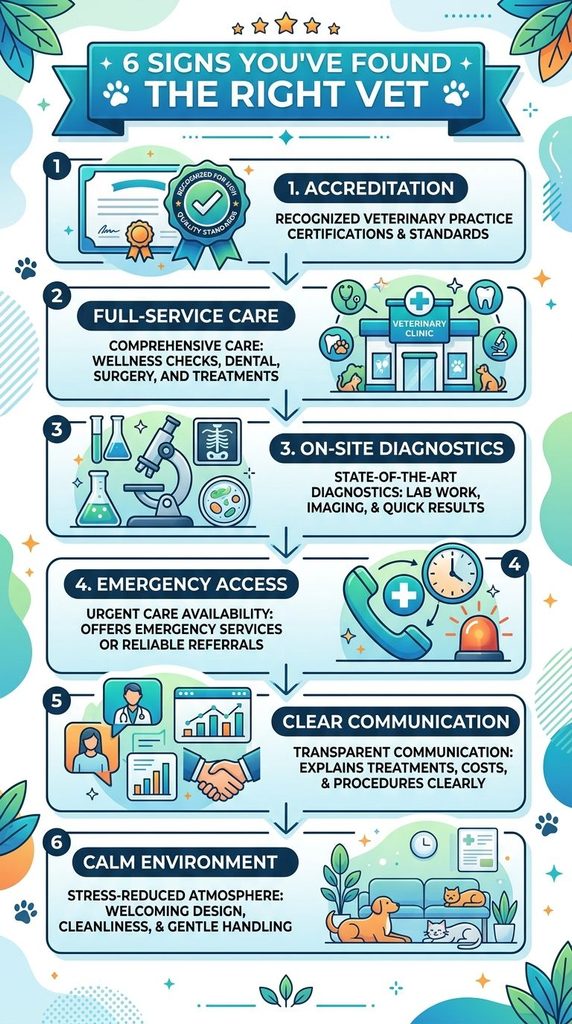
Not every clinic offers the same level of care, and the differences are not always obvious from a website. These are the factors that genuinely matter, in roughly the order most experienced pet owners come to value them.
Credentials, licensing, and accreditation. Every practicing veterinarian in California must hold a state license, which is the baseline, not the ceiling. Look beyond it. The American Veterinary Medical Association offers practical guidance on finding and evaluating a veterinarian that is worth reading before you commit. Accreditation is another strong signal. According to the American Animal Hospital Association, only a minority of animal hospitals are AAHA-accredited, and nearly 60 percent of pet owners wrongly assume their clinic is. Accreditation means a practice has voluntarily passed evaluations covering everything from anesthesia safety to record-keeping. It is a useful shorthand for a clinic that takes standards seriously.
A full range of services under one roof. A vet that handles wellness, dental, surgery, diagnostics, and urgent care in the same building saves you the disruption of being referred out for routine needs. It also means your pet’s records, imaging, and history live in one place. When you are comparing a Stockton animal hospital and how it cares for pets, ask what they can treat in-house versus what gets sent elsewhere. Fewer referrals for common issues usually means faster answers and less handoff between teams.
On-site diagnostics and equipment. Modern veterinary medicine leans heavily on imaging and lab work. A clinic with in-house bloodwork, digital X-ray, and in-house ultrasound can diagnose and begin treating during a single visit rather than making you wait days for outside results. For anything time-sensitive, that speed is not a luxury. It changes outcomes. Ask whether diagnostics are performed on the premises and how quickly results come back.
Emergency and urgent care availability. Pets do not schedule their crises. A practice that offers same-day and evening urgent care, including weekends, covers many of the hours when traditional offices are closed. If you are weighing an emergency vet near me, find out exactly what they can handle on-site and what they refer to a 24-hour facility. Knowing that boundary in advance means you are never guessing during an actual emergency.
Communication and bedside manner. A good veterinarian explains the why behind every recommendation and gives you room to ask questions without feeling rushed. You should leave a conversation informed, not overwhelmed. Pay attention to how the team talks to you during a first visit. Do they translate medical terms into plain language? Do they present options rather than issuing orders? In a bilingual community like Stockton, it also helps when staff can communicate comfortably in both English and Spanish.
A calm, low-stress environment. The physical space tells you a lot. Clean exam rooms, organized reception, and a team trained in gentle handling all reduce fear for your animal. Organizations like Fear Free have made low-stress veterinary visits a recognized standard, and clinics that embrace it tend to have calmer patients and more accurate exams, since a relaxed pet is easier to assess.
Preventive Care: The Foundation of a Good Vet Relationship
The strongest reason to choose a vet carefully is preventive care, because that is where you will spend most of your visits. Routine checkups are not just formalities. They are the mechanism that catches disease before it becomes expensive, painful, or advanced. A thorough pet wellness exam evaluates weight, heart and lung function, joints, skin, and dental health, and it keeps vaccinations and parasite prevention on schedule. The AVMA’s overview of preventive pet healthcare explains why annual or twice-yearly exams matter more as pets age.
Dental care deserves special mention because it is the single most overlooked part of pet health. Periodontal disease is common, largely hidden, and connected to problems in the heart, kidneys, and liver. Ask any prospective vet how they approach oral health and whether they offer a professional dog dental cleaning with proper anesthesia and monitoring. A practice that treats dental as an afterthought is telling you something about its overall philosophy of care.
When you evaluate a veterinarian near you on preventive care, look for a clinic that builds a personalized plan rather than applying a generic schedule. Your pet’s age, breed, lifestyle, and local risk factors, and Stockton’s warm Central Valley climate keeps fleas, ticks, and foxtails active much of the year, should shape their recommendations.
Advanced Care and When You Will Need It
Even with excellent preventive care, some pets need more. Injuries, chronic conditions, and age-related issues can call for procedures that go beyond a routine visit. This is where the depth of a practice becomes obvious. A clinic equipped for pet surgery, from spay and neuter to soft-tissue and mass removal, with modern anesthesia and close monitoring, spares you the stress of being referred out for common operations.
When a surgeon recommends a procedure, a good veterinarian will explain why it is the right course compared to alternatives, what the operation involves, and what recovery realistically looks like. You should feel informed, not pressured. The quality of monitoring during anesthesia and the clarity of aftercare instructions both matter enormously, and both are fair questions to ask before you agree to anything. A vet who welcomes those questions is one worth keeping.
What Sets a Full-Service Vet Apart
It helps to see the difference laid out plainly. The table below compares a limited practice with a full-service veterinary hospital across the factors that affect your pet most.
| Factor | Limited Practice | Full-Service Veterinary Hospital |
|---|---|---|
| Services offered | Basic exams and vaccines | Wellness, dental, surgery, diagnostics, urgent care |
| Diagnostics | Sent to outside labs | In-house bloodwork, X-ray, and ultrasound |
| Urgent care | Appointment only | Same-day and weekend urgent care |
| Records and history | May be fragmented across referrals | Centralized in one location |
| Continuity of care | Varies by visit | Consistent team across life stages |
| Result for you | More waiting, more referrals | Faster answers, fewer handoffs |
A full-service model is not about having the longest service list for its own sake. It is about reducing the friction, delay, and repetition that make pet care harder than it needs to be.
Case Study: How the Right Vet Changed the Outcome
Consider a scenario our Stockton team sees often. A family notices their nine-year-old Labrador, Cooper, drinking more water than usual and seeming a little off, but with no obvious symptoms. Because they had already chosen a full-service veterinarian and kept up with regular wellness visits, the vet had years of baseline bloodwork on file. That history mattered.
At the visit, in-house bloodwork and ultrasound were run the same afternoon, and the results pointed to early kidney changes that would not have been visible from the outside. Caught at this stage, the condition was manageable with diet adjustments, medication, and closer monitoring rather than an emergency crisis months later. The family did not have to shuttle Cooper between clinics or wait days for outside labs. Everything happened under one roof, guided by a team that already knew him.
The lesson is simple. The value of choosing the right vet early is not visible on a good day. It shows up on the day something is quietly wrong, when a clinic with the right tools, the right history, and the right team turns a frightening moment into a solvable one. This is exactly why the selection process is worth the effort before you need it.
How to Evaluate a Veterinarian Near You Before Your First Visit
You do not have to guess. A short evaluation tells you most of what you need to know:
- Check reviews for patterns, not one-offs. Look for consistent themes around communication, wait times, and follow-up rather than reacting to a single review either way.
- Call and ask real questions. How do they handle after-hours situations? What is done in-house? How do they approach anxious pets? The quality of the answers is revealing.
- Tour the facility if you can. Cleanliness, organization, and how staff interact with animals in the waiting area speak volumes.
- Book a wellness visit first. A routine appointment lets you judge the team before an emergency forces the decision for you.
- Confirm the scope of care. Make sure the range of services matches what your pet, especially a senior or a breed with known health risks, is likely to need.
Run through that list and you will have a clear sense of whether a practice is right for your family long before any crisis tests it.
Frequently Asked Questions
-
How do I find the best veterinarian near me?
Start by looking beyond distance. Check that the practice is licensed and, ideally, accredited, then compare the range of services, in-house diagnostics, and urgent care availability. Read reviews for recurring themes about communication and follow-up. The best veterinarian near you is the one whose standards and services fit your pet’s specific needs, so a short call or a first wellness visit is the surest way to judge fit.
-
What makes a good vet different from an average one?
A good vet combines strong medical credentials with clear communication and genuine continuity of care. They explain recommendations in plain language, welcome your questions, and build a health history that makes future visits smarter. Average clinics treat each visit in isolation. Top rated vets near you invest in relationships, keep detailed records, and offer the in-house tools to diagnose and treat quickly rather than referring you out for routine needs.
-
Should I choose a full-service animal hospital or a small clinic?
It depends on your pet, but a full-service hospital offers meaningful advantages for most families. Having wellness, dental, surgery, diagnostics, and urgent care in one place means faster answers, centralized records, and fewer referrals. A smaller clinic can work well for basic needs, but when a pet ages or a serious issue appears, the depth of a full-service veterinary hospital usually delivers a smoother, less stressful experience.
-
How often should my pet see the veterinarian?
Healthy adult dogs and cats generally need an annual wellness exam, while puppies, kittens, and senior pets benefit from more frequent visits. Regular checkups let your vet catch developing problems early, keep vaccinations and parasite prevention current, and track subtle changes over time. Your veterinarian will recommend a schedule based on your pet’s age, breed, and health status rather than applying a one-size-fits-all timeline.
-
What questions should I ask a new vet near me?
Ask what services are handled in-house versus referred out, how they manage urgent and after-hours situations, and how they approach anxious pets. Find out whether diagnostics like bloodwork and imaging are done on-site and how quickly results come back. Also ask how they build preventive care plans. The clarity and patience of the answers tell you as much about the practice as the answers themselves.
Pacific Veterinary Hospital is located at 6828 Pacific Avenue, Stockton, CA 95207. To schedule a visit or ask about our services, call (209) 474-2444.
