
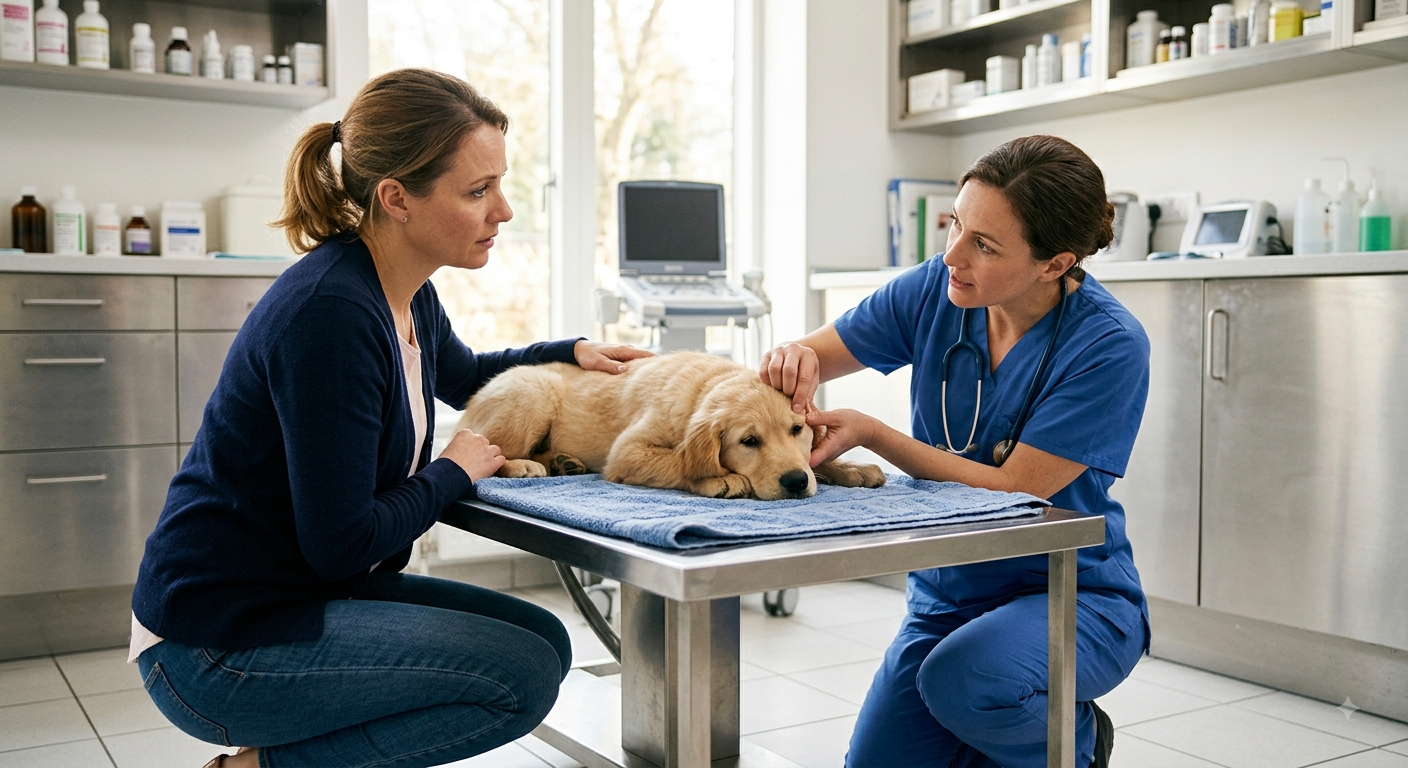
Few moments feel scarier than watching your dog go from playful to lethargic in the span of a single afternoon. If you have landed here because your gut is telling you something is wrong, that instinct matters. Canine parvovirus, commonly shortened to parvo, is one of the fastest-moving and most dangerous illnesses a dog can contract, and catching the earliest parvo symptoms often makes the difference between a full recovery and a life-threatening emergency. At Pacific Veterinary Hospital, our Stockton team sees parvo cases on a regular basis, and this guide walks through exactly what early parvo looks like in puppies and adult dogs, how it differs from ordinary stomach upset, and what to do the moment you suspect it.
What Is Canine Parvovirus and Why Early Detection Matters
Canine parvovirus is a highly contagious virus that attacks rapidly dividing cells in a dog’s body, primarily the lining of the intestinal tract and the bone marrow. In very young puppies, it can also affect the heart muscle. The virus spreads through contact with infected feces, contaminated surfaces, shoes, bedding, and even the hands of someone who has recently touched an infected dog. It is remarkably hardy and can survive in soil and on hard surfaces for months, which is part of why outbreaks continue to occur even in well-maintained neighborhoods.
How the Virus Attacks the Body
Once parvovirus enters a dog’s system, it targets the cells lining the small intestine. As those cells die off, the intestinal wall loses its ability to absorb nutrients and fluids, and the barrier that normally keeps harmful bacteria contained begins to break down. This is what makes parvo so dangerous. Dehydration, blood loss, and secondary bacterial infection can all happen at the same time, and a dog’s condition can deteriorate within hours rather than days.
Why Every Hour Counts
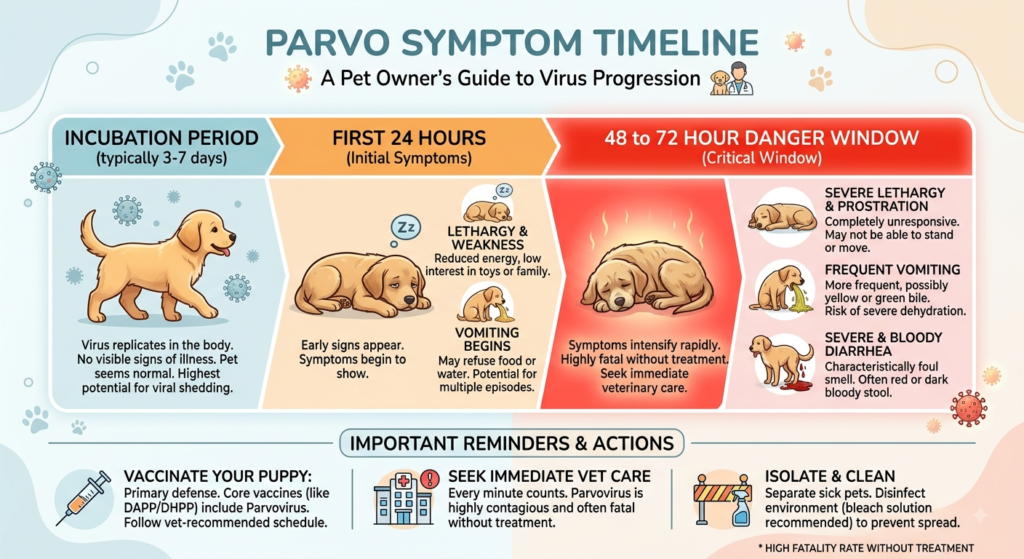
The incubation period for parvo typically runs three to ten days, meaning a dog can carry and shed the virus before any outward signs appear. By the time symptoms show up, the virus has often already caused significant internal damage. This is exactly why recognizing the earliest, subtlest signs and getting to a veterinarian quickly gives a dog the best possible chance of survival.
Early Signs and Symptoms of Parvo in Puppies
Puppies between six weeks and six months old are the most vulnerable group, largely because maternal antibodies fade unevenly and can leave gaps where a puppy is neither protected by its mother’s immunity nor fully protected by vaccination yet.
The First 24 Hours
The earliest and most commonly overlooked sign and symptom of parvo in puppies is a sudden drop in energy and appetite. A puppy that was bouncing off the walls the day before may suddenly seem withdrawn, reluctant to play, or unusually clingy. Some puppies run a low-grade fever during this window, and many stop eating even their favorite treats. These early signs and symptoms of parvo in puppies are easy to dismiss as a bad day, which is exactly why so many cases are not caught until the illness has already progressed.
Progressing Symptoms
Within a day or two, the picture usually becomes unmistakable. Vomiting typically appears first, followed by diarrhea that often turns watery and may contain streaks or pools of blood with a distinct, unpleasant odor. Puppies frequently become severely dehydrated within hours because they are losing fluid from both ends while refusing to drink. Abdominal pain, a hunched posture, and a rapid heart rate are also common as the illness advances. Any puppy showing this combination of symptoms, particularly one that is unvaccinated or only partially vaccinated, needs veterinary attention immediately rather than a wait-and-see approach.
Early Signs of Parvo in a Grown Dog
Parvo is often talked about as a puppy disease, and while puppies are statistically at the highest risk, adult dogs are not immune.
Why Adult Dogs Are Often Overlooked
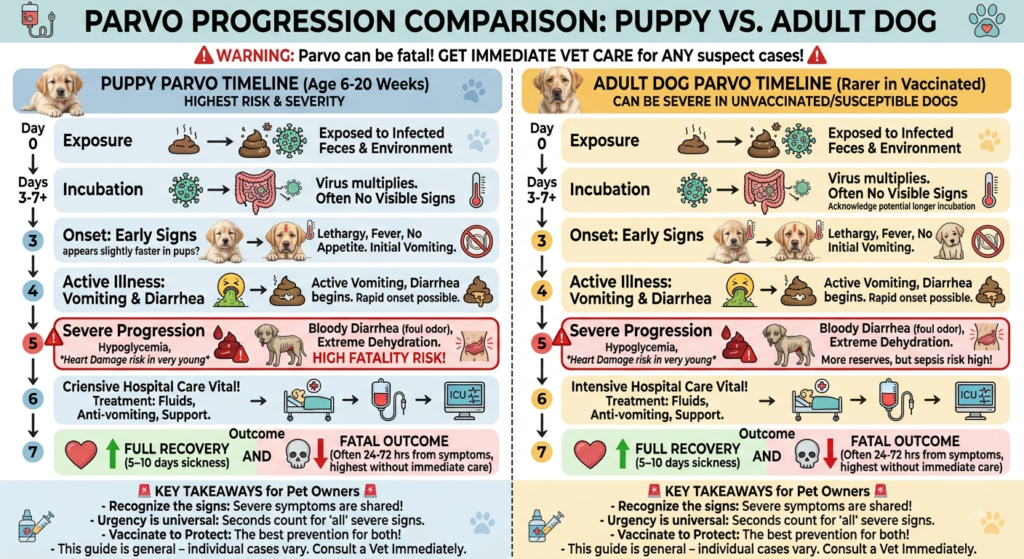
Because parvo is so strongly associated with puppies, owners of adult dogs sometimes rule it out entirely when their dog develops sudden vomiting and diarrhea, assuming it must be something they ate or a minor bug. This assumption can delay care at exactly the moment it matters most. The early signs of parvo in a grown dog closely mirror those seen in puppies: lethargy, loss of appetite, low energy, and a reluctance to move around normally, followed by vomiting and diarrhea as the illness progresses.
Can Older Dogs Get Parvo?
Yes, older dogs can get parvo, though it happens less frequently and tends to be less severe than in puppies, largely because a mature immune system typically mounts a stronger defense. Adult dogs at the highest risk are those with an incomplete vaccination history, dogs whose vaccine protection has lapsed, and senior dogs with underlying health conditions that weaken the immune response. Unvaccinated adult dogs adopted from shelters or rescues, or dogs with unknown vaccination records, should always be considered at risk until proven otherwise.
Parvo Symptoms in Puppies vs Adult Dogs
| Factor | Puppies (6 weeks to 6 months) | Adult Dogs |
|---|---|---|
| Speed of onset | Often rapid, within 24 to 48 hours | Can be slower and more gradual |
| Severity | Typically more severe, higher risk | Usually milder, but still serious |
| Dehydration risk | Very high, can become critical quickly | High, but progresses somewhat slower |
| Most common first sign | Sudden lethargy and appetite loss | Lethargy paired with digestive upset |
| Recovery outlook with early treatment | Good with prompt intensive care | Generally favorable |
Case Study: Early Recognition Made the Difference
A recent case at our hospital illustrates why early detection matters so much. A four-month-old mixed-breed puppy was brought in after her owner noticed she had skipped breakfast and seemed unusually quiet, without any vomiting or diarrhea yet. Because the owner recognized that a sudden change in energy and appetite can be an early sign and symptom of parvo in puppies, she brought her puppy in the same afternoon rather than waiting to see if things worsened overnight.
A rapid in-clinic fecal test confirmed parvovirus, and because treatment began before severe dehydration or bloody diarrhea had set in, the puppy responded well to supportive care and was discharged within several days. Our veterinary team consistently sees that the single biggest factor separating a good outcome from a poor one is how quickly a dog gets into treatment after the first subtle signs appear. This case is a clear example of why we encourage every pet owner in the Stockton area to treat sudden lethargy and appetite loss seriously, especially in puppies and unvaccinated dogs.
When Parvo Symptoms Become an Emergency
Parvo can escalate from mild symptoms to a life-threatening emergency in a matter of hours. Watch for these warning signs that mean immediate veterinary care is needed rather than a scheduled appointment:
- Repeated vomiting that prevents your dog from keeping down water
- Diarrhea that is watery, bloody, or has a strong, unusual odor
- Extreme lethargy or collapse
- Pale or tacky gums, which can indicate dehydration or shock
- A swollen, painful, or tense abdomen
- Rapid breathing or a racing heart rate
If your dog shows any of these signs, do not wait to see if they improve on their own. Our team at Pacific Veterinary Hospital treats emergency parvo cases as a priority, and our emergency and urgent care guide covers additional warning signs worth knowing for any sudden illness or injury, not just parvo.
Other Illnesses That Can Look Like Early Parvo
Because the earliest parvo symptoms are so easy to mistake for something minor, it helps to know what else can cause similar signs so you understand why a veterinary exam is the only reliable way to tell the difference.
Dietary Indiscretion and Mild Stomach Upset
Dogs that get into the trash, eat something spoiled, or experience a sudden diet change can develop vomiting and diarrhea that looks superficially similar to early parvo. The key difference is usually severity and duration. Simple dietary upset tends to improve within a day, while parvo symptoms typically worsen quickly rather than plateauing.
Intestinal Parasites
Roundworms, hookworms, and giardia can all cause lethargy, poor appetite, and loose or bloody stool, particularly in young puppies. A fecal exam can distinguish parasites from parvovirus, which is one reason our team runs both a parvo test and a parasite screen when a puppy presents with gastrointestinal symptoms.
Intestinal Obstruction
Puppies are notorious for swallowing toys, socks, and other objects, and a partial or full intestinal blockage can cause vomiting, lethargy, and abdominal pain that mirrors early parvo. Imaging is often needed to rule this out, especially in a young, curious dog with a known habit of chewing on non-food items.
Given how much overlap exists between these conditions, the safest approach is always the same: any puppy or unvaccinated dog showing sudden lethargy, vomiting, or diarrhea should be seen by a veterinarian promptly so the correct diagnosis can be made and treatment can begin without delay.
How Parvo Is Diagnosed and Treated
When a dog arrives with suspected parvo, our veterinary team typically starts with a rapid in-clinic fecal test that can confirm the virus within minutes, along with a physical exam to assess hydration status, heart rate, and overall stability. Bloodwork often follows to check white blood cell counts and electrolyte levels, since parvo characteristically causes a sharp drop in white blood cells.
Treatment focuses on supportive care rather than a single cure, because there is no medication that directly kills the virus once a dog is infected. Hospitalization typically includes intravenous fluids to correct dehydration and electrolyte imbalances, anti-nausea medication to control vomiting, and close monitoring for secondary bacterial infection, which may require antibiotics. For a deeper walkthrough of what each stage of parvo looks like and how the recovery timeline typically unfolds, our detailed guide on parvo stages and treatment covers the full clinical picture in depth.
Recovery odds improve significantly the earlier treatment begins, which is the central reason this guide focuses so heavily on catching the earliest, subtlest symptoms rather than waiting for the more obvious signs to appear.
Preventing Parvo: Vaccination and Prevention Strategies
Vaccination remains the single most effective way to protect a dog from parvovirus. Puppies typically begin their core vaccine series, which includes parvo protection, around six to eight weeks of age, with boosters every three to four weeks until roughly sixteen weeks old. This spacing matters because maternal antibodies decline unevenly, and skipping a booster can leave a window of vulnerability even in a puppy that has already received some doses.
Until a puppy has completed its full vaccination series, it is safest to avoid dog parks, pet stores, boarding facilities, and other high-traffic areas where unvaccinated dogs may have been. Adult dogs benefit from staying current on booster vaccines as recommended by their veterinarian, since protection can wane over time. Our team can review your dog’s vaccination schedule and help you close any gaps, particularly if you recently adopted a dog with an unknown vaccine history.
Beyond vaccination, basic hygiene habits reduce risk meaningfully. Promptly cleaning up after your dog, avoiding contact with unfamiliar dogs’ waste, and disinfecting shared spaces with a parvo-effective cleaner all help limit exposure, especially in a community setting like Stockton where the virus remains active in the environment. Regular household disinfectants are not always effective against parvovirus because of how resilient the virus is on surfaces, so it is worth asking your veterinary team which cleaning products are proven to break it down.
If you are bringing a new puppy into a home that previously had a dog with parvo, extra caution is warranted. The virus can persist in yards and on hard surfaces for months, so thoroughly disinfecting the environment and waiting before introducing a new, incompletely vaccinated puppy to that same space is a reasonable precaution. Your veterinarian can advise on realistic timelines based on your specific situation and the surfaces involved.
According to the American Veterinary Medical Association, puppies between six and twenty weeks old and dogs with incomplete vaccination histories face the greatest risk of infection, which lines up closely with what our team sees in practice. The AAHA Canine Vaccination Guidelines list parvovirus as a core vaccine recommended for every dog regardless of lifestyle, underscoring just how seriously the veterinary community treats prevention. Ongoing research from institutions like the Cornell University College of Veterinary Medicine continues to study the virus decades after it first emerged, and the UC Davis School of Veterinary Medicine publishes detailed core vaccine scheduling guidance that mirrors the protocols we follow in clinic.
Frequently Asked Questions
-
What are the earliest signs and symptoms of parvo in puppies?
The earliest sign and symptom of parvo in puppies is usually a sudden drop in energy and appetite, sometimes paired with a mild fever, before vomiting or diarrhea even begin. Because this stage looks like an ordinary off day, many owners miss it. Watching closely for unexplained lethargy in an unvaccinated or partially vaccinated puppy and acting on it quickly gives the best chance of catching the illness before it progresses further.
-
How can I tell if my adult dog has parvo?
The early signs of parvo in a grown dog look similar to those in puppies: sudden lethargy, appetite loss, and low energy, followed by vomiting and diarrhea that may contain blood. Adult dogs are sometimes misdiagnosed with routine stomach upset, so any unvaccinated or under-vaccinated adult dog showing this pattern should be evaluated by a veterinarian promptly rather than monitored at home.
-
Can older dogs get parvo?
Yes, older dogs can get parvo, though it is less common and often milder than in puppies because mature immune systems typically respond more effectively. Adult and senior dogs with incomplete vaccination histories, lapsed boosters, or weakened immune systems remain at genuine risk. Vaccination status matters more than age alone when assessing a dog’s actual risk level for contracting the virus.
-
How fast do parvo symptoms progress after exposure?
Parvo has an incubation period of roughly three to ten days before symptoms appear, but once signs begin, they can escalate from mild lethargy to severe vomiting, bloody diarrhea, and dehydration within 24 to 48 hours. This rapid progression is why early recognition and same-day veterinary evaluation matter so much for improving a dog’s chances of recovery.
-
When should I take my dog to the emergency vet for suspected parvo?
Seek emergency care immediately if your dog shows repeated vomiting, bloody or watery diarrhea, extreme lethargy, pale gums, or a swollen abdomen. Do not wait overnight or try home remedies first, since dehydration and secondary infection can progress quickly. Prompt hospitalization and supportive care significantly improve outcomes, especially in puppies and unvaccinated dogs showing these warning signs.
-
How is parvo diagnosed and confirmed at the vet?
Veterinarians typically confirm parvo using a rapid in-clinic fecal test that delivers results within minutes, combined with a physical exam and bloodwork to assess hydration, white blood cell counts, and electrolyte levels. This quick diagnostic process allows treatment to begin the same day, which is critical given how fast the virus can affect a dog’s condition.
Pacific Veterinary Hospital, 6828 Pacific Avenue, Stockton, CA 95207, (209) 474-2444
