
Few things stop a pet owner mid-step faster than looking down and seeing red or pink-tinged urine on the ground. If your dog is peeing blood, your mind races through worst-case scenarios before you even have a chance to think clearly. The medical term is hematuria, and while it always warrants veterinary attention, the causes range from treatable infections to conditions that require urgent intervention. At Pacific Veterinary Hospital, we see dogs with bloody urine regularly, and the sooner a cause is identified, the better the outcome almost always is. This guide covers everything Stockton pet owners need to know, from what might be causing the bleeding to what happens during the diagnostic workup, so you can act with confidence instead of panic.
What Does It Mean When Your Dog Is Peeing Blood?
Blood in your dog’s urine can originate from anywhere along the urinary tract, including the kidneys, ureters, bladder, urethra, or even the prostate in male dogs. Sometimes the blood is visible to the naked eye, producing urine that looks red, pink, or brownish. Other times the blood is microscopic, only detectable through a urinalysis performed by your veterinarian.
The color and timing of the blood can offer clues. Bright red blood at the beginning of urination often points to a lower urinary tract issue such as the urethra or prostate. Blood that appears throughout the entire stream typically originates from the bladder or higher. Dark brown or tea-colored urine may indicate bleeding from the kidneys or a condition affecting red blood cells. These are general patterns, though, and no amount of at-home observation replaces proper diagnostic testing. If your dog is peeing blood in any amount, a veterinary visit should happen promptly.
Common Causes of Blood in Dog Urine
Understanding why your dog is peeing blood starts with knowing what conditions can produce hematuria. Several are common and treatable, while others require more aggressive care.
Urinary Tract Infections (UTIs) are among the most frequent causes of bloody urine in dogs, especially in females. Bacteria enter the urethra and multiply in the bladder, causing inflammation, pain, and bleeding. Dogs with UTIs often urinate more frequently, strain during urination, or have accidents indoors. You might also notice your dog licking the genital area excessively or whimpering while trying to urinate. According to the American Kennel Club, UTIs are one of the most commonly diagnosed infectious diseases in dogs. Female dogs are more vulnerable because their shorter urethras give bacteria a shorter path to the bladder. Dogs with diabetes, Cushing’s disease, or compromised immune systems also face higher UTI risk. Treatment typically involves a course of antibiotics after a urine culture confirms the bacteria involved. Recurrent UTIs, defined as three or more infections within a 12-month period, warrant deeper investigation to rule out underlying anatomical or metabolic contributors.
Bladder Stones form when minerals in the urine crystallize and clump together. These stones irritate the bladder wall, cause pain, and produce bleeding. Certain breeds, including Dalmatians, Schnauzers, and Shih Tzus, are more predisposed. Small stones may pass on their own with dietary management. Larger stones may require pet surgery near me to remove safely.
Prostate Problems affect intact (unneutered) male dogs more frequently. An enlarged or infected prostate can compress the urethra, causing blood in the urine and difficulty urinating. Neutering often resolves or significantly improves prostate-related issues, which is one of many reasons veterinarians recommend spay and neuter procedures.
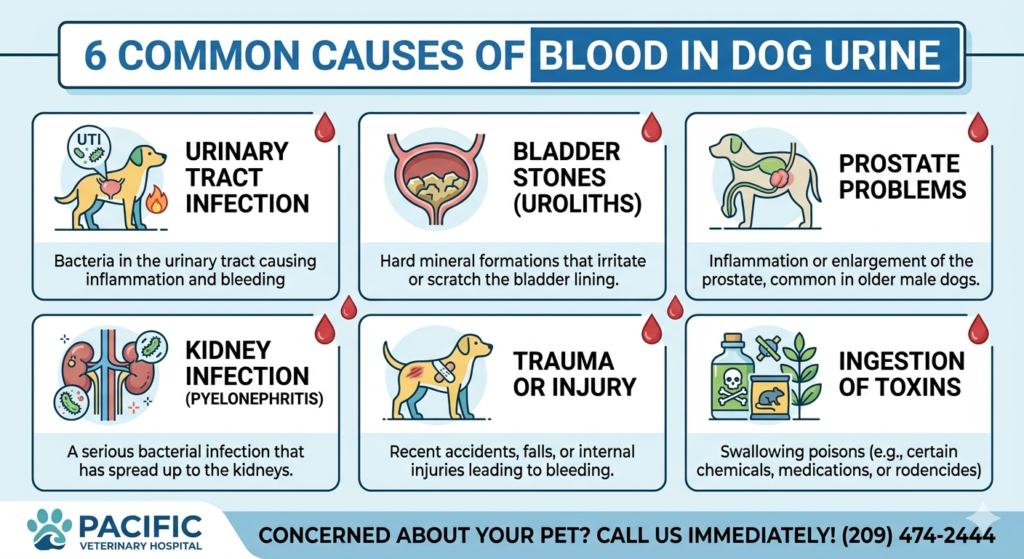
Kidney Infections and Disease can cause blood to appear in the urine along with symptoms such as fever, lethargy, decreased appetite, and increased water consumption. Pyelonephritis, a bacterial infection of the kidney, requires aggressive antibiotic therapy and sometimes hospitalization for IV fluid support. It often develops when a lower urinary tract infection is left untreated and bacteria migrate upward to the kidneys. Chronic kidney disease, more common in senior dogs over the age of seven, can also produce hematuria as the organs gradually lose filtration efficiency. Early kidney disease is often silent, which is why routine bloodwork and urinalysis during regular checkups are so important for catching changes before they become irreversible.
Trauma or Injury to the abdomen or pelvic area can damage the bladder, kidneys, or urethra. This is common after car accidents, rough play, or falls. Dogs who have experienced any physical trauma and then show blood in their urine need immediate veterinary evaluation, since internal bleeding may not be visible from the outside.
Bladder or Urinary Tract Cancer is a less common but serious cause. Transitional cell carcinoma (TCC) is the most frequently diagnosed bladder cancer in dogs, and breeds like Scottish Terriers, Shetland Sheepdogs, and Beagles face a higher risk. Early detection through in-house ultrasound imaging can significantly impact treatment options and prognosis.
Toxin Ingestion is another cause that pet owners in the Central Valley should keep on their radar. Certain rat poisons contain anticoagulants that prevent blood from clotting, leading to internal bleeding that can show up in the urine. The Pet Poison Helpline maintains a comprehensive database of substances toxic to pets. If you suspect your dog has ingested any poison, this is a true emergency.
Dog Peeing Blood but Acting Normal: Should You Still Worry?
This is one of the questions we hear most often. Your dog peed blood once, maybe twice, but is eating, playing, and behaving completely normally otherwise. It is tempting to write it off as a fluke. The honest answer is yes, you should still be concerned. Many conditions that cause blood in the urine, particularly early-stage UTIs, bladder stones, and even certain cancers, do not produce dramatic outward symptoms right away. A dog straining to pee but acting normal may have a partial urinary obstruction that could worsen quickly.
Dogs are remarkably good at masking discomfort. Evolutionary instinct drives them to hide pain and vulnerability. By the time a dog shows obvious distress, the underlying condition is often more advanced than it would have been at the first appearance of blood. A single episode of bloody urine in an otherwise healthy-seeming dog still deserves a same-day call to your veterinarian and likely a urinalysis within 24 to 48 hours.
The exception is a dog peeing but nothing coming out, or a dog that is repeatedly squatting and straining with little to no urine production. That scenario suggests a possible urinary blockage, which is a life-threatening emergency that requires immediate care.
What to Watch For at Home Before Your Vet Visit
If you notice blood in your dog’s urine and your veterinarian has advised monitoring until an appointment, there are specific things you should track that will help the diagnostic process.
Frequency and volume. Note how often your dog is urinating and whether the volume seems normal, reduced, or increased. A dog that suddenly needs to go outside every 30 minutes is telling you something different than one who urinates on a normal schedule with a slight pink tinge.
Color changes. Take a photo of the urine if you can. The difference between light pink, dark red, and brown gives your veterinarian meaningful diagnostic clues. Urine color can also change throughout the day, so documenting multiple episodes is useful.
Straining or posture changes. Pay attention to whether your dog is squatting longer than usual, hunching their back, crying, or repeatedly attempting to urinate without producing much. A male dog that suddenly starts squatting instead of lifting his leg may be experiencing urethral discomfort.
Behavioral shifts. Even subtle changes like decreased appetite, increased sleep, reduced interest in play, excessive licking of the genital area, or reluctance to jump onto furniture can indicate that your dog is experiencing more discomfort than they are showing outwardly.
Bring these observations with you to the appointment. Detailed owner observations paired with clinical diagnostics give your veterinarian the most complete picture possible.
When Blood in Dog Urine Is an Emergency
Not every case of hematuria is an emergency, but some absolutely are. Recognizing the difference can save your dog’s life.
Seek emergency vet in Stockton care immediately if your dog is showing any of the following alongside bloody urine:
- Inability to urinate or straining with no output
- Lethargy, collapse, or unresponsiveness
- Pale gums (a sign of significant blood loss or shock)
- Abdominal swelling or pain when the belly is touched
- Vomiting combined with bloody urine
- Known or suspected ingestion of rat poison or other toxins
- Trauma such as being hit by a car or falling from a height
The ASPCA recommends contacting a veterinarian or poison control immediately if toxin exposure is suspected, even if symptoms have not yet appeared. Time is critical in poisoning cases because anticoagulant rodenticides can take 24 to 72 hours to produce visible symptoms, by which point the damage may be severe.
If you are unsure whether your situation qualifies as urgent, calling your veterinarian is always the right move. Our team at Pacific Veterinary Hospital can evaluate the situation over the phone and advise whether your dog needs to come in immediately.
| Scenario | Urgency Level | What to Do |
|---|---|---|
| Blood in urine, dog acting normal | Non-emergency, still important | Schedule a vet visit within 24-48 hours |
| Straining to pee with small amounts of blood | Urgent | Same-day veterinary visit |
| Dog peeing but nothing coming out | Emergency | Go to the vet immediately |
| Bloody urine after known trauma | Emergency | Seek care immediately |
| Blood in urine with vomiting or lethargy | Emergency | Do not wait; go now |
| Blood in urine with pale gums | Critical emergency | Rush to the nearest vet |
What Your Veterinarian Will Do: Diagnosis and Treatment
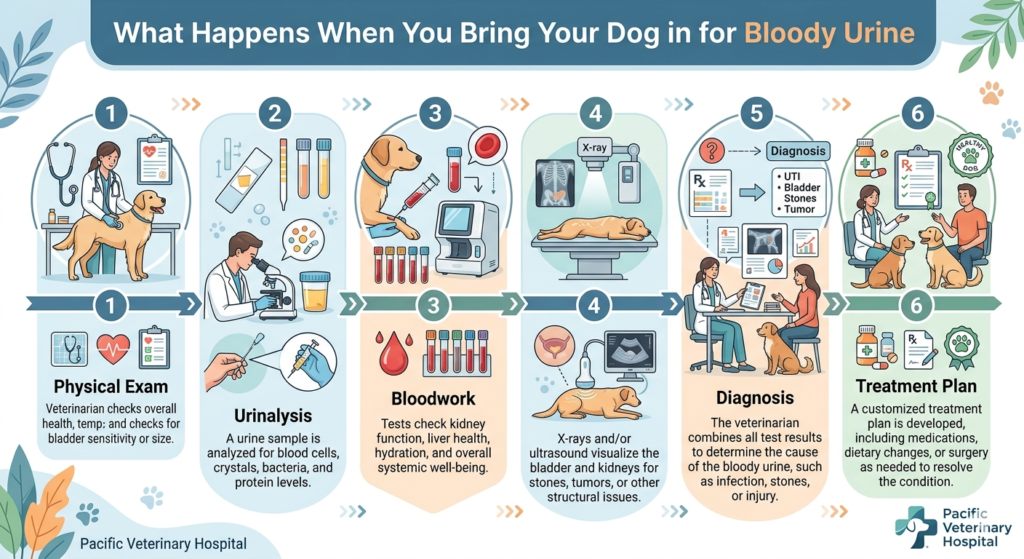
When you bring your dog in for bloody urine, the diagnostic process follows a logical sequence designed to narrow down the cause as quickly as possible.
Physical Examination comes first. Your vet will palpate the abdomen to check for bladder distension, pain, or masses. Male dogs will have their prostate assessed through a rectal exam. The vet will also check hydration status, gum color, heart rate, and overall body condition. A thorough history is just as important as the physical exam. Expect questions about when you first noticed the blood, how frequently your dog is urinating, changes in water intake, recent diet changes, and whether your dog has had access to any toxins or experienced any trauma.
Urinalysis is the cornerstone test. A urine sample, ideally collected via cystocentesis (a sterile needle draw directly from the bladder) for the most accurate results, is analyzed for the presence of red blood cells, white blood cells, bacteria, crystals, protein, and abnormal cells. The concentration of the urine also provides important information about kidney function. In many cases, a urine culture is submitted alongside the urinalysis to identify the specific bacteria involved and determine which antibiotics will be most effective. This step is critical because using the wrong antibiotic can prolong the infection and contribute to antibiotic resistance.
In-house bloodwork including a complete blood count (CBC) and chemistry panel reveals systemic issues such as infection, anemia, kidney dysfunction, clotting abnormalities, or elevated inflammatory markers. Having these results available within minutes, rather than waiting days for an outside lab, allows treatment to begin during the same visit.
Diagnostic Imaging rounds out the workup. In-house X-ray can detect bladder stones, kidney stones, or structural abnormalities. Ultrasound provides more detailed visualization of soft tissue and can identify masses, thickened bladder walls, or fluid accumulation that X-rays may miss.
Treatment depends entirely on the diagnosis. UTIs are treated with targeted antibiotics, typically for 10 to 14 days, with a follow-up urinalysis to confirm the infection has cleared. Bladder stones may require dietary modification, dissolution therapy, or surgical removal depending on their composition and size. Struvite stones can sometimes be dissolved with prescription diets, while calcium oxalate stones almost always require surgical extraction. Prostate issues in intact males often improve with neutering and appropriate medication. Cancer cases are evaluated individually, with options ranging from surgery to medical management depending on the type and stage. Toxin exposure cases may need plasma transfusions, vitamin K therapy, or supportive hospitalization with IV fluids and close monitoring.
Throughout the process, medications prescribed by your veterinarian can be filled conveniently through our in-house pharmacy, eliminating the need to make additional stops when your dog needs treatment started right away.
A Stockton Dog Owner’s Experience
Last spring, a Stockton family brought their seven-year-old Labrador, Duke, to our clinic after noticing pink-tinged urine in the backyard two mornings in a row. Duke was eating normally and still wanted to play fetch, so they nearly waited another week before calling. Their decision to come in early made all the difference.
Duke’s urinalysis showed elevated red and white blood cells along with bacteria. His bloodwork was largely normal, ruling out systemic issues like kidney failure or clotting disorders. The ultrasound, however, revealed a cluster of small bladder stones irritating the bladder wall alongside a secondary bacterial infection. The stones were small enough that a combination of a prescription diet formulated to dissolve struvite crystals and a targeted antibiotic course resolved both issues within six weeks. A follow-up ultrasound confirmed the stones had dissolved completely, and Duke’s urine was clear of blood and bacteria.
Had Duke’s family waited, those stones could have grown large enough to require surgical removal, or worse, caused a partial obstruction that would have turned a manageable situation into an emergency. The total cost of early intervention was a fraction of what surgery and hospitalization would have been. Duke’s case is a textbook example of why early action, even when a dog seems perfectly fine, leads to simpler, less invasive, and less expensive treatment.
How to Reduce the Risk of Blood in Your Dog’s Urine
Prevention is not always possible, but several steps significantly lower the chances of hematuria in dogs.
Keep your dog hydrated. Fresh water should be available at all times, especially during Stockton’s hot summer months when temperatures routinely exceed 100 degrees. Adequate water intake dilutes the urine and helps flush bacteria from the bladder before infections take hold. If your dog is a reluctant drinker, consider adding a pet water fountain or mixing a small amount of low-sodium broth into their water bowl to encourage consumption.
Schedule regular wellness checkups. Routine urinalysis during annual wellness exams can catch microscopic blood, crystals, or early bacterial growth before visible symptoms ever appear. For senior dogs over seven years old, twice-yearly exams give your veterinarian more frequent opportunities to monitor kidney function and bladder health. Prevention through early detection is always less expensive and less stressful than emergency treatment.
Feed a balanced, species-appropriate diet. Certain diets promote crystal formation in the urine, especially those high in specific minerals like magnesium, phosphorus, or calcium. Your veterinarian can recommend foods that support urinary tract health based on your dog’s breed, age, and medical history. The American Veterinary Medical Association emphasizes that maintaining a healthy weight through proper nutrition also reduces strain on the kidneys and bladder. Overweight dogs face higher rates of urinary complications across the board.
Provide frequent bathroom breaks. Dogs that hold their urine for extended periods are more susceptible to bacterial buildup in the bladder. Aim for at least three to four outdoor breaks per day for adult dogs, and more frequently for puppies and seniors. If your schedule makes midday breaks difficult, consider a dog walker or pet door.
Neuter male dogs. Prostate-related causes of hematuria are significantly reduced or eliminated by neutering. Talk with your vet about the appropriate timing for your specific dog.
Pet-proof your home and yard. Secure all rodenticides, antifreeze, medications, and toxic plants. In the Central Valley, foxtails and certain wild plants also pose seasonal risks. Understanding pet emergency signs helps you act fast if accidental ingestion does occur.
Frequently Asked Questions
-
Is a dog peeing blood always an emergency?
Not always, but it always requires veterinary attention. A dog peeing blood while otherwise behaving normally may have a urinary tract infection or early-stage bladder stones, both of which need treatment but are not immediately life-threatening. However, if your dog cannot produce urine, has pale gums, is vomiting, or has experienced physical trauma alongside the bloody urine, those are emergency situations that require immediate care. When in doubt, call your vet.
-
What does it mean when my dog is peeing blood and straining?
Straining to urinate combined with blood typically points to bladder stones, a severe urinary tract infection, or inflammation in the lower urinary tract. In male dogs, an enlarged prostate can also produce this combination of symptoms. A dog straining to pee but acting normal otherwise still needs prompt veterinary evaluation, because partial urinary obstructions can progress to complete blockages that become life-threatening within hours if the bladder cannot empty.
-
Can a UTI in dogs resolve on its own without treatment?
Bacterial urinary tract infections in dogs rarely resolve without antibiotic treatment. Delaying care allows bacteria to multiply, the infection to spread toward the kidneys, and the bladder lining to sustain increasing damage. The Merck Veterinary Manual notes that untreated lower UTIs can ascend to the kidneys and cause pyelonephritis, a much more serious and difficult-to-treat condition. Prompt diagnosis through urinalysis and targeted antibiotics produces the best outcomes.
-
My dog is peeing but nothing coming out. What should I do?
A dog that repeatedly postures to urinate but produces little or no urine may be experiencing a urinary obstruction. This is a veterinary emergency. Complete blockages prevent the bladder from emptying, which causes toxins to build up in the bloodstream and can lead to kidney failure or bladder rupture within hours. Do not wait to see if it resolves. Bring your dog to a veterinarian immediately for catheterization, imaging, and stabilization before permanent damage occurs.
-
How much does it cost to diagnose why my dog is peeing blood?
Diagnostic costs vary based on the tests required. A basic urinalysis and physical exam are the starting point, with additional costs for bloodwork, urine culture, X-rays, or ultrasound as needed. Many veterinary clinics, including Pacific Veterinary Hospital, offer in-house diagnostics that deliver same-day results, reducing the need for multiple follow-up visits. Financing options through programs like CareCredit can also help manage unexpected veterinary expenses so treatment is not delayed.
-
What breeds are most at risk for urinary problems that cause bloody urine?
Certain breeds have a genetic predisposition to urinary conditions. Dalmatians and English Bulldogs are prone to urate bladder stones. Miniature Schnauzers commonly develop struvite and calcium oxalate stones. Scottish Terriers face a significantly higher risk of transitional cell carcinoma, the most common bladder cancer in dogs. Female dogs of all breeds are more susceptible to bacterial UTIs due to their shorter urethras. Regardless of breed, regular veterinary checkups and urinalysis screening are the best tools for early detection.
Pacific Veterinary Hospital, 6828 Pacific Avenue, Stockton, CA 95207. Call (209) 474-2444.
