
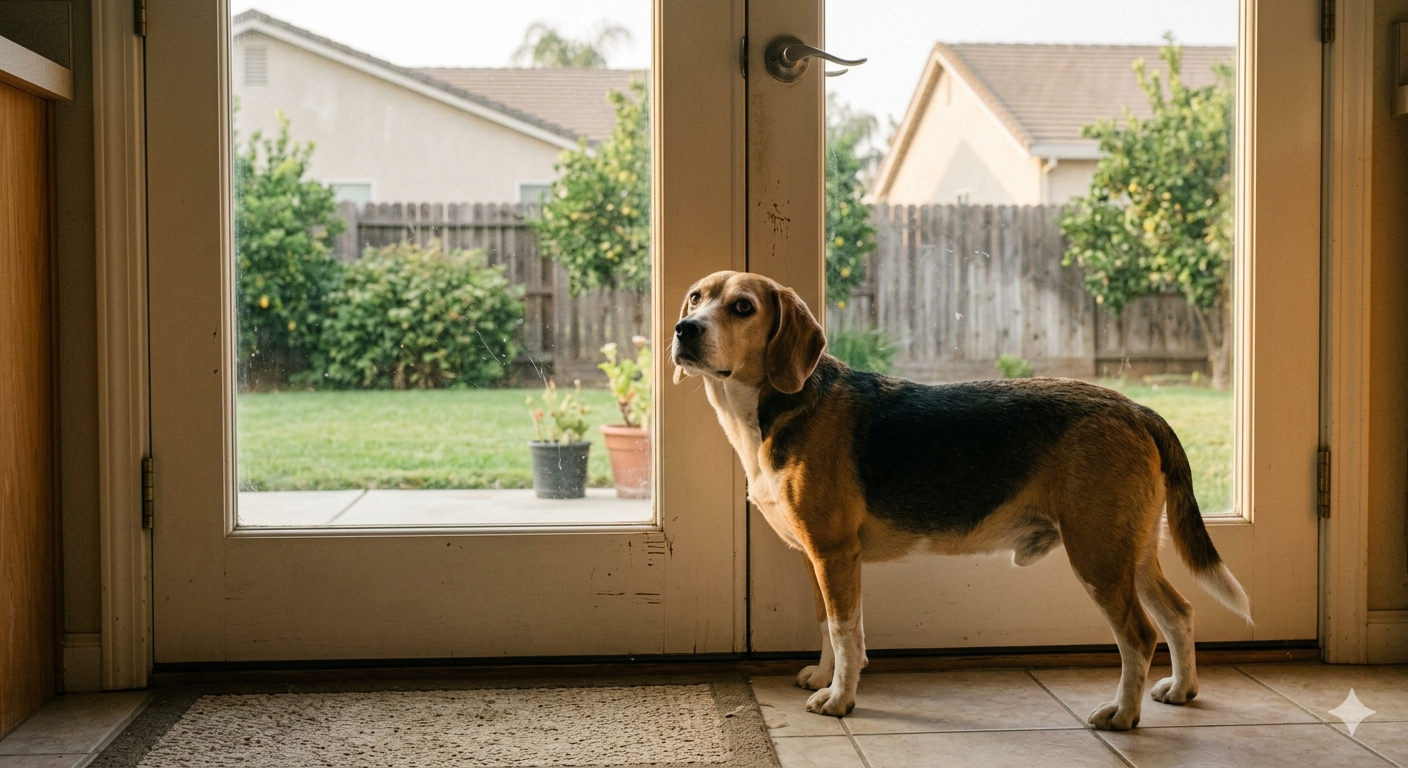
Your dog just went outside twenty minutes ago, and now they are standing at the door again, pawing to go out. You let them out, they squat or lift a leg, produce a small amount of urine, and then want back inside. An hour later, the cycle repeats. Maybe there has been an accident on the kitchen floor overnight, something that has never happened before. Frequent urination in dogs is one of those symptoms that is easy to dismiss as a behavioral quirk or a temporary blip. But more often than not, it is your dog’s body signaling that something is off internally. At Pacific Veterinary Hospital in Stockton, we evaluate dogs with urinary changes regularly, and the earlier the underlying cause is identified, the more straightforward treatment tends to be. This guide breaks down what excessive urination actually looks like, what causes it, and what your veterinarian will do to get to the bottom of it.
What Actually Counts as Frequent Urination?
Before assuming something is wrong, it helps to understand what normal looks like. Most healthy adult dogs urinate three to five times per day. Puppies go more often because their bladders are smaller and their muscles are still developing. Senior dogs may also need slightly more frequent trips outside due to age-related changes in bladder capacity and muscle tone.
Frequent urination, or polyuria in medical terms, means your dog is producing more urine than normal or needing to void their bladder significantly more often than their established baseline. There is an important distinction between polyuria (increased volume of urine) and pollakiuria (frequent urination in small amounts). Both look similar from the outside, but they point toward different categories of problems. Polyuria often suggests systemic conditions like diabetes or kidney disease, while pollakiuria typically indicates lower urinary tract issues like infections or bladder stones.
The key indicator is change from your dog’s normal pattern. A dog that has always asked to go out four times a day and suddenly needs eight trips is telling you something, even if each trip produces a normal-looking stream. Tracking frequency, volume, and any changes in color or odor gives your veterinarian valuable diagnostic information.
Common Causes of Excessive Urination in Dogs
Dog frequent urination stems from a wide range of conditions. Some are minor and easily treatable. Others are chronic and require ongoing management. Here are the most common causes veterinarians encounter.
Urinary Tract Infections remain the single most common reason dogs start urinating more frequently. Bacteria colonize the bladder lining, creating inflammation that triggers the constant urge to urinate even when the bladder is not full. Female dogs are disproportionately affected due to their shorter urethras. Dogs with UTIs often strain to produce small amounts of urine, may whimper during urination, and sometimes produce urine that is cloudy or has a strong odor. According to the American Kennel Club, UTIs are among the most frequently diagnosed conditions in veterinary practice. A urinalysis and culture identify the specific bacteria so your vet can prescribe the right antibiotic rather than guessing.
Diabetes Mellitus causes increased urination because excess glucose in the bloodstream spills into the urine and pulls water along with it. The result is a dog that drinks far more water than usual and produces large volumes of dilute urine. Other early signs include increased appetite despite weight loss, lethargy, and a dull coat. Diabetes is more common in middle-aged and older dogs, and certain breeds including Samoyeds, Australian Terriers, and Miniature Poodles carry genetic predispositions. The ASPCA notes that maintaining a healthy weight through proper nutrition is one of the most effective preventive measures against metabolic conditions in dogs.
Cushing’s Disease (Hyperadrenocorticism) develops when a dog’s adrenal glands produce too much cortisol over an extended period. Excessive urination is often the first symptom owners notice, along with increased thirst and appetite. Dogs with Cushing’s frequently develop a pot-bellied appearance, thinning skin, hair loss, and increased susceptibility to infections. This condition predominantly affects dogs over the age of six, and breeds like Poodles, Dachshunds, and Boston Terriers are at higher risk. Diagnosis requires specific blood tests that measure cortisol levels and how the body regulates them.
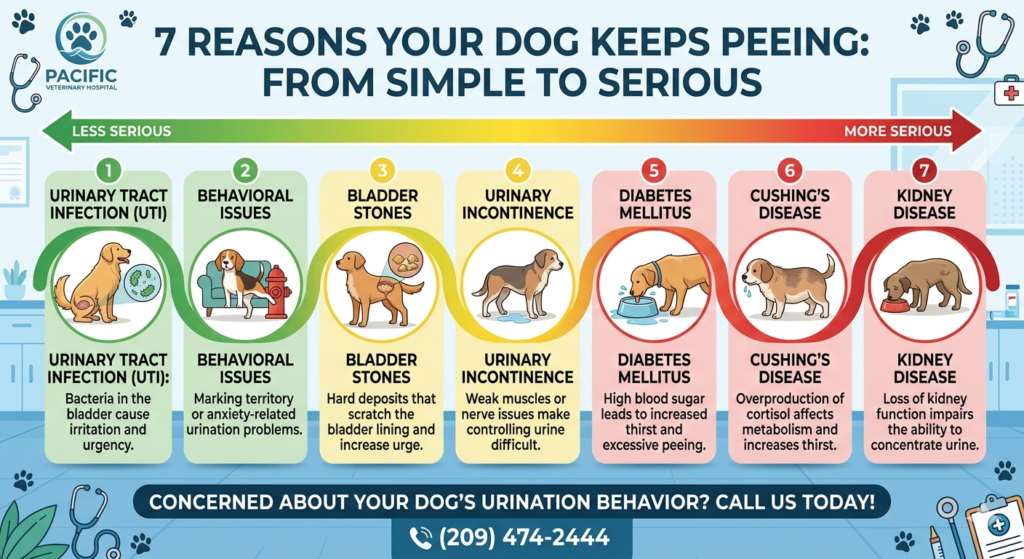
Kidney Disease impairs the kidneys’ ability to concentrate urine, which means the body produces larger volumes of dilute urine to flush out the same amount of waste. Dogs with kidney disease drink more to compensate for the increased fluid loss. Early-stage kidney disease is often clinically silent, which is why routine in-house bloodwork that includes kidney values (BUN and creatinine) is so important for dogs over seven. By the time increased urination becomes noticeable, the kidneys may have already lost a significant portion of their functional capacity. The Merck Veterinary Manual identifies chronic kidney disease as one of the leading causes of illness and death in older dogs.
Bladder Stones irritate the bladder wall and reduce its effective capacity, causing dogs to feel the urge to urinate even when the bladder contains very little urine. Dogs with bladder stones often produce frequent, small amounts of urine and may strain visibly. Some stones are small enough to pass on their own or dissolve with dietary therapy. Others require surgical removal. An in-house X-ray can identify most stone types within minutes, and an in-house ultrasound provides additional detail about the bladder wall and any secondary complications.
Urinary Incontinence is common in spayed female dogs, particularly medium to large breeds. The condition develops when the urethral sphincter weakens, often due to decreased estrogen levels following spaying. Dogs with incontinence may leak urine while sleeping or resting, leave wet spots on bedding, or dribble urine while walking without appearing to notice. This is not a behavioral issue and should not be treated as one. Hormone-responsive incontinence responds well to medication in the majority of cases.
Behavioral and Environmental Factors also contribute to increased urination. Excitement urination is common in puppies and young dogs. Marking behavior, especially in intact males, can mimic frequent urination. Anxiety, changes in routine, a new pet in the household, or even a new brand of food can temporarily alter urinary patterns. The critical difference is that behavioral urination is typically context-specific (happens in certain situations) rather than constant, and the dog otherwise appears healthy with normal urine output overall.
The Connection Between Drinking More and Peeing More
One of the most important observations you can make at home is whether your dog is also drinking more water than usual. Increased urination paired with increased thirst, a combination veterinarians call polyuria/polydipsia or PU/PD, significantly narrows the diagnostic possibilities. PU/PD points strongly toward systemic conditions rather than localized bladder problems.
Dogs with UTIs or bladder stones may urinate frequently but typically do not drink dramatically more water. Dogs with diabetes, Cushing’s disease, kidney disease, liver disease, or hormonal imbalances almost always show both increased drinking and increased urination. Tracking your dog’s daily water intake for a few days before the vet visit gives your veterinarian a concrete data point. A general guideline is that dogs should drink approximately one ounce of water per pound of body weight per day. A 50-pound dog consuming significantly more than 50 ounces daily deserves investigation.
Some medications also cause increased thirst and urination as a side effect. Prednisone and other corticosteroids are well-known for this. Certain anti-seizure medications and diuretics produce the same effect. If your dog recently started a new medication and you notice excessive peeing in dogs that was not present before, let your veterinarian know so the dosage or medication can be evaluated.
When Frequent Urination Becomes an Emergency
Most cases of increased urination in dogs are not emergencies, but a few scenarios require immediate veterinary attention.
A dog that is straining to urinate and producing nothing, or only drops, may have a urinary obstruction. Complete blockages are life-threatening and can cause kidney failure or bladder rupture within hours. Male dogs are at higher risk for obstructions due to their narrower urethras. If your dog is posturing repeatedly with no urine production, this is a reason to seek emergency vet care in Stockton immediately.
Frequent urination accompanied by vomiting, refusal to eat, extreme lethargy, or collapse suggests a systemic crisis such as diabetic ketoacidosis, acute kidney failure, or a severe infection. Blood in the urine combined with frequent urination and abdominal pain also warrants same-day evaluation.
If you are uncertain whether the situation is urgent, calling your veterinarian is always the right decision. A brief phone conversation can help you determine whether your dog needs to come in immediately or can safely be seen within a day or two.
| Scenario | Urgency | Action |
|---|---|---|
| Peeing more often but acting normal | Monitor closely | Schedule a vet visit within a few days |
| Increased urination with increased thirst | Important | Vet visit within 24-48 hours |
| Straining with little or no urine output | Emergency | Go to the vet immediately |
| Frequent urination with vomiting or lethargy | Emergency | Do not wait |
| Accidents overnight in a previously housetrained dog | Non-emergency | Vet visit within a week |
| Frequent urination after starting new medication | Non-emergency | Call your vet for guidance |
How Your Veterinarian Diagnoses the Cause
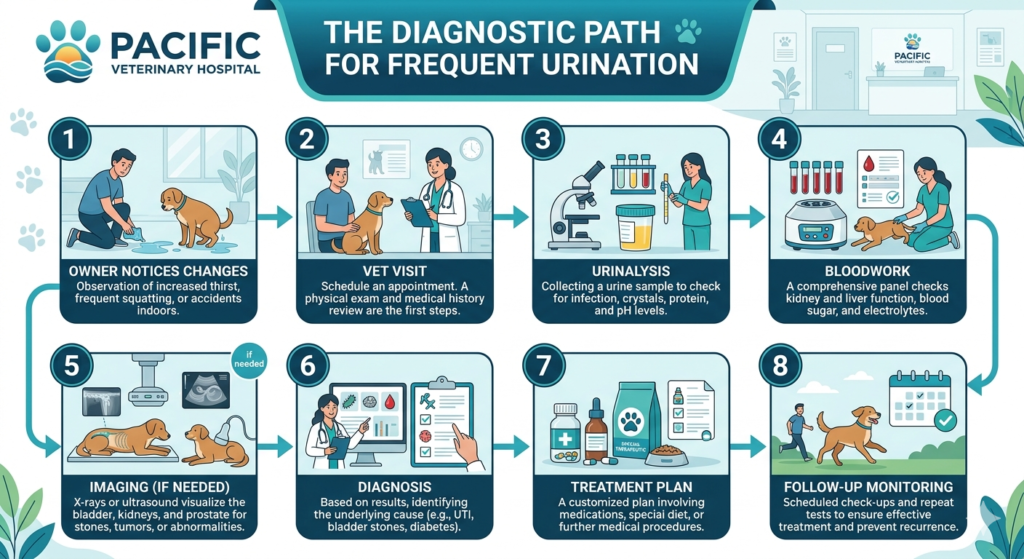
Diagnosing the reason behind dog excessive peeing follows a structured process that moves from simple, inexpensive tests toward more targeted diagnostics as needed.
Urinalysis is almost always the starting point. A urine sample reveals the concentration of the urine (which tells your vet whether the kidneys are doing their job), the presence of bacteria, white blood cells, red blood cells, glucose, protein, crystals, and abnormal cells. A single urinalysis can point toward or rule out UTIs, diabetes, kidney disease, and bladder stones in one test.
Blood Chemistry Panel and Complete Blood Count provide a systemic overview. Kidney values, liver enzymes, blood glucose, electrolytes, thyroid levels, and white blood cell counts all help paint the full picture. Dogs with diabetes will show elevated blood glucose. Dogs with kidney disease will have elevated BUN and creatinine. Dogs with Cushing’s disease may show elevated liver enzymes and characteristic changes in white blood cell distribution. Having bloodwork results available within minutes rather than days allows treatment to begin during the same visit.
Diagnostic Imaging is used when blood and urine tests suggest a structural problem. X-rays detect bladder stones, kidney stones, and abnormalities in organ size. Ultrasound provides detailed visualization of the kidneys, bladder wall, adrenal glands, and surrounding structures. For dogs suspected of having Cushing’s disease, ultrasound evaluation of the adrenal glands is a standard part of the workup.
Specialized Endocrine Testing may be needed for conditions like Cushing’s disease or atypical hormonal imbalances. These tests measure how the body produces and regulates specific hormones and often require timed blood draws over several hours.
Your vet may not need every test for every dog. A young female dog with sudden frequent urination and straining likely has a straightforward UTI that a urinalysis will confirm. An older dog with gradually increasing urination and thirst over several months needs a broader workup. The diagnostic path is tailored to the individual patient.
A Stockton Family’s Experience with Increased Urination
Last fall, a Stockton family brought in their nine-year-old Cocker Spaniel, Bella, because she had started asking to go outside every two hours and had begun having accidents overnight. She was also emptying her water bowl twice as fast as usual. The family assumed it was just aging.
Bella’s urinalysis showed very dilute urine with no signs of infection. Her bloodwork revealed moderately elevated kidney values and mildly elevated blood glucose. A follow-up fructosamine test confirmed early diabetes, and the ultrasound showed kidney changes consistent with early chronic kidney disease, a combination that is not uncommon in older dogs.
Bella started on insulin therapy with careful dietary adjustments and a kidney-supportive diet. Within three weeks, her water intake had normalized, and the overnight accidents stopped completely. Her family now manages her diabetes with twice-daily insulin injections and brings her in for glucose curve monitoring every few months. The veterinary team at Pacific Veterinary Hospital was able to fill all of Bella’s prescriptions through the in-house pharmacy, simplifying the process during an already stressful time.
Had Bella’s family waited several more months, her kidney disease could have progressed to a stage with far fewer treatment options. Early detection turned what could have been a crisis into a manageable chronic condition.
What You Can Do at Home
While home monitoring is not a substitute for veterinary diagnostics, there are meaningful steps you can take to support your dog and provide your vet with useful information.
Track water intake. Measure how much water you put in the bowl each morning and note how much remains at the end of the day. Do this for three to five days to establish a pattern. Bring these numbers to your vet appointment.
Note urination frequency and volume. Keep a simple log of how many times your dog goes outside to urinate and whether the volume seems normal, increased, or reduced. Note any straining, accidents, or changes in urine color.
Provide constant access to clean water. Never restrict water intake in a dog that is drinking excessively unless specifically instructed by your veterinarian. Restricting water in a dog with diabetes or kidney disease can cause dangerous dehydration.
Maintain regular wellness checkups. Routine exams that include urinalysis and bloodwork catch conditions like early kidney disease and diabetes before they produce noticeable symptoms. The American Veterinary Medical Association recommends at least one comprehensive wellness exam per year for adult dogs and twice-yearly exams for seniors. Our guide on why yearly lab work matters for pets explains how routine screening prevents exactly the kind of late-stage diagnoses that limit treatment options.
Keep your dog at a healthy weight. Obesity increases the risk of diabetes, joint problems that reduce mobility and lead to accidents, and bladder issues related to increased abdominal pressure. A balanced diet and regular exercise are foundational to urinary health.
Frequently Asked Questions
-
How many times a day should a healthy dog urinate?
Most healthy adult dogs urinate between three and five times per day, though this varies based on age, size, diet, water intake, and activity level. Puppies typically need more frequent bathroom breaks because their bladders are smaller and their sphincter muscles are still maturing. Senior dogs may also urinate slightly more often due to age-related changes in bladder capacity. The most reliable indicator of a problem is a noticeable change from your individual dog’s established baseline rather than comparing to a generic number.
-
Can frequent urination in dogs be caused by stress or anxiety?
Yes, stress and anxiety can temporarily increase urination in some dogs. Changes in the household such as a new baby, a move, a new pet, or disruptions in routine can trigger anxiety-related urination. Excitement urination is also common in puppies and young dogs during greetings or play. The distinguishing factor is that behavioral urination tends to be situational and temporary, while medically driven frequent urination is consistent and often accompanied by other symptoms like increased thirst, lethargy, or changes in appetite.
-
My dog is drinking and peeing more but seems fine otherwise. Should I worry?
Increased thirst and urination together, even in a dog that appears healthy, should always be evaluated by a veterinarian. Several serious conditions including diabetes, Cushing’s disease, and early kidney disease present initially with increased drinking and urination as the only observable symptom. Dogs are skilled at masking discomfort, and many metabolic conditions progress silently before producing obvious signs of illness. A basic urinalysis and blood panel can confirm or rule out these conditions quickly and inexpensively.
-
Is frequent urination in older dogs just a normal part of aging?
While mild increases in urination can occur with aging due to reduced bladder capacity and weaker sphincter muscles, significant increases in frequency or volume should never be dismissed as normal aging. Older dogs are at higher risk for kidney disease, diabetes, Cushing’s disease, and urinary tract infections, all of which produce increased urination as an early symptom. Regular veterinary exams with bloodwork and urinalysis become increasingly important as dogs enter their senior years, typically around age seven for large breeds and age nine for smaller breeds.
-
What is the difference between frequent urination and urinary incontinence?
Frequent urination means a dog is actively choosing to urinate more often and is aware of the process. The dog signals to go outside, postures to urinate, and produces urine intentionally. Urinary incontinence is the involuntary leaking of urine, often while the dog is sleeping, resting, or walking, without any apparent awareness. Incontinence is particularly common in spayed female dogs and is caused by weakened urethral sphincter muscles. Both conditions require veterinary evaluation, but they point toward different underlying causes and different treatment approaches.
-
When should I take my dog to the vet for frequent urination?
Schedule a veterinary visit if your dog’s urination frequency has increased noticeably and persisted for more than a day or two, especially if accompanied by increased water intake, straining, blood in the urine, accidents in a previously housetrained dog, changes in appetite or energy level, or weight loss. If your dog is straining to urinate and producing nothing, this is an emergency that requires immediate care. When uncertain, calling your veterinarian for phone guidance is always a reasonable first step to determine the appropriate level of urgency.
Pacific Veterinary Hospital, 6828 Pacific Avenue, Stockton, CA 95207. Call (209) 474-2444.
