
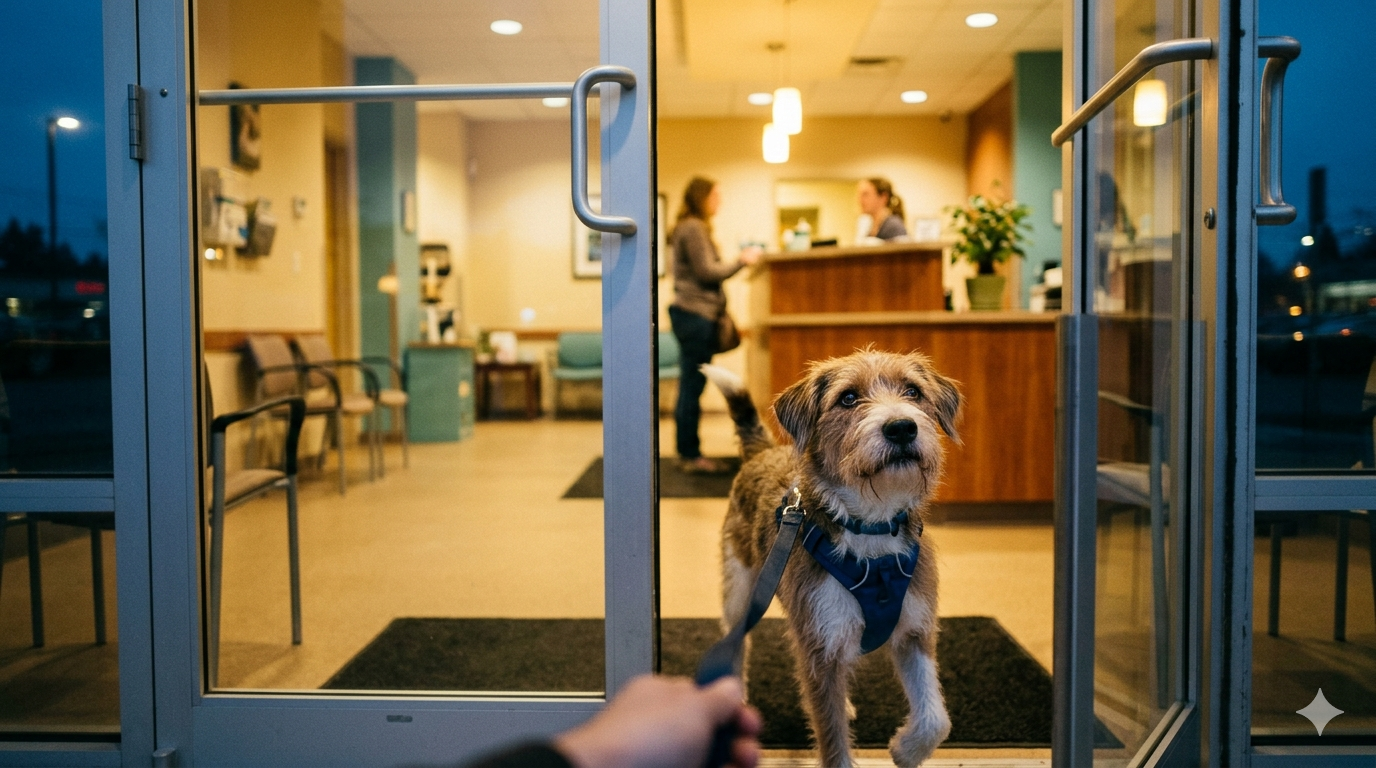
The drive to an emergency pet hospital is one of the loneliest drives a pet owner ever takes. Your dog is wrapped in a blanket on the back seat, your cat is yowling in the carrier, and your brain is running through every worst-case scenario it can manufacture. Knowing what’s going to happen the moment you walk through those doors makes that drive less terrifying, and it helps you act faster once you arrive. This guide walks through every step of an emergency pet hospital visit in Stockton, from the first phone call to the moment you bring your pet home.
When a Pet Emergency Means Heading to a Hospital, Not Waiting
There’s a real difference between something that needs a same-day appointment and something that needs an emergency pet hospital right now. Repeated vomiting, breathing trouble, suspected poisoning, severe bleeding, collapse, seizures, a bloated belly, and inability to urinate all sit firmly in the “go now” column. So does any trauma where your pet was hit, fell, or attacked, even if they seem okay afterward. Internal injuries can hide for hours. If your regular veterinarian near me is unavailable and your pet is showing any of those signs, an emergency pet hospital is where you need to be.
The First Phone Call: What to Say and What to Have Ready
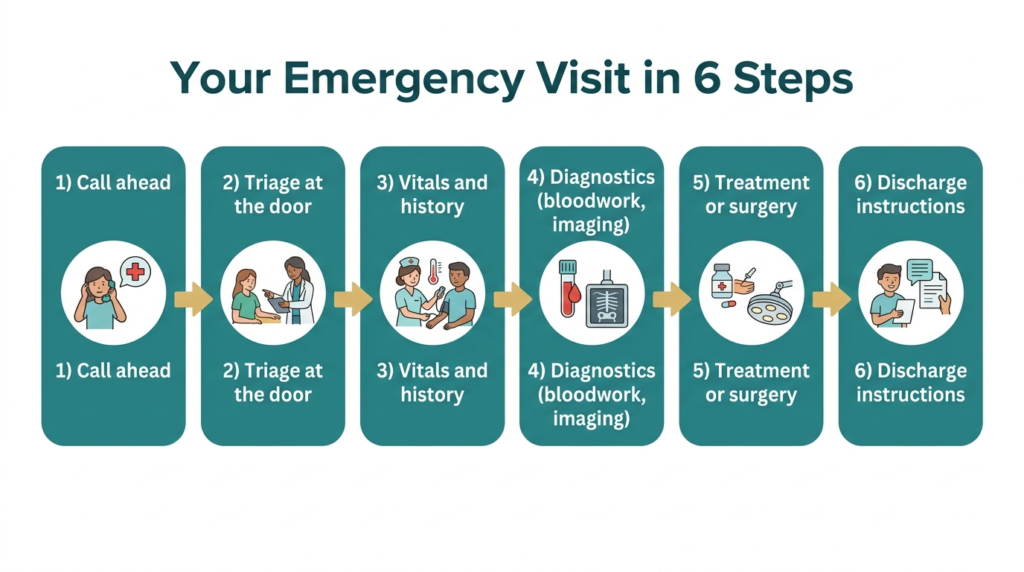
Calling ahead, even on a five-minute drive, makes a difference. The team can prep an exam room, pull resources, and clear a path for triage before you arrive. When you call, lead with the symptom and how long it’s been going on. Say things like, “My eight-year-old Labrador has been vomiting for three hours and now there’s blood in it,” not “She’s been sick all day.” Be ready with your pet’s age, weight, breed, any medications, and any known allergies. If you suspect poisoning, grab the wrapper or container. If you witnessed an injury, note the time. The clearer you are, the faster the medical team can move.
Walking Through the Door: Triage in the First Five Minutes
Emergency pet hospitals don’t run on a first-come-first-served basis the way a typical clinic does. They run on triage. A technician will assess your pet within seconds of you walking in, checking gum color, breathing, heart rate, and level of consciousness. If your pet is critical, they go to the back immediately. If they’re stable but unwell, you’ll be moved into an exam room. The brief wait that sometimes happens isn’t neglect; it usually means someone else has a more time-sensitive crisis. The flip side is also true: if your pet is the critical one, you’ll watch the entire room reorganize around them.
The Diagnostic Workup: How Doctors Find the Problem Fast
Once your pet is stable, the medical team builds a picture of what’s wrong. That picture usually comes from three places: a full physical exam, lab work, and imaging. In-house bloodwork often reveals dehydration, infection, organ damage, anemia, and clotting issues within minutes. X-rays or ultrasound can identify foreign body obstructions, fractures, masses, fluid in the chest or abdomen, and pregnancy complications. Cardiac workups check for heart disease that might be driving symptoms. The American Animal Hospital Association consistently lists on-site diagnostics as one of the strongest indicators of a well-equipped emergency hospital, because every minute spent waiting for outside lab results is a minute your pet may not have.
Treatment Options: From Stabilization to Surgery
Treatment usually starts with stabilization: oxygen support, IV fluids, pain management, and any urgent intervention needed to keep your pet alive. Once stable, the team moves to the underlying cause. Some pets need observation and supportive care, with vitals monitored every hour. Others need pet surgery in Stockton for issues like GDV, foreign body removal, splenic masses, or wound repair. A small number need transfer to a referral specialist for procedures the hospital isn’t equipped to handle, though most common emergencies are managed in-house when the hospital has surgical capability, imaging, and a well-stocked pharmacy on-site.
A Stockton Case Study: How Bella’s Evening Visit Played Out
A few weeks ago, a Stockton family rushed in with Bella, a six-year-old terrier mix who had stopped eating that morning and started vomiting in the afternoon. By dinnertime she was lethargic and her gums looked pale. The owner called from the parking lot. By the time they walked through the door, a technician was waiting with a thermometer.
Within twenty minutes, Bella had vitals taken, an IV catheter placed, and bloodwork running. Imaging showed a foreign body lodged in her small intestine. The team had a sock she had swallowed two days earlier out of her belly before midnight. Bella went home two days later, eating soft food and back to her usual tail wagging. Total time from “something seems off” to “she’s stable” was under three hours. That timeline doesn’t happen by accident. It happens when an owner acts quickly and the hospital has the right tools on site.
How an Emergency Pet Hospital Differs From a Standard Clinic
A general vet clinic and an emergency-capable hospital look similar from the outside but operate very differently inside. Knowing the difference helps you make the right call when you’re scared.
| Feature | Standard Vet Clinic | Emergency-Capable Pet Hospital |
|---|---|---|
| Appointment style | Scheduled visits, occasional walk-ins | Walk-ins prioritized by triage |
| Staffing | Usually one veterinarian per shift | Multiple veterinarians and technicians during peak hours |
| On-site diagnostics | Limited; many tests sent out | Bloodwork, imaging, urinalysis run in-house |
| Surgical capability | Routine procedures (spay, neuter, dentals) | Routine plus emergency surgery |
| Hours pattern | Standard business hours | Extended hours, weekends included |
| Best for | Wellness visits, follow-ups, chronic care | Acute illness, trauma, surgical emergencies |
A practice like a wellness checkup appointment is exactly the kind of thing a standard clinic handles every day. A pet that just collapsed is a different conversation entirely.
Costs, Decisions, and Conversations You May Have
Emergency visits can be expensive, and the team will talk through estimates before treatment whenever your pet’s condition allows. You’ll usually sign a treatment authorization listing the planned diagnostics and care, with a deposit that varies by case. For more involved situations, the veterinarian will walk you through options, expected outcomes, and risks. Decisions about surgery, intensive care, and end-of-life are some of the hardest a pet owner ever makes, and a good emergency team will give you honest information without pressure. According to the American Veterinary Medical Association, preparing for these decisions before they happen, including a conversation with your family about how far you’d go in different scenarios, makes the moment itself less paralyzing.
What Happens If You Arrive When We’re Closed
Even hospitals with extended hours and seven-day-a-week service aren’t open around the clock. If you arrive outside open times, the front door will not be the answer; a phone call will. Calling the main hospital line directs you to recorded after-hours guidance with the nearest overflow or 24-hour referral options. Save this number in your phone before you ever need it. The emergency urgent care page also lists what’s covered during open times so you know what to expect when you call. Pet emergencies don’t keep office hours, so part of being prepared is knowing where to go in every possible time slot, not just the convenient ones.
How to Recognize Trouble Before It Becomes a Crisis
A surprising number of emergency visits could have been earlier urgent visits if the warning signs had been caught sooner. Cats in particular are masters at masking pain, and the early symptoms of illness in cats often look like minor behavior changes. Dogs sometimes show subtler signs too: a slight limp that gets worse over a day, reluctance to climb stairs, or a slow loss of appetite over a week. Pairing these observations with a baseline you know well, because you see your pet every day, is one of the most valuable diagnostic tools any vet has. Read the emergency pet care guide for a deeper look at the first ten minutes of a crisis. The ASPCA’s guidance on signs of a pet emergency also offers a strong baseline checklist worth keeping near your fridge.
Frequently Asked Questions
-
What’s the difference between a pet emergency hospital and an urgent care vet?
An urgent care vet handles same-day concerns that aren’t immediately life-threatening, like ear infections, limping, vomiting that’s stable, or sudden mild illness. An emergency pet hospital handles immediately life-threatening situations: collapse, severe bleeding, seizures, trouble breathing, suspected poisoning. Many veterinary hospitals offer both, deciding which track your pet enters at triage. If you’re unsure where your situation fits, call and describe what you’re seeing.
-
Do I need an appointment for an emergency pet hospital visit?
No. Emergency visits are walk-in by nature; the hospital triages based on severity, not arrival time. Calling ahead is strongly recommended so the team can prepare for your arrival, especially in cases involving suspected poisoning, trauma, or active seizures. The call also lets the medical team advise on first aid before you leave the house, which can stabilize your pet during transport in certain situations.
-
What should I bring to the emergency pet hospital?
Bring your pet (obviously), any medications they’re currently taking, the packaging of anything they may have ingested, your pet’s medical records if accessible (many clinics share digital records), and a payment method. A short video on your phone of any symptom that’s hard to describe (a seizure, an odd gait, labored breathing) is genuinely helpful. If your pet has bitten before or is fearful, mention that on arrival so the team can use safe handling techniques.
-
How long does an emergency vet visit usually take?
Short answer: longer than you’d like. A straightforward urgent visit (an ear infection, a small wound) can be 30 to 90 minutes. A complex emergency involving bloodwork, imaging, IV fluids, and observation can be three to six hours. Surgical cases mean hospitalization for one to several days. Plan for a long visit, bring water and a phone charger, and don’t rush the team. Good emergency medicine takes time.
-
Can my regular vet handle most emergencies?
It depends on the clinic’s equipment and the type of emergency. Many general practices can stabilize a pet and handle moderate emergencies during open hours. Complex trauma, advanced surgery, and round-the-clock critical care often require an emergency-equipped hospital or specialty center. The best protection is knowing both options in advance: who your day-to-day vet is and where the nearest emergency-capable hospital sits relative to your home.
-
Will the emergency vet keep my regular vet informed?
Yes. Most emergency hospitals send discharge summaries, lab results, and imaging to your primary veterinarian, often the next business day. Continuity matters for recovery, especially when ongoing medications, dietary changes, or follow-up imaging are involved. If your regular vet is in a different network, ask the emergency team to send a copy of the records directly, or carry the paperwork yourself to the next appointment.
-
How can I make the experience less stressful for my pet?
Stay calm. Pets read your tone and posture more than your words, and panic is contagious. Transport them securely in a carrier or with a seatbelt harness, keep the car quiet, avoid loud music or phone calls, and bring a familiar blanket or favorite toy. Once at the hospital, your job becomes the consistent reassuring presence. The medical team handles the medicine; you handle the comfort. That division of labor matters more than most people realize.
Pacific Veterinary Hospital is located at 6828 Pacific Avenue, Stockton, CA 95207. For urgent pet concerns, call (209) 474-2444.
