
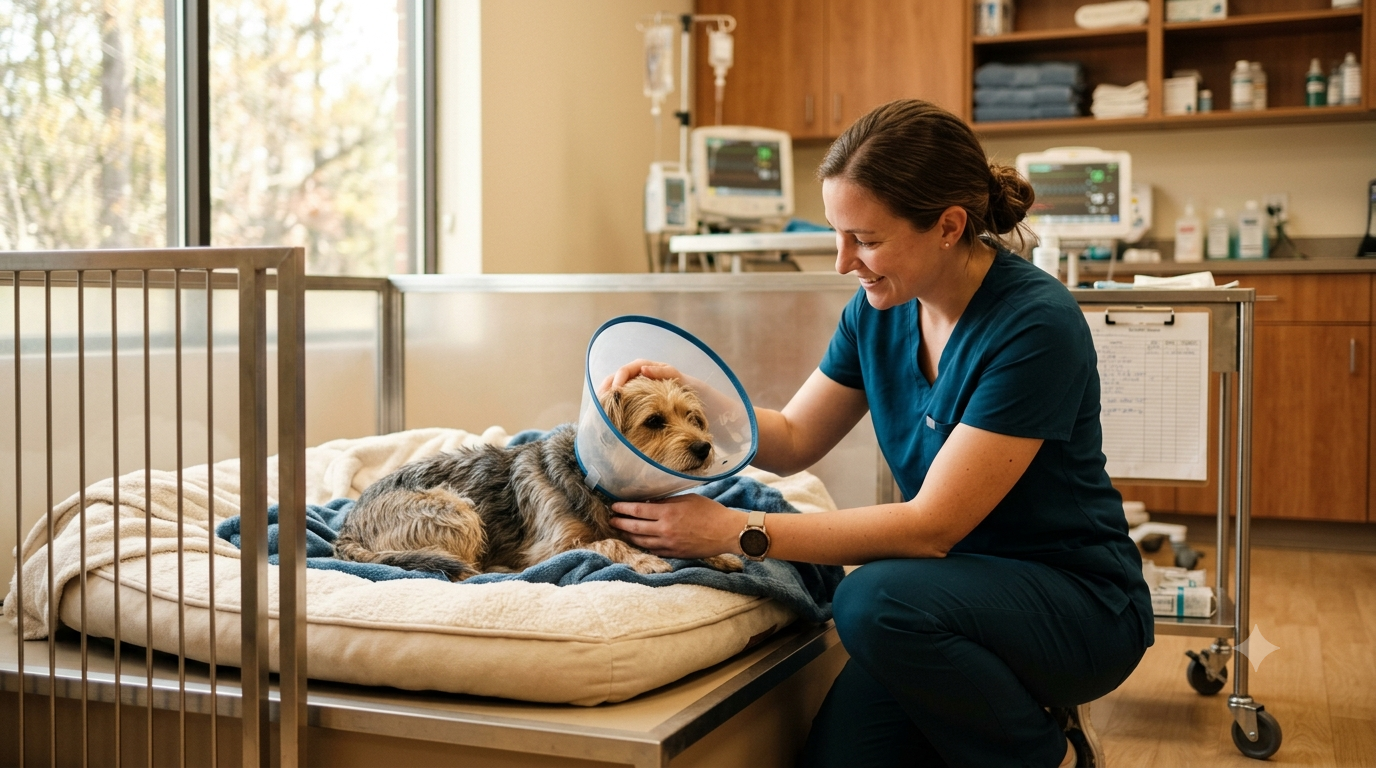
Deciding when and whether to spay or neuter your pet is one of the most consequential health decisions you’ll make as an owner. It affects long-term cancer risk, behavior, and even how your pet interacts with other animals. At Pacific Veterinary Hospital, our Stockton spay and neuter clinic has performed these procedures since 1981, and this guide covers what the surgery actually involves, the best age for your specific pet, and what recovery looks like day by day.
What Is Spay and Neuter Surgery?
Spay and neuter are two different surgical procedures that both accomplish the same broad goal: preventing reproduction while providing measurable health benefits. Our spay and neuter clinic in Stockton performs both procedures daily using the same anesthesia protocols and monitoring standards applied across every surgery we handle.
Spaying Explained
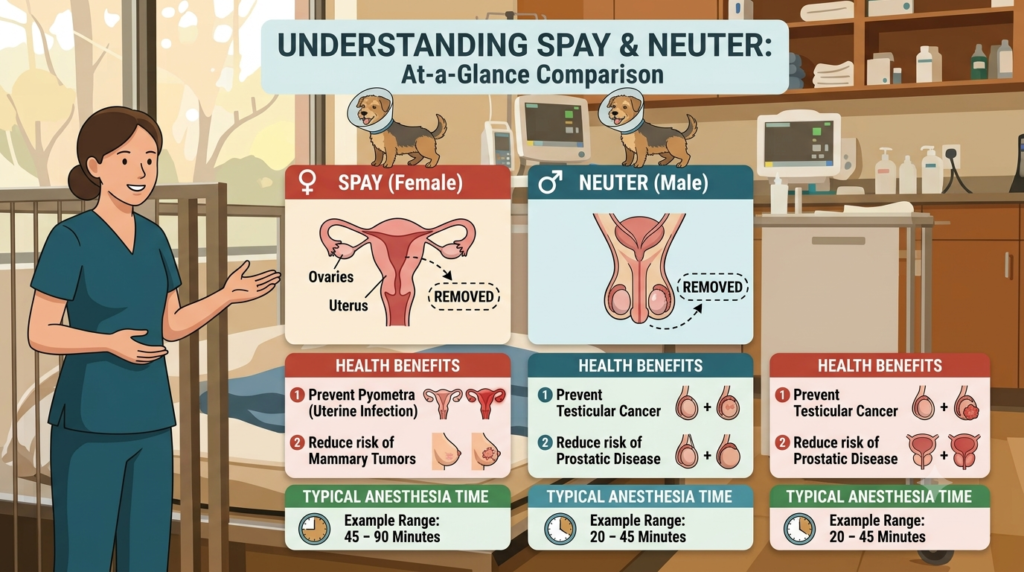
Spaying, medically known as an ovariohysterectomy, is the surgical removal of a female pet’s ovaries and uterus under general anesthesia. Because it removes the source of reproductive hormones, spaying eliminates heat cycles entirely and removes the risk of ovarian and uterine cancers.
Neutering Explained
Neutering, or orchiectomy, refers to the surgical removal of a male pet’s testicles. This procedure eliminates the risk of testicular cancer and significantly reduces the likelihood of prostate disease later in life. The difference between spay and neuter essentially comes down to which organs are removed and which sex the procedure applies to, but both share a similar surgical approach: general anesthesia, a short procedure time, and same-day discharge for most healthy pets.
Why Spay or Neuter Your Dog or Cat?
Understanding why spay or neuter a dog or cat matters helps put the decision in context beyond simply preventing litters.
Health Benefits
Spaying a female dog before her first heat cycle dramatically lowers her lifetime risk of mammary tumors, and spaying at any age eliminates the risk of pyometra, a life-threatening uterine infection that often requires emergency surgery. Neutering male dogs and cats removes testicular cancer risk entirely and lowers rates of prostate enlargement and perianal tumors later in life. Neutering can also resolve or significantly improve prostate-related issues that sometimes show up as blood in a dog’s urine, one of several reasons veterinarians frequently recommend the procedure for intact males. According to the American Veterinary Medical Association, spaying and neutering can also help reduce the risk of certain other health problems throughout a pet’s life.
Behavioral Benefits
Intact male dogs are more prone to roaming, which increases their exposure to traffic accidents, fights with other animals, and infectious disease. Intact male cats commonly mark territory with urine and are more likely to escape in search of a mate. Females in heat can vocalize frequently and attract unwanted attention from intact males in the area. While the surgery won’t reshape a pet’s fundamental personality, it typically reduces these specific hormone-driven behaviors.
Community Impact
Spaying and neutering also plays a direct role in reducing pet overpopulation. Local shelters across San Joaquin County manage a steady flow of homeless animals every year, and widespread spay and neuter compliance is one of the most effective long-term tools for reducing that number. The ASPCA notes that spaying and neutering remains one of the most effective ways communities can address pet overpopulation and reduce the number of animals entering shelters each year.
When Is the Best Age to Spay or Neuter?
Timing depends heavily on species, breed, and adult size, so there isn’t a single universal answer.
Cats and Small Dogs
Most cats and small-breed dogs can be safely spayed or neutered around six months of age, before sexual maturity sets in. Some veterinarians recommend even earlier timing for shelter or rescue animals to ensure the procedure happens before adoption.
Large and Giant Breed Dogs
Larger and giant breed dogs often benefit from waiting slightly longer, since their growth plates close later and some research suggests a modest delay may support joint health in certain breeds. Your veterinarian will factor in your specific dog’s breed, size, and health history when recommending timing, which is why a wellness visit before scheduling surgery is so valuable. The American Animal Hospital Association recommends discussing individualized timing with your veterinarian rather than following a single fixed age for every breed and size of dog.
Spay vs. Neuter at a Glance
| Feature | Spay (Female) | Neuter (Male) |
|---|---|---|
| Medical term | Ovariohysterectomy | Orchiectomy |
| Organs removed | Ovaries and uterus | Testicles |
| Typical procedure length | 20–90 minutes | 15–30 minutes |
| Eliminates heat cycles | Yes | Not applicable |
| Eliminates related cancer risk | Ovarian and uterine cancer | Testicular cancer |
| Recovery time | 10–14 days | 7–10 days |
What to Expect During the Spay or Neuter Procedure
Pre-Surgical Preparation
Before surgery, your pet undergoes a physical examination and bloodwork to confirm they’re healthy enough for anesthesia. You’ll receive fasting instructions in advance, since an empty stomach reduces the risk of complications during the procedure. A wellness exam beforehand gives your veterinarian the chance to flag any underlying issues that could affect the surgical plan.
The Day of Surgery
On surgery day, a dedicated team member monitors your pet’s heart rate, oxygen saturation, blood pressure, and body temperature continuously throughout the procedure. Our surgical care team follows the same anesthesia protocols and monitoring standards used across all procedures at our hospital, whether routine or complex. Most pets go home the same day with pain medication and detailed aftercare instructions.
Recovery Timeline After Spay or Neuter Surgery
The First 24–48 Hours
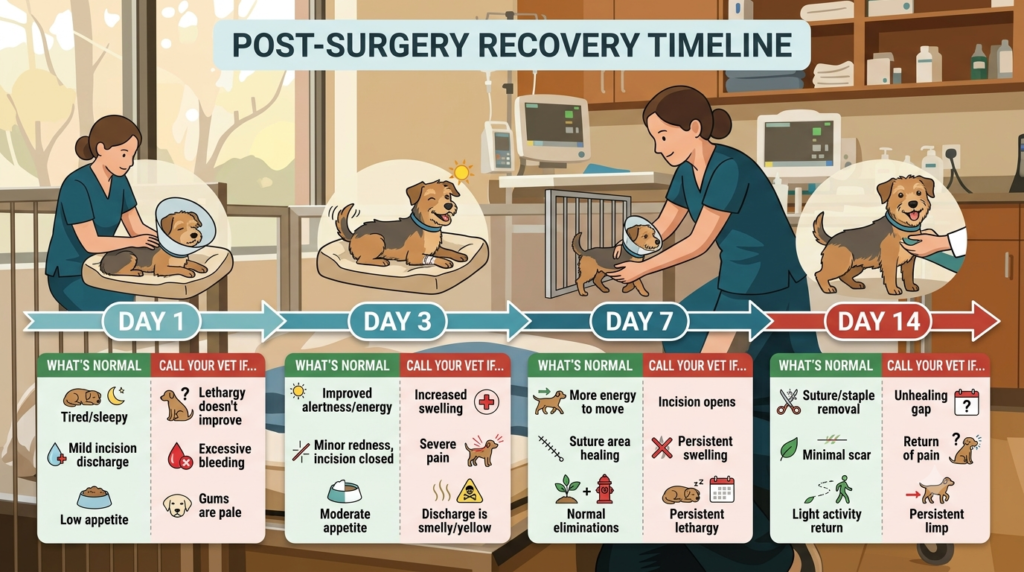
Expect your pet to be groggy and less active immediately after surgery. Keep them in a quiet, confined space away from stairs, other pets, and rough play. Pain medication prescribed at discharge, available through our in-house pharmacy, should be given exactly as directed to keep your pet comfortable during this stage.
Days 3–14
Most pets return to normal activity within ten to fourteen days, though individual recovery speed varies. During this window, restrict running, jumping, and off-leash play to protect the incision, and check the surgical site daily for redness, swelling, or discharge. An e-collar prevents licking or chewing, which is one of the most common causes of post-surgical complications.
Signs to Watch For
Contact your veterinarian promptly if you notice significant swelling, discharge, a gaping incision, or if your pet seems unusually lethargic or refuses food beyond the first day. Our detailed guide on preparing your pet for surgery walks through anesthesia safety and recovery expectations in more depth.
Case Study: A Stockton Cat’s Neuter Recovery
A one-year-old indoor-outdoor cat was brought to our hospital after his owners noticed increasingly frequent urine marking around the house and more time spent roaming outside overnight. This kind of case is part of the everyday preventive care our team provides for Stockton pets. During his wellness exam, our veterinarian confirmed he was a good candidate for neutering and scheduled the procedure for later that week. The surgery itself took under twenty minutes, and he was discharged the same afternoon with pain medication and an e-collar. Within a week, his owners reported the marking behavior had stopped almost entirely, and his nighttime roaming had noticeably decreased. His follow-up exam at day fourteen confirmed the incision had healed cleanly with no complications. This case reflects a pattern we see often: behavioral changes tend to improve within days to weeks after neutering, while the surgical incision itself typically finishes healing within the standard ten-to-fourteen-day window.
Frequently Asked Questions
-
What is the difference between spay and neuter?
Spaying refers to the surgical removal of a female pet’s ovaries and uterus, while neutering refers to removing a male pet’s testicles. Both procedures are performed under general anesthesia and both prevent reproduction, but they apply to different sexes and involve different organs. The health benefits differ slightly as a result, though both reduce certain cancer risks and hormone-driven behaviors.
-
What is spay neuter surgery, and is it safe?
Spay and neuter surgery is a routine, commonly performed procedure that removes reproductive organs under general anesthesia. It’s considered one of the safest and most frequently performed surgeries in veterinary medicine, especially when preceded by a pre-surgical exam and bloodwork to confirm your pet is a good anesthesia candidate. Continuous monitoring during the procedure further reduces risk.
-
Why spay or neuter a dog if I don’t plan to breed them?
Even without breeding plans, spaying or neutering provides meaningful health benefits, including reduced cancer risk and fewer hormone-driven behaviors like roaming or marking. It also removes the possibility of an accidental litter, lowers the chance of certain infections and tumors later in life, and supports broader efforts to manage pet overpopulation in the community. Many owners find their pet is calmer and less prone to escape attempts afterward as well.
-
How much does a spay and neuter cost?
Cost varies based on your pet’s species, size, age, and any additional bloodwork or pain management needed. Because every case is different, the most accurate way to get a cost estimate is to schedule a consultation with our veterinary team, who can review your pet’s specific needs before your visit.
-
How is spay and neuter surgery performed on a dog?
The procedure is performed exclusively by a licensed veterinarian in a sterile surgical setting under general anesthesia, never at home. Your dog is monitored continuously throughout, and the veterinary team follows established surgical protocols from pre-operative exam through recovery. This is not a procedure that should ever be attempted outside a veterinary clinic.
-
Where can I find a spay neuter clinic near me in Stockton?
Pacific Veterinary Hospital performs spay and neuter surgery daily for dogs and cats in the Stockton area, with full pre-surgical exams, anesthesia monitoring, and post-operative care included as part of every procedure. Our team can help you decide on the right timing for your specific pet’s breed, size, and health history. Call our team to schedule a consultation and discuss the best timing for your specific pet.
Pacific Veterinary Hospital is located at 6828 Pacific Avenue, Stockton, CA 95207. Call (209) 474-2444 to schedule your pet’s spay or neuter consultation.
