
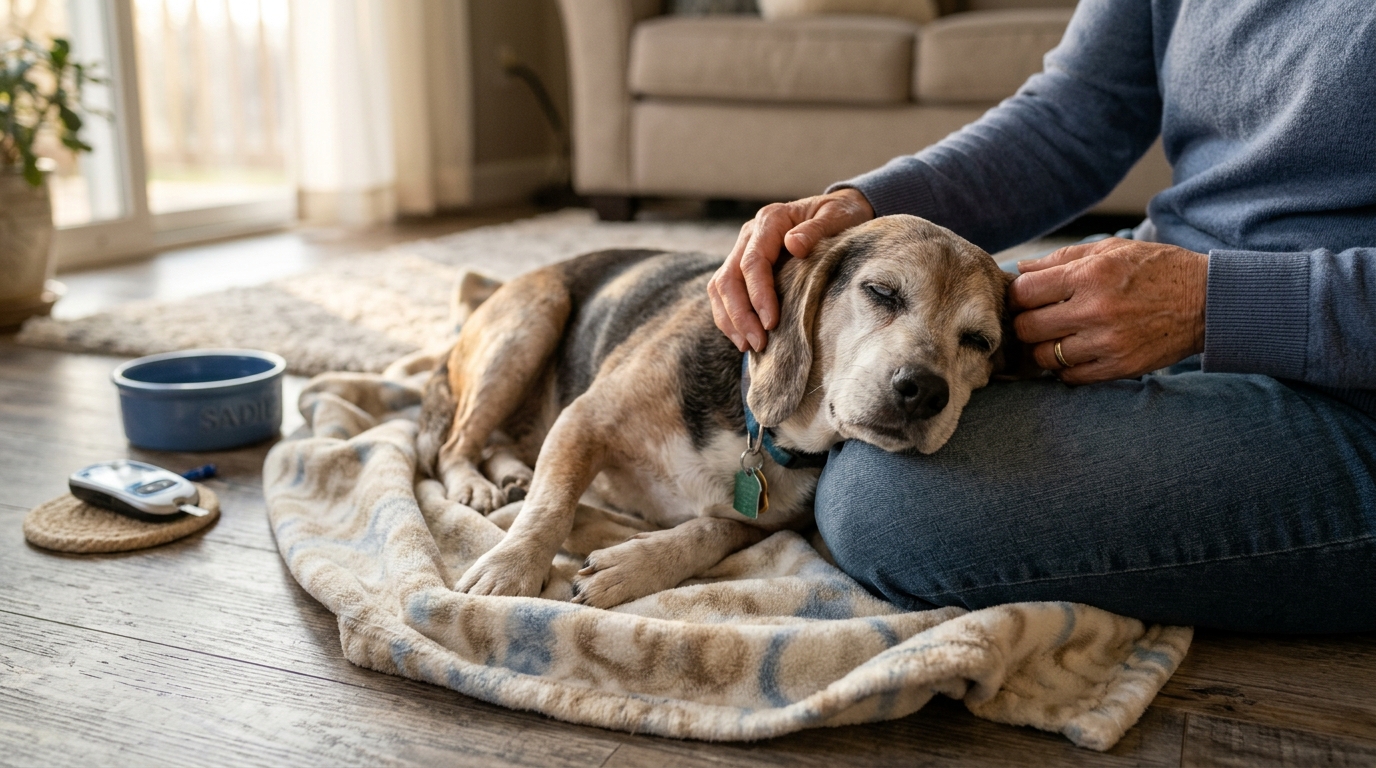
Knowing the signs your dog with diabetes is dying helps you tell the difference between a bad week that treatment can fix and a decline that calls for comfort care. Many dogs live good, active years with diabetes, but complications, age and other illnesses can eventually tip the balance. If you are searching for a veterinarian near me because something feels wrong with your diabetic dog, this guide explains what to watch for, which symptoms are emergencies, and how to keep your dog comfortable through the end of life.
How Diabetes Changes as Dogs Age
Diabetes in dogs happens when the body stops making enough insulin, so sugar builds up in the blood instead of fueling the cells. Unlike cats, dogs almost never go into remission, which means most diabetic dogs need insulin for life. Early signs are hard to miss: heavy thirst, large puddles of urine and weight loss despite a big appetite. If you have ever asked yourself why is my dog peeing so much, uncontrolled blood sugar is one of the first causes your vet will rule out.
Over time, the disease moves through fairly predictable stages. Senior dog health plays a big role in how fast that happens.
| Stage | What It Looks Like | Outlook |
|---|---|---|
| Newly diagnosed | Thirst, frequent urination, weight loss | Good once insulin dose is set |
| Well controlled | Normal energy, stable weight, steady appetite | Many good years possible |
| Poorly controlled | Thirst returns, infections, weight swings | Improves with dose changes and testing |
| Complicated | Ketoacidosis, Cushing’s disease, pancreatitis, kidney decline | Guarded, depends on the other illness |
| End stage | Refuses food, cannot keep sugar stable, weakness, collapse | Focus moves to comfort and dog end of life care |
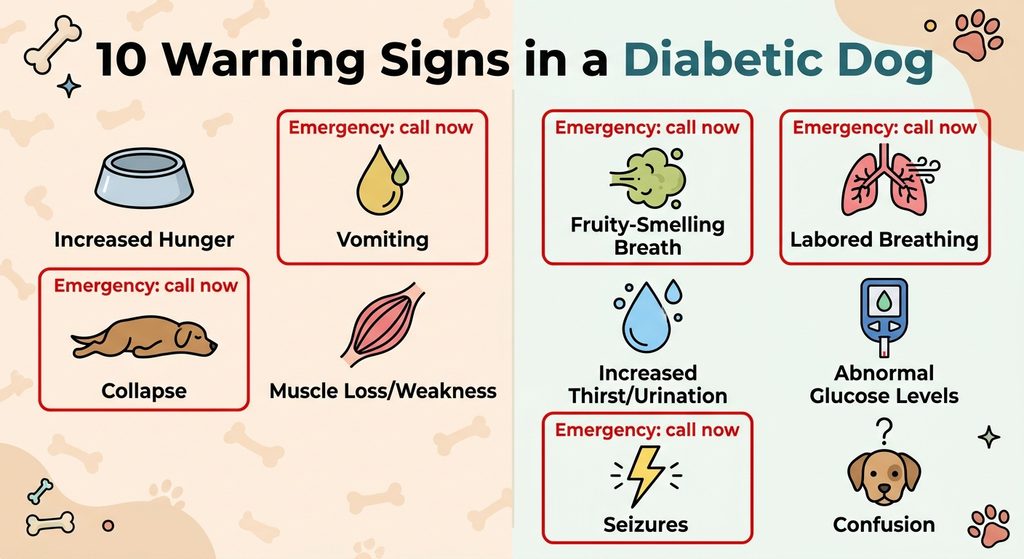
10 Signs Your Dog With Diabetes Is Dying
No single symptom means the end. What matters is a pattern that keeps getting worse even when treatment is adjusted. Watch closely for these signs.
1. Refusing food for more than a day
Appetite is everything for a diabetic dog because insulin and meals work as a pair. A dog who will not eat cannot safely receive a full insulin dose. Never give the full dose to a dog that has skipped a meal. Call your veterinarian for instructions.
2. Vomiting or diarrhea that will not settle
Repeated vomiting drains fluids and electrolytes fast. In a diabetic dog, it is also one of the earliest signs of ketoacidosis or pancreatitis.
3. Sweet or nail polish smell on the breath
A fruity, chemical odor points to ketones building up in the blood. This is a sign of diabetic ketoacidosis, a true emergency.
4. Fast, deep or labored breathing at rest
The body tries to blow off acid by breathing harder. Panting while lying still, especially with weakness, needs same-day care.
5. Extreme weakness, wobbling or collapse
Severe lethargy can come from very high or very low blood sugar. Either one can turn life threatening within hours.
6. Muscle wasting despite treatment
Visible loss of muscle over the hips, spine and head, even with insulin on schedule, suggests the body is breaking itself down for energy.
7. Severe dehydration
Look for sticky gums, sunken eyes and skin that stays tented when gently lifted. Dehydration often travels with ketoacidosis and kidney decline.
8. Blood sugar that will not stay stable
When glucose readings swing wildly or stay high despite repeated dose increases, something else is usually driving insulin resistance, such as infection, Cushing’s disease or cancer.
9. Repeated low blood sugar episodes or seizures
Trembling, confusion, staggering or seizures after insulin point to hypoglycemia. Several episodes in a short time make safe dosing very difficult.
10. Withdrawal, confusion and loss of interest
A dog that no longer greets the family, gets lost in familiar rooms, or stops caring about walks and treats may be telling you more than any lab result can.
Emergency or End Stage? How to Tell the Difference
Some of these signs mean your dog needs emergency treatment, not goodbye. Many dogs recover fully from a crisis when they get care quickly.
| Situation | Key Signs | What It Means | What to Do |
|---|---|---|---|
| Diabetic ketoacidosis (DKA) | Vomiting, sweet breath, fast breathing, weakness | Ketones and acid have built up in the blood | Emergency care now; often treatable |
| Hypoglycemia (low sugar) | Trembling, confusion, staggering, seizures | Too much insulin or a missed meal | Rub honey or corn syrup on the gums, then come in right away |
| Unregulated diabetes | Thirst, urination and weight loss return | Dose, diet or another illness needs review | Book a recheck and glucose testing |
| End-stage decline | Repeated crises, refusal to eat, no response to treatment | Body can no longer be stabilized | Talk with your vet about comfort care |
The 2026 AAHA guidance on diabetic ketoacidosis in dogs describes DKA as life threatening, with dangerous dehydration and, in severe cases, coma. Even so, one study of 127 dogs treated for DKA found about 70 percent survived to go home. If your dog shows these signs, call an emergency vet near me before assuming the worst.
Signs That Look Scary but Are Not the End
Some changes frighten owners but do not mean a diabetic dog is dying.
Cloudy eyes and blindness
Cataracts are the most common diabetes complication in dogs. A study of 200 diabetic dogs found half had cataracts within about 170 days of diagnosis and roughly 80 percent within 16 months. Blind dogs adapt surprisingly well using smell and hearing, especially when furniture stays in the same place.
Thirst returning after a stable period
This usually means the insulin dose or diet needs adjusting, or a urinary infection has started. It is a reason for a recheck, not a reason to lose hope.
Slower walks and longer naps
Ordinary aging looks a lot like mild illness. Senior exams help separate the two.
What Shortens Life With Diabetes in Dogs
Large studies help explain why some dogs do well for years while others decline faster. A UK VetCompass study of 409 diabetic dogs found shorter survival in dogs over 10 at diagnosis, dogs with very high blood sugar at diagnosis, dogs previously treated with steroids, and Cocker Spaniels.
Other diseases often decide the outcome more than diabetes itself:
- Cushing’s disease raises cortisol and fights insulin
- Pancreatitis causes pain, vomiting and unstable sugar
- Kidney disease reduces appetite and changes how drugs clear
- Chronic infections in the bladder, skin or teeth push sugar higher
- Cancer drains energy and makes control very hard
The daily workload also matters. In a survey of 1,192 veterinarians, respondents estimated that about one in ten diabetic pets is euthanized at diagnosis and another one in ten within the first year, with concurrent illness and treatment burden among the main reasons. That is why we work hard to build plans families can actually keep up with.
How Our Veterinarians Help a Declining Diabetic Dog
At Pacific Veterinary Hospital, the first goal is always to find out whether the decline can be reversed.
Diagnostics in one visit
Same-day in-house bloodwork checks glucose, ketones, kidney values, liver enzymes and electrolytes. A fructosamine test shows average sugar control over the past two to three weeks, and a glucose curve tracks how insulin behaves through the day. When pancreatitis, adrenal disease or a tumor is suspected, a dog ultrasound gives a clearer picture of the abdomen.
Medication changes without delays
Insulin, syringes, anti-nausea medication and pain relief can be filled through our pet pharmacy in Stockton, CA, so dose changes start the same day.
Regular senior rechecks
Diabetic dogs do best with rechecks every few months, plus urine tests for silent infections. Our senior pet care in Stockton, CA visits catch kidney changes, dental disease and weight loss early, before they spiral.
Quality of Life Checklist for a Diabetic Dog
Use this checklist weekly. When warning signs start to outnumber good signs, schedule a conversation with your vet.
| Area | Good Sign | Warning Sign |
|---|---|---|
| Appetite | Eats full meals on schedule | Skips meals, needs coaxing every day |
| Energy | Enjoys short walks and family time | Sleeps most of the day, avoids people |
| Hydration | Drinks normally, gums moist | Excessive thirst or signs of dehydration |
| Blood sugar | Readings mostly in target range | Wild swings or repeated lows |
| Comfort | Moves easily, rests calmly | Pacing, panting, crying or restlessness |
| Hygiene | Can get outside to urinate | Frequent accidents, soaked bedding |
| Good days | Most days feel normal | Bad days outnumber good ones |
How to Help Your Diabetic Dog at Home
Small changes make a real difference for a senior dog nearing the end.
- Feed on a strict schedule and keep the same food unless your vet changes it
- Offer warm, strong-smelling food when appetite dips, but ask before switching diets
- Keep fresh water in several spots around the house
- Take your dog out more often to prevent accidents and urine scald
- Use washable bedding and keep the sleeping area warm and quiet
- Keep a log of meals, insulin times, glucose readings and behavior
- Keep honey or corn syrup on hand for low blood sugar emergencies
- Leave furniture in place and block stairs if your dog has lost vision
Case Study: A Composite Example of Late-Stage Decline
This example combines common clinical patterns and does not describe any individual patient. It shows how a 12-year-old diabetic terrier mix with Cushing’s disease typically declines over several months.
| Timeline | What the Family Sees | What the Team Does |
|---|---|---|
| Months 1 to 3 | Stable on insulin, cataracts forming, still playful | Routine rechecks, fructosamine, home glucose log |
| Months 4 to 5 | Thirst returns, recurring bladder infections | Cushing’s confirmed, medication added, insulin adjusted |
| Month 6 | First DKA episode, recovers after hospital care | Close glucose monitoring, diet review |
| Months 7 to 8 | Eating poorly, muscle loss, second DKA episode | Quality of life review with the family |
| Final week | Refuses food, weak, restless at night | Family chooses a peaceful, planned euthanasia |
The lesson is not that every diabetic dog follows this path. It is that repeated crises, appetite loss and failing response to treatment, all together, are the clearest signs the body is wearing out.
End of Life Care for Dogs With Diabetes
When diabetes can no longer be controlled, care moves from fixing numbers to protecting comfort. End of life for dogs can include palliative care at home, with anti-nausea medication, appetite support and relaxed glucose targets, followed by euthanasia when comfort can no longer be kept. The AAHA/IAAHPC End-of-Life Care Guidelines encourage a shared, written plan between the veterinarian and the family so decisions are made calmly rather than in a crisis.
If you are looking for end of life care for dogs near me, our team can talk through hospice support, a gentle euthanasia process with sedation first, and aftercare options such as private cremation. Every family gets honest guidance, without pressure, about what is best for their dog.
Why Stockton Families Trust Pacific Veterinary Hospital
- Caring for Stockton pets since 1981
- A 4.3-star Google rating from local pet owners
- In-house bloodwork, X-ray, ultrasound and pharmacy for faster answers
- Care offered in English and Spanish
- New patients welcome without a referral
If your diabetic dog is not acting like themselves, do not wait for the next routine visit. Book a same day vet in Stockton, CA appointment and we will help you decide what comes next.
Frequently Asked Questions About Diabetic Dogs at End of Life
-
What are the final stages of diabetes in dogs?
The final stages usually involve a dog that refuses food, vomits often, loses muscle quickly and cannot keep blood sugar in a safe range despite insulin changes. Many dogs also have repeated ketoacidosis episodes, dehydration, weakness and confusion. Other illnesses such as Cushing’s disease, pancreatitis or kidney failure often drive this decline. When several of these signs appear together and do not improve with treatment, it is time to discuss comfort care with your veterinarian.
-
How long can a dog live with diabetes?
Many dogs live several good years after diagnosis when insulin, diet and rechecks stay consistent. Survival is shorter in dogs diagnosed after age 10, dogs with very high sugar at diagnosis and dogs with other serious illnesses. The first few months are often the hardest while the dose is fine tuned. Once a dog is stable, regular senior exams and home monitoring give the best chance of a long, comfortable life with diabetes.
-
Is my diabetic dog suffering?
Signs of suffering include refusing food, constant restlessness or panting, crying, hiding, repeated vomiting and trouble standing. A diabetic dog who still eats, enjoys walks and greets the family is usually comfortable, even with cataracts or occasional accidents. Use a weekly quality of life checklist and keep a simple log of good and bad days. If bad days start to outnumber good ones, schedule a visit so your veterinarian can examine your dog.
-
Should I give insulin if my dog will not eat?
Do not give a full insulin dose to a dog that has not eaten. Insulin without food can push blood sugar dangerously low and cause trembling, collapse or seizures. Call your veterinarian for instructions, since some dogs need a reduced dose and others need to skip a dose entirely. If your dog has not eaten for a full day, or is also vomiting or weak, bring them in right away for an exam and bloodwork.
-
Can a diabetic dog recover from ketoacidosis?
Yes, many dogs recover from diabetic ketoacidosis when it is treated quickly. Treatment usually involves hospital care with intravenous fluids, short-acting insulin, electrolyte support and close monitoring of blood sugar and ketones. Recovery is harder when the dog also has pancreatitis, Cushing’s disease or kidney problems, or when episodes keep coming back. Repeated ketoacidosis despite good home care is one of the clearer signs that a diabetic dog is declining.
-
When is it time to euthanize a diabetic dog?
It may be time when your dog no longer eats reliably, blood sugar cannot be controlled safely, crises keep returning and bad days outnumber good ones. There is rarely one perfect moment, and many families find comfort in deciding while their dog can still enjoy a favorite meal or a quiet afternoon together. Your veterinarian can score quality of life with you and explain each option honestly, so the decision reflects your dog’s comfort first.
Pacific Veterinary Hospital, 6828 Pacific Avenue, Stockton, CA 95207. Call (209) 474-2444 if you are worried about your diabetic dog or want to talk about end of life care.
